Agracejo comestible
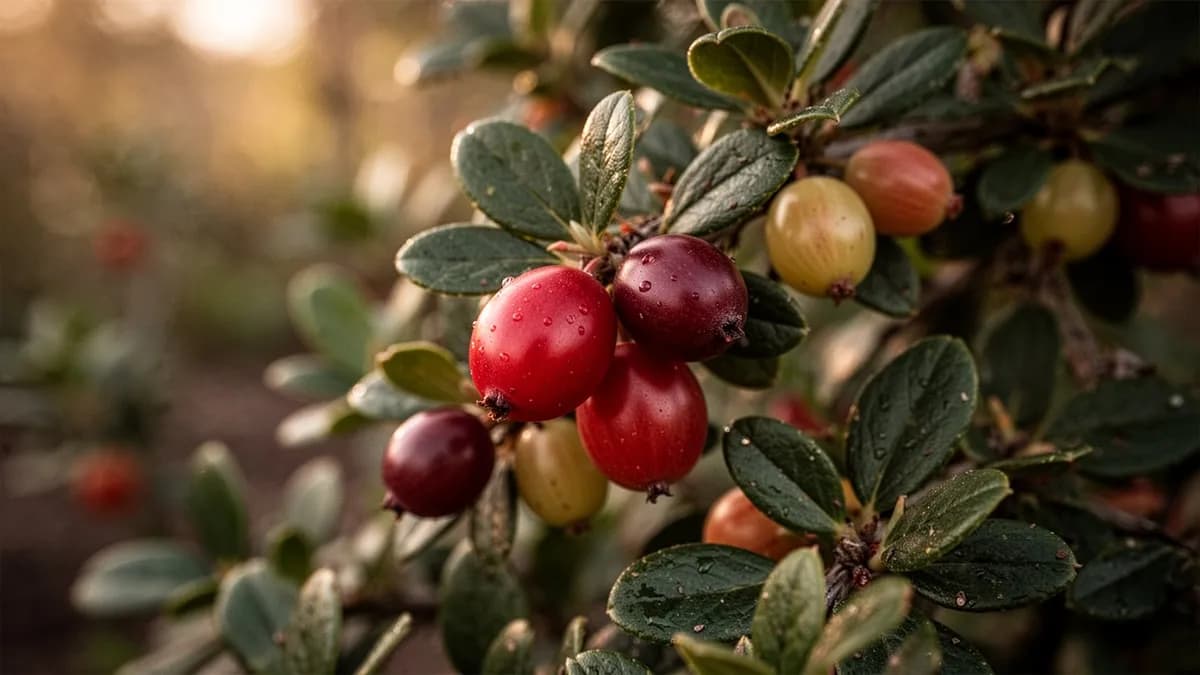
Un arbusto caducifolio espinoso que produce racimos de bayas rojo brillante y ácidas, muy utilizadas en la cocina persa como zereshk.





En esta páginaResumen
Conoce Agracejo comestible
Un arbusto caducifolio espinoso que produce racimos de bayas rojo brillante y ácidas, muy utilizadas en la cocina persa como zereshk. Las bayas son ricas en vitamina C y se secan bien para su almacenamiento a largo plazo. El agracejo es extremadamente tolerante a la sequía una vez establecido y forma un seto barrera eficaz, aunque en algunas regiones su plantación está restringida por preocupaciones relacionadas con la roya del trigo.
Cuándo plantar Agracejo comestible
El agracejo se propaga con facilidad por semilla, esquejes semileñosos o acodo. Para la propagación por semilla, limpie las semillas de las bayas maduras y estratifíquelas en frío durante 60 a 90 días a 1 °C. Siembre las semillas a 0.5 cm de profundidad en un sustrato muy drenante en primavera. La germinación tarda de dos a cuatro semanas. Los esquejes semileñosos tomados a mediados del verano enraízan bien si se tratan con hormona de enraizamiento y se mantienen bajo niebla. El acodo, enterrando una rama baja en el suelo, produce plantas enraizadas en una sola temporada de crecimiento.
Tu año de Agracejo comestible
Ajustado a Zona 7 · temporada típica · la helada se va hacia el 2 abr y vuelve hacia el 1 nov
Planta Agracejo comestible Mar – Abr, Oct – Nov y cosecha Sep – Oct. Consulta los métodos de plantación y elige tu clima para adaptar los periodos.
Cómo cultivar Agracejo comestible
El agracejo comestible prospera a pleno sol o en semisombra en suelos bien drenados con un pH de 6.0 a 7.5. Antes de plantar, compruebe que Berberis vulgaris sea legal en su estado, ya que está prohibido en algunas regiones cerealistas porque actúa como hospedador alternativo de la roya negra del tallo del trigo. Plante arbustos cultivados en contenedor o a raíz desnuda en primavera u otoño, separándolos entre 1.5 y 1.8 metros para setos o unos 2.4 metros como ejemplares individuales.
El agracejo es uno de los arbustos más adaptables y agradecidos que existen. Tolera la sequía, el calor, los suelos pobres, la contaminación urbana y la semisombra. Una vez establecido, requiere prácticamente ningún mantenimiento. Las ramas espinosas lo convierten en un seto de seguridad excelente y en una barrera resistente al ramoneo de los ciervos. Pode para dar forma después de la floración si lo desea, o deje que se desarrolle su porte arqueado natural.
El arbusto produce pequeñas flores amarillas en primavera, seguidas por racimos colgantes de bayas rojo brillante que permanecen bien entrado el invierno. Riegue con regularidad durante la primera temporada de crecimiento para establecer las raíces; después, el agracejo se vuelve muy tolerante a la sequía. Aplique un fertilizante equilibrado una vez al año a comienzos de primavera, aunque las plantas establecidas rara vez necesitan abonado adicional. El agracejo puede cultivarse como seto informal, arbusto ejemplar o guiado contra un muro.
Para Agracejo comestible un bancal de 120 × 240 cm se queda corto
Cada Agracejo comestible pide 150 cm de margen. El planificador guarda ese marco por ti — cada planta, cada bancal.
Guías de cultivo relacionadas
Abónalo bien
El agracejo prospera en casi cualquier suelo bien drenado, desde arenoso hasta arcilloso, y tolera condiciones tanto ácidas como alcalinas con un rango de pH de 5.5 a 8.0. Crece bien en suelos pobres y poco fértiles donde muchos otros arbustos tienen dificultades. La fertilización rara vez es necesaria en plantas ya establecidas. En arbustos recién plantados, una aplicación ligera de fertilizante equilibrado en primavera favorece el establecimiento. El exceso de fertilidad promueve un crecimiento blando y alargado que reduce el carácter denso y espinoso valorado para los setos. El acolchado es beneficioso, pero no imprescindible.
Temperatura ideal
Compatibilidad de zonas de rusticidad
De la semilla a la cosecha, etapa por etapa
Plantación y establecimiento de raíces
Las plantas a raíz desnuda o cultivadas en contenedor establecen su sistema radicular durante las primeras cuatro a seis semanas después de la plantación. El crecimiento aéreo es mínimo mientras la energía se dirige a anclar la red de raíces. La planta es más vulnerable al estrés por sequía durante este periodo.
Primer brote de crecimiento
Los nuevos brotes salen desde la base y de los tallos existentes, produciendo las características hojas ovaladas en ramas arqueadas. En cada nudo se forman espinas de tres puntas, cada vez más afiladas. Durante el primer año, el enfoque sigue siendo establecer una estructura fuerte en lugar de fructificar.
Floración
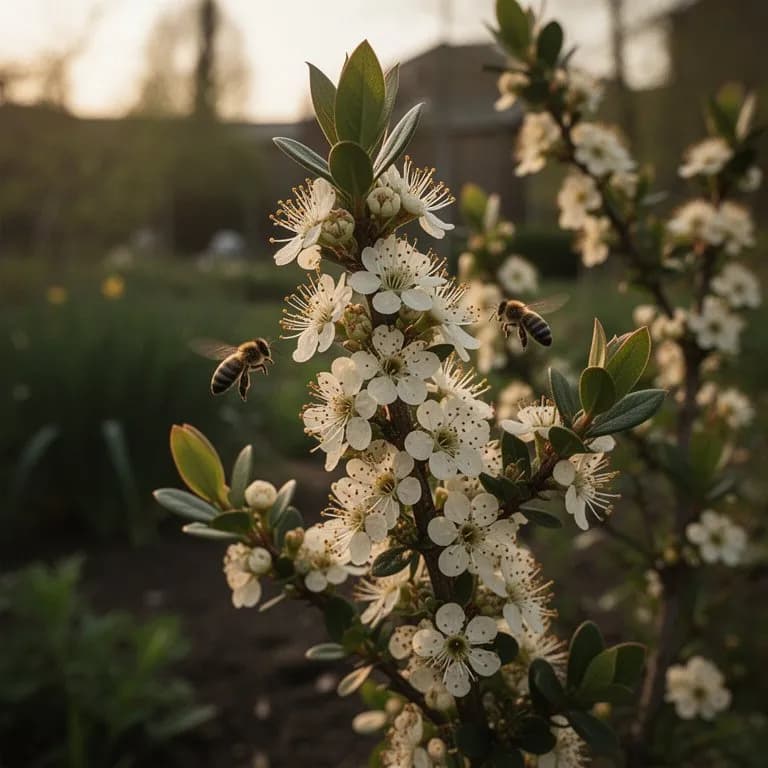
A mediados o finales de la primavera aparecen racimos de pequeñas flores amarillas brillantes de seis pétalos a lo largo de la madera del año anterior, normalmente de abril a mayo según la zona. Cada flor contiene anteras que se mueven hacia adentro cuando las toca un polinizador, mejorando de forma notable la transferencia de polen. Las flores tienen un aroma parecido a la miel que atrae a abejas y sírfidos.
Maduración
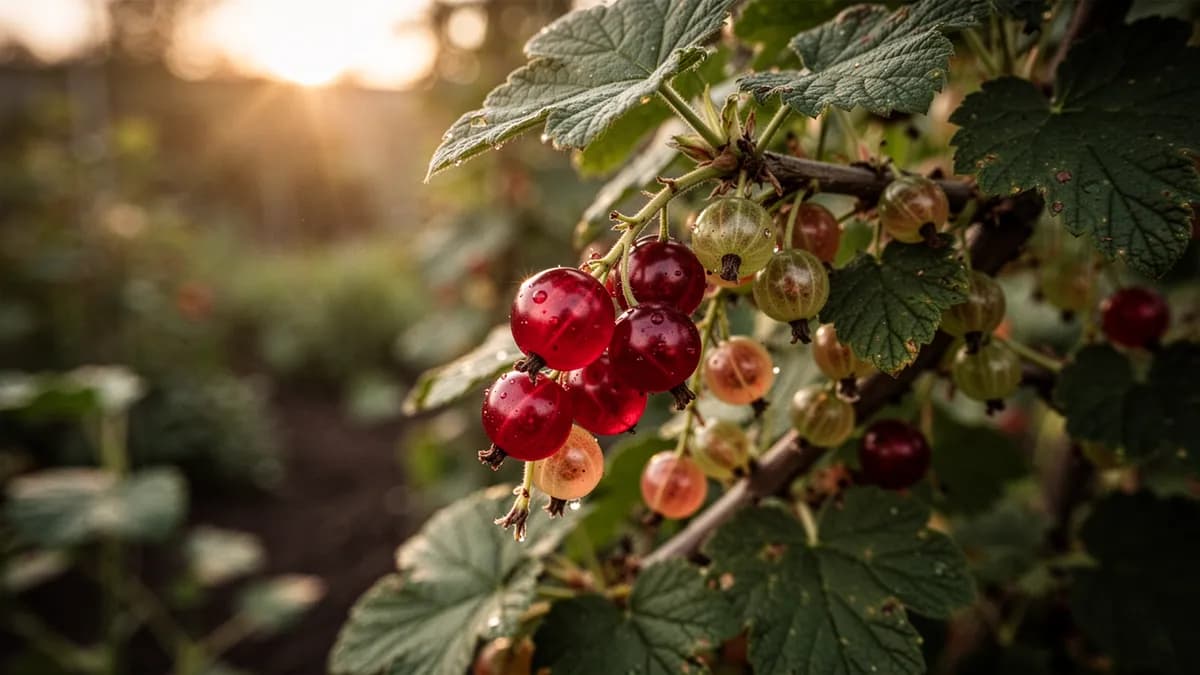
Desde finales de agosto hasta octubre, las bayas pasan de verde a rosa y luego a un rojo carmesí o escarlata intenso y brillante. El contenido de azúcar aumenta mientras que el ácido málico se suaviza un poco, creando el característico sabor agridulce. Después de la primera helada ligera, las bayas se vuelven notablemente más agradables al paladar, un fenómeno que los cultivadores persas conocen desde hace siglos.
Color de otoño y poscosecha
Después de la cosecha principal, el follaje se vuelve de tonos espectaculares de naranja, rojo y escarlata antes de caer a finales de otoño. La planta sigue fotosintetizando en periodos suaves, acumulando reservas de carbohidratos para el invierno. Las bayas que quedan en la planta persisten hasta bien entrado el invierno y proporcionan alimento valioso para la fauna.
Latencia y poda invernal
La planta está completamente en reposo una vez que termina la caída de las hojas, normalmente de noviembre a febrero. La estructura desnuda y espinosa es muy ornamental con las heladas, y las bayas persistentes se vuelven cada vez más visibles. Esta es la ventana ideal para la poda estructural sin perturbar las yemas florales de la próxima temporada, que se forman en madera vieja.
Latencia y poda invernal
La planta está completamente en reposo una vez que termina la caída de las hojas, normalmente de noviembre a febrero. La estructura desnuda y espinosa es muy ornamental con las heladas, y las bayas persistentes se vuelven cada vez más visibles. Esta es la ventana ideal para la poda estructural sin perturbar las yemas florales de la próxima temporada, que se forman en madera vieja.
Plántela en un lugar bien drenado, soleado o de semisombra, con el suelo enmendado con gravilla si es pesado. Riegue cada pocos días durante los periodos secos durante las primeras seis semanas. Evite fertilizar con nitrógeno en esta etapa, porque promueve un crecimiento aéreo blando y débil antes de que las raíces estén bien establecidas.
Cuidar Agracejo comestible mes a mes
Qué hacer cada mes para tu Agracejo comestible
Octubre
Mes actualContinúe la cosecha y termine de secar o congelar los excedentes. Si desea podar para dar forma, hágalo después de la floración y antes de que llegue el frío intenso. Retire restos enfermos o dañados.
Ten claro qué hacer en tu huerto, cada mes
Un correo al empezar cada mes: qué sembrar, plantar y hacer ahora mismo — para tu Agracejo comestible y todo lo que crece alrededor. Más un breve curso inicial para esquivar los errores clásicos.
- Qué hacer ahora mismo
- Ajustado a tu temporada
- Curso inicial incluido
Cosechar Agracejo comestible
Las bayas de agracejo maduran de septiembre a octubre, pasando a un rojo vivo y volviéndose ligeramente translúcidas. Coseche sujetando un recipiente bajo la rama y desprendiendo los racimos hacia abajo con la mano, usando guantes para protegerse de las espinas. Las bayas son muy ácidas y no resultan agradables crudas, pero son excelentes secas o cocinadas. También pueden dejarse en el arbusto y cosecharse gradualmente hasta bien entrado el invierno, porque se conservan muy bien. Después de la primera helada, las bayas restantes se vuelven algo menos ácidas y más fáciles de procesar.
se supone que plantas al comenzar el periodo — indica tu fecha real
Coseche de septiembre a octubre, cuando las bayas estén completamente rojas y ligeramente translúcidas; para consumirlas frescas o secarlas, espere hasta después de la primera helada.
Almacenamiento y conservación
Las bayas de agracejo se secan de forma excelente y son la forma tradicional usada en la cocina persa como zereshk. Extiéndalas en bandejas en un deshidratador o al sol hasta que se sequen por completo y guárdelas en recipientes herméticos durante hasta un año. Las bayas secas se rehidratan fácilmente en agua tibia. Las bayas frescas dan una gelatina y un jarabe intensamente ácidos. Congele las bayas frescas en bandejas antes de pasarlas a bolsas para almacenamiento prolongado. El zumo puede utilizarse como colorante alimentario natural y agente acidificante en la cocina.
Qué falla — y cómo solucionarlo
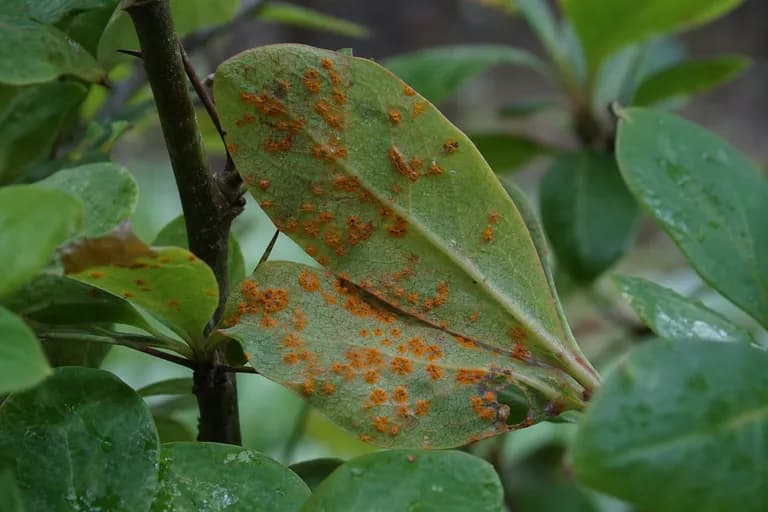
Roya negra del tallo del trigo
EnfermedadPústulas naranja rojizas en el envés de las hojas del agracejo en primavera; esta es la fase de hospedador alternativo de Puccinia graminis, una devastadora enfermedad del trigo.
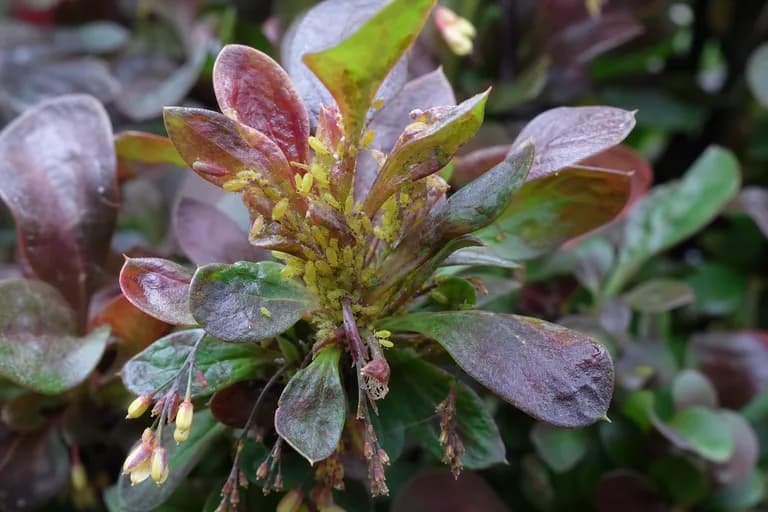
Pulgón del agracejo
PlagaColonias de pequeños pulgones verde amarillentos en los brotes nuevos y los racimos florales; hojas rizadas y menor cuajado.
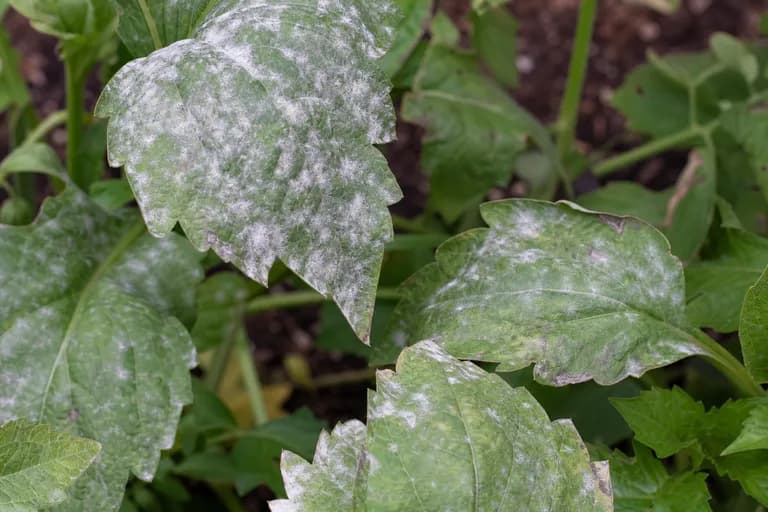
Oídio
EnfermedadCapa blanca y polvorienta sobre las hojas a finales del verano; las hojas afectadas pueden amarillear y caer antes de tiempo.
Solución de problemas comunes
El principal problema del agracejo comestible es su estatus regulado en muchas zonas cerealistas debido a su papel como hospedador alternativo de la roya negra del tallo del trigo. Compruebe siempre la normativa local antes de plantar. Las espinas afiladas hacen que la poda y la cosecha sean una tarea dolorosa sin guantes gruesos. Las bayas son extremadamente ácidas y tienen semillas proporcionalmente grandes, lo que limita su atractivo para el consumo en fresco. Algunas especies ornamentales de Berberis son invasoras; Berberis vulgaris en sí puede sembrarse sola en condiciones favorables. Las aves dispersan las semillas hacia zonas naturales.
Consejos de cultivo
- Antes de plantar, verifique la normativa local: Berberis vulgaris está restringida en algunas regiones cerealistas por su relación con la roya del trigo.
- Plante en pleno sol para maximizar la floración y la producción de bayas, aunque el agracejo también tolera semisombra.
- Las plantas recién establecidas necesitan riegos regulares durante la primera temporada, pero después pueden sobrevivir con muy poca agua.
- Si lo usa como seto, plante en línea y pode ligeramente después de la floración para mantener una forma densa y manejable.
- Proteja las bayas maduras de las aves con malla si desea cosecharlas todas, ya que los pájaros pueden vaciar el arbusto con rapidez.
- Para uso culinario, deje que las bayas pasen por una helada ligera: el frío mejora mucho el sabor y reduce la astringencia.
- No aplique mucho nitrógeno, porque fomentará un crecimiento tierno y abierto en lugar de la estructura densa que hace valioso al arbusto.
- Si quiere secar la cosecha, recoja los racimos cuando estén completamente rojos y termine el secado en una capa fina para evitar moho.
- En jardines secos, combine el agracejo con lavanda, romero y salvia para una plantación resistente a la sequía y de bajo mantenimiento.
- Use siempre guantes gruesos para podar y cosechar: las espinas son largas, afiladas y se clavan con facilidad.
Cultiva tu mejor Agracejo comestible — y todo lo que la rodea.
Empieza un plan gratis hoy. Diseña tus bancales, coloca tu Agracejo comestible y deja que PlotMyGarden gestione el momento, el espaciado, las asociaciones y los recordatorios de la semilla a la cesta.
Elige tu Agracejo comestible
Berberis vulgaris
El agracejo europeo común, con bayas rojas brillantes usadas en la cocina persa; arbusto espinoso que alcanza de 1.8 a 2.4 metros.
Berberis vulgaris var. asperma
Una selección sin semillas o casi sin semillas, muy apreciada para uso culinario, ya que las diminutas bayas suelen contener semillas grandes.
Berberis integerrima
Una especie de Asia central con bayas algo más grandes y mejor adaptación a climas cálidos y secos.
Atropurpurea
Una forma ornamental de hojas púrpuras que también produce bayas rojas comestibles; una planta de gran belleza paisajística e interés en varias estaciones.
Un arbusto de agracejo comestible ya establecido puede dar una cosecha útil de bayas durante muchos años con un coste de mantenimiento muy bajo. Aunque el valor económico directo depende de la región y del acceso al mercado, las bayas secas compradas como zereshk suelen ser bastante más caras que la fruta fresca cultivada en casa. Para un hogar que use agracejo en platos de arroz, salsas y conservas, un solo arbusto puede reemplazar varias compras anuales de ingredientes especializados. Además, al ser una planta muy resistente a la sequía, su gasto en riego puede ser mínimo una vez arraigado.
Recetas rápidas
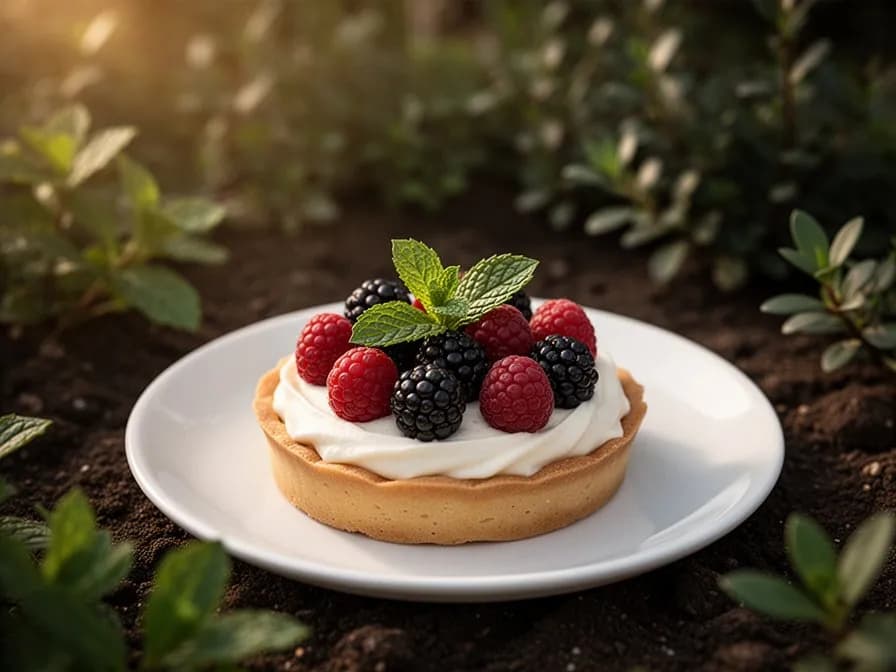
Kétchup de agracejo
45 minutosUn condimento especiado y salado que aprovecha al máximo una abundante cosecha de agracejos. La pectina natural del agracejo da a este kétchup una textura sedosa sin espesantes, y su complejo sabor agridulce combina de maravilla con carnes de caza, quesos intensos y verduras de raíz asadas.
9 ingredientesJarabe de agracejo y azafrán
20 minutosUn jarabe brillante y aromático que concentra la acidez característica del agracejo y la redondea con la calidez del azafrán. Excelente sobre yogur, helado, arroz con leche o para mezclar con agua con gas y obtener una bebida refrescante.
6 ingredientesArroz persa con agracejo
1 horaUn plato clásico iraní en el que el arroz aromático se cubre con agracejos salteados en mantequilla, azafrán y un toque de azúcar. El resultado es un contraste brillante entre dulce, ácido y fragante que convierte una comida simple en algo festivo.
6 ingredientesUsos culinarios
Las bayas secas de agracejo, conocidas como zereshk en la cocina persa, son un ingrediente básico en los platos de arroz iraníes, especialmente el zereshk polo ba morgh (arroz con agracejo y pollo). Las bayas secas, intensamente ácidas, se saltean brevemente en mantequilla con azafrán y azúcar antes de espolvorearse sobre el arroz. Aportan brillo a ensaladas de cereales, rellenos y mezclas de frutos secos. La gelatina de agracejo tiene un color rojo brillante y un sabor intenso, similar al cítrico. Las bayas pueden sustituir a los arándanos rojos en muchas recetas, aportando una acidez parecida.
Qué contiene
Beneficios para la salud
- Las bayas de agracejo aportan una buena cantidad de vitamina C, que favorece la función inmunitaria y la síntesis de colágeno, además de ayudar a proteger las células del estrés oxidativo.
- Su fibra dietética contribuye a una digestión saludable y ayuda a mantener la regularidad intestinal como parte de una alimentación equilibrada.
- Los polifenoles del agracejo, incluida la berberina en menor proporción, se han estudiado por sus posibles efectos sobre el metabolismo de la glucosa y la inflamación.
- El contenido de potasio ayuda a sostener una presión arterial saludable y el equilibrio de líquidos al contrarrestar parte del sodio de la dieta.
- Las bayas secas son una forma concentrada y práctica de incorporar compuestos vegetales antioxidantes a platos salados y cereales.
- Su acidez natural permite usarlas como sustituto de otras frutas ácidas en recetas, añadiendo sabor sin necesidad de grandes cantidades de azúcar.
De dónde viene Agracejo comestible
El agracejo comestible tiene una historia larga y muy ligada a la alimentación y a la medicina de Eurasia. Berberis vulgaris es originario de gran parte de Europa, el norte de África y Asia occidental, donde crece de forma natural en setos, laderas y márgenes de bosques. Sus bayas ácidas se recolectaban desde antiguo como alimento y como conservante ácido natural. En Persia y Asia central, las bayas secas se incorporaron hace siglos a la cocina cotidiana y a la gastronomía ceremonial, especialmente en platos de arroz y guisos especiados.
En Europa medieval, el agracejo se cultivaba tanto por sus bayas como por su corteza y raíces amarillas, ricas en berberina, un colorante y compuesto medicinal muy apreciado. Los herbolarios europeos empleaban diversas partes de la planta para problemas digestivos, afecciones cutáneas y como tónico amargo. Los arbustos también eran valorados como setos defensivos por sus espinas y su capacidad para formar barreras densas e impenetrables.
Con la expansión de la agricultura cerealista a gran escala, la relación del agracejo con la roya negra del trigo se volvió un problema importante en algunas regiones. El hongo Puccinia graminis completa parte de su ciclo vital en Berberis vulgaris, por lo que varios países y estados restringieron o prohibieron su plantación en zonas trigueras. Esa historia fitosanitaria explica por qué el agracejo, aunque útil y tradicional, sigue estando regulado en ciertos lugares.
En la cocina persa, sin embargo, el valor del agracejo nunca desapareció. Las bayas secas, conocidas como zereshk, siguen siendo un ingrediente fundamental en platos emblemáticos y en la repostería regional. Hoy el agracejo comestible ocupa una posición singular: es a la vez planta patrimonial, arbusto ornamental, recurso culinario y ejemplo clásico de cómo una especie puede ser apreciada en un lugar y regulada en otro por razones agrícolas y ecológicas.
Agracejo comestible: ¿sabías que?
Datos fascinantes sobre Agracejo comestible
El agracejo común (Berberis vulgaris) se ha usado durante más de 2.000 años en la medicina popular europea, sobre todo como tónico digestivo y purgante suave, y su uso aparece en la tradición herbolaria antigua.
Agracejo comestible: preguntas frecuentes
¿Cuándo debo plantar Agracejo comestible?
¿En qué zonas de rusticidad puede crecer Agracejo comestible?
¿Cuánto sol necesita Agracejo comestible?
¿A qué distancia debo espaciar Agracejo comestible?
¿Qué plagas y enfermedades afectan a Agracejo comestible?
¿Cómo almaceno Agracejo comestible después de la cosecha?
¿Cuáles son las mejores variedades de Agracejo comestible para cultivar?
¿Qué suelo necesita Agracejo comestible?
¿Se puede comer el agracejo crudo?
¿Necesito dos arbustos de agracejo para obtener fruta?
¿Por qué mi agracejo está prohibido en algunas zonas?
¿Cómo sé cuándo cosechar las bayas de agracejo?
¿Se puede cultivar el agracejo en un seto?
¿Cómo se secan las bayas de agracejo para cocinar?
Acabas de leer la teoría. Ahora cultívala en piloto automático.
Todo lo que hace que Agracejo comestible sea delicado — el momento, el espaciado, las asociaciones, la ventana de cosecha — es justo lo que PlotMyGarden resuelve por ti, para cada planta de tu huerto.
Un plan que conoce tu clima
Indica tu ubicación una vez. Recibe fechas de siembra, abonado y cosecha basadas en tu última helada real y el pronóstico en vivo — sin adivinar con un sobre genérico.
De la sección “Cuándo plantar”Planificador de bancales de arrastrar y soltar
Diseña bancales sobre una cuadrícula. Cada planta encaja con su espaciado correcto y ves toda la temporada antes de gastar un céntimo en semillas.
De la sección “Cultivo”Conflictos de asociación, detectados a tiempo
Más de 200 buenas y malas combinaciones comprobadas en vivo mientras plantas — para que un error que arruine la temporada nunca llegue a la tierra.
De la sección “Asociaciones”Recordatorios que sí vas a seguir
“Riega las judías.” “Recoge hoy antes de que se pase.” Oportunos, concretos y ligados a las plantas que de verdad cultivas.
De la sección “Cosecha”Escalonado, programado
¿Quieres cosechar seis semanas en vez de seis días? Reparte tus siembras automáticamente y te avisa cuando toca el siguiente lote.
De la sección “Cuándo plantar”Un registro que se vuelve más listo
Cada cosecha que registras le enseña tu huerto. El plan del año que viene parte de lo que de verdad funcionó en tu suelo, no en un manual.
De la sección “Resumen”Más Bayas
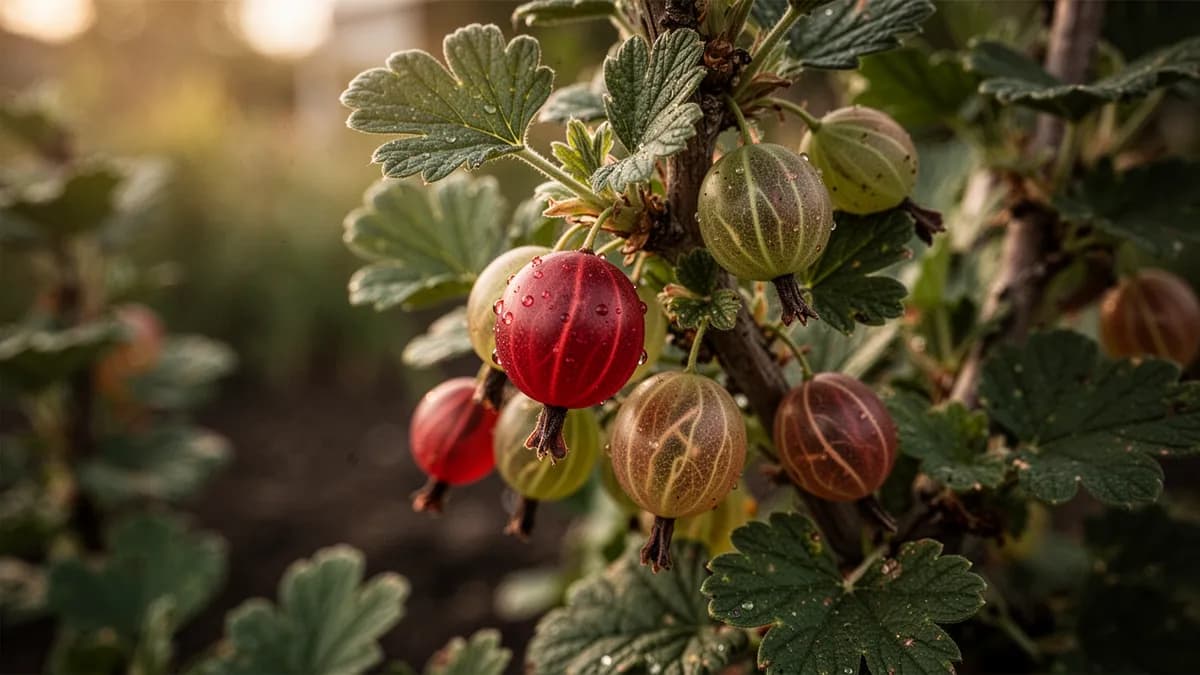
Cultiva tu mejor Agracejo comestible — y todo lo que la rodea.
Empieza un plan gratis hoy. Diseña tus bancales, coloca tu Agracejo comestible y deja que PlotMyGarden gestione el momento, el espaciado, las asociaciones y los recordatorios de la semilla a la cesta.