Melón de Invierno
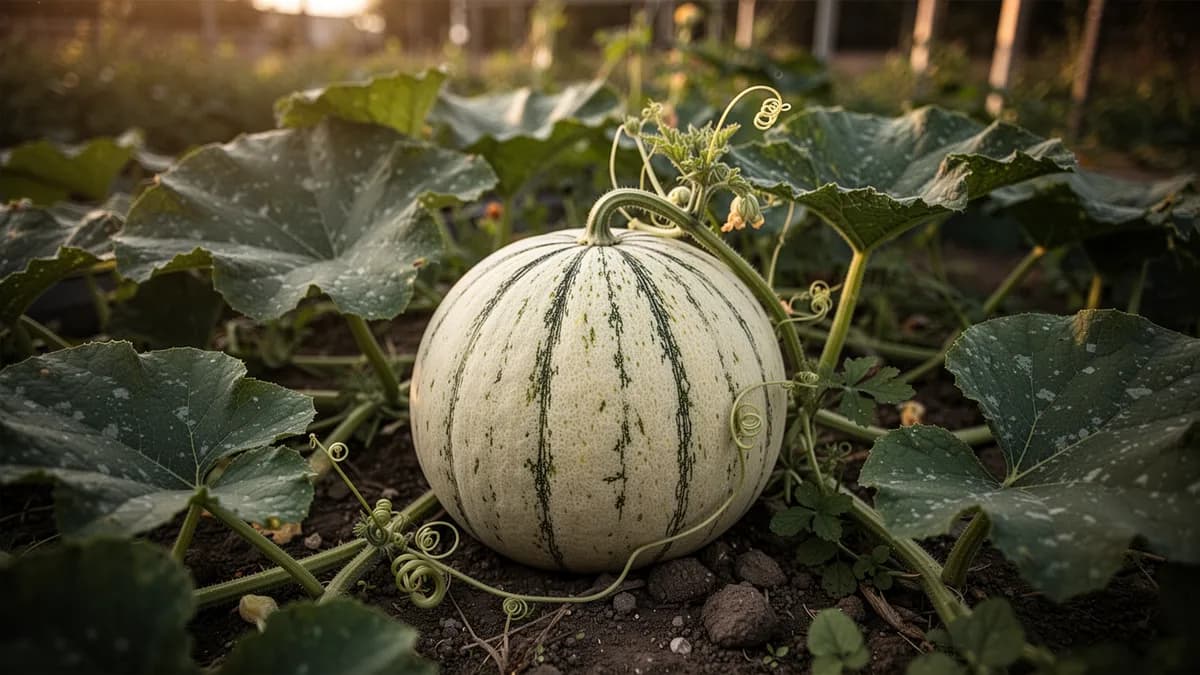
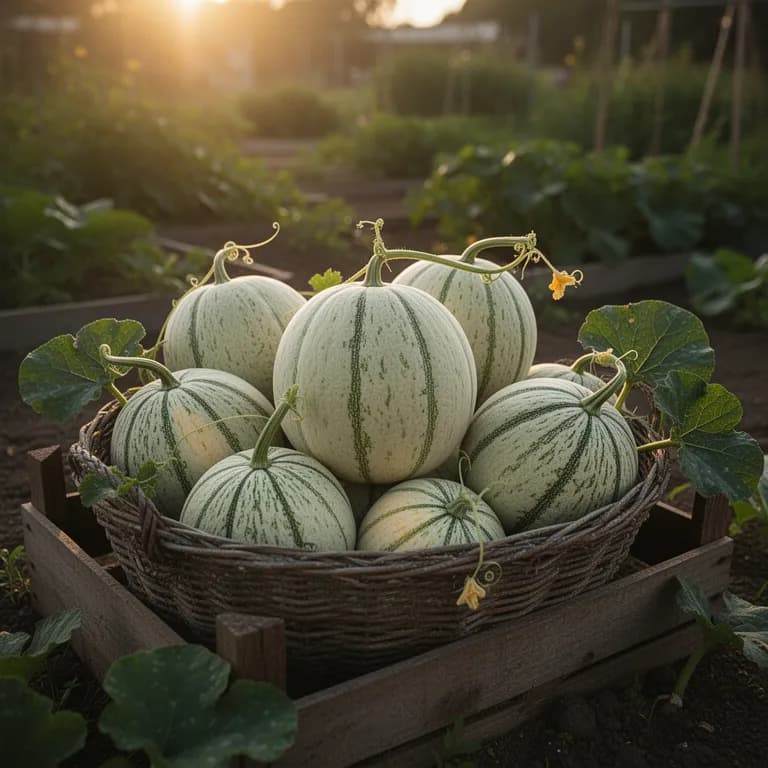
El melón de invierno (Benincasa hispida), también conocido como calabaza de cera, dong gua o wintermelon, es una cucurbitácea trepadora originaria del sudeste asiático que produce frutos enormes de hasta 30-40 kg cubiertos de una capa cerosa blanca.





En esta páginaResumen
Conoce Melón de Invierno
El melón de invierno (Benincasa hispida), también conocido como calabaza de cera, dong gua o wintermelon, es una cucurbitácea trepadora originaria del sudeste asiático que produce frutos enormes de hasta 30-40 kg cubiertos de una capa cerosa blanca. Su pulpa blanca y suave tiene un sabor delicado y neutral que absorbe los sabores de los caldos y salsas, convirtiéndola en un ingrediente esencial de sopas y guisos chinos.
Cuándo plantar Melón de Invierno
Inicie las semillas en interior 4-6 semanas antes de la última helada en macetas individuales grandes, a 2-3 cm de profundidad y 25-30 °C. La germinación tarda 7-14 días. Trasplante al exterior cuando las temperaturas nocturnas superen los 15 °C. También puede sembrar directamente en el exterior en climas con temporadas largas. Endurezca las plántulas gradualmente antes del trasplante.
Tu año de Melón de Invierno
Ajustado a Zona 7 · temporada típica · la helada se va hacia el 2 abr y vuelve hacia el 1 nov
Planta Melón de Invierno May – Jun y cosecha Sep – Nov. Consulta los métodos de plantación y elige tu clima para adaptar los periodos.
Cómo cultivar Melón de Invierno
El melón de invierno necesita mucho espacio, calor y una temporada de crecimiento larga (90-120 días). Elija un lugar a pleno sol con al menos 3-4 metros cuadrados por planta, o cultive en espalderas muy robustas con soporte para los frutos pesados. El suelo debe ser rico, fértil y bien drenado, pH entre 6,0 y 7,0.
Inicie las semillas en interior 4-6 semanas antes de la última helada a 25-30 °C. Trasplante al exterior cuando las temperaturas nocturnas superen los 15 °C. Plante en montículos enriquecidos con abundante compost, separados 2-3 metros entre sí.
Riegue abundante y regularmente, especialmente durante la formación de frutos. Aplique fertilizante orgánico rico en potasio cada 2-3 semanas. Las flores son grandes y amarillas; la planta tiene flores masculinas y femeninas separadas. Si la fructificación es escasa, polinice a mano. Limite a 2-3 frutos por planta para conseguir un buen tamaño.
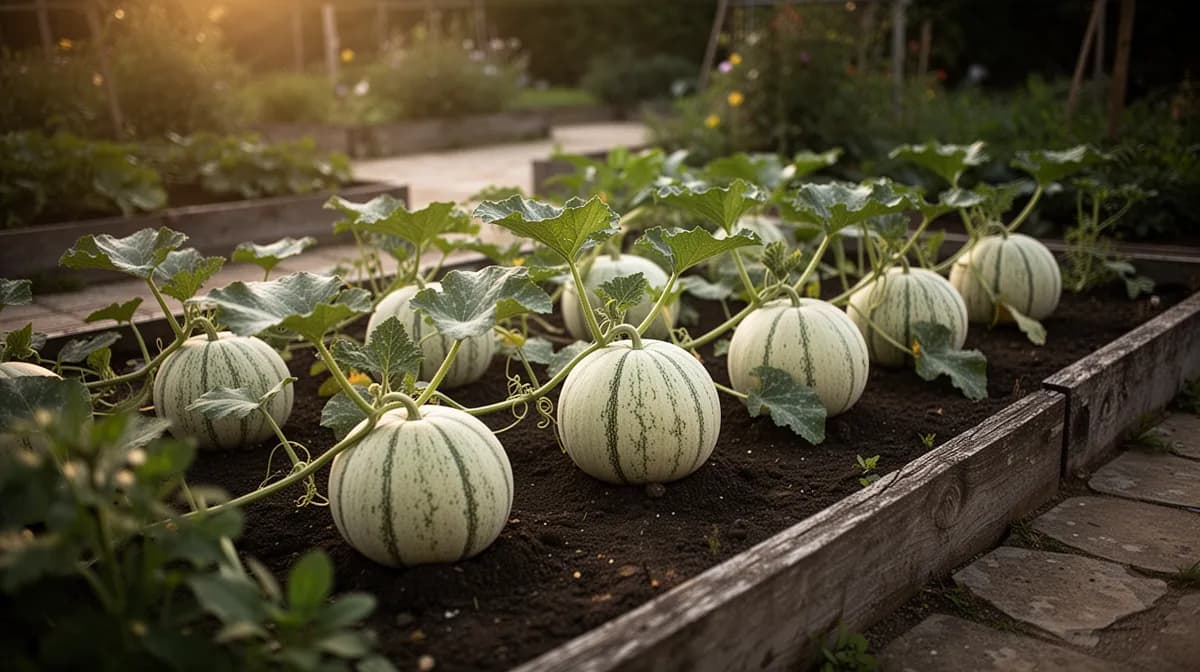
2 plantas caben en un bancal de 120 × 240 cm
Cada Melón de Invierno pide 120 cm de margen. El planificador guarda ese marco por ti — cada planta, cada bancal.
Los mejores vecinos de Melón de Invierno
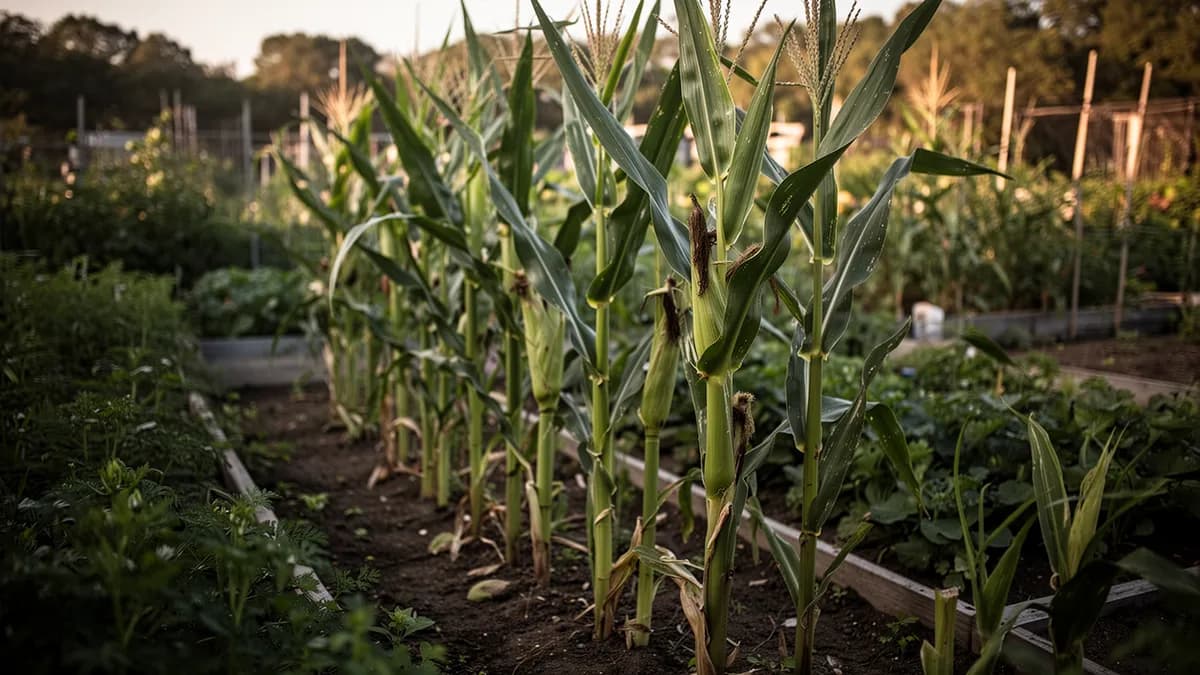
El melón de invierno crece bien junto a maíz y frijoles en el sistema de las tres hermanas tropical. Las caléndulas plantadas alrededor repelen ciertos insectos. Necesita mucho espacio, así que plante cultivos de ciclo corto (lechugas, rábanos) entre las plantas jóvenes que se cosecharán antes de que las enredaderas se extiendan.
Maíz va a su lado.
Saber de huerto de siempre, cotejado con la tabla real de Melón de Invierno — prueba cualquier planta que cultives.
Prueba Melón de Invierno en un bancal, aquí mismo
Un bancal real del planificador con Melón de Invierno ya plantado. Toca una planta compañera para colocarla y mira cómo responde la comprobación de vecinos: verde para buenos vecinos, rojo si hay conflicto.


Guías de cultivo relacionadas
Abónalo bien
El melón de invierno necesita suelo muy rico, profundo y bien drenado con pH entre 6,0 y 7,0. Incorpore abundante compost y estiércol bien descompuesto antes de la plantación. Es una planta de alto consumo de nutrientes; aplique fertilizante orgánico rico en potasio cada 2-3 semanas durante la fructificación para frutos de buen tamaño y calidad.
Temperatura ideal
Compatibilidad de zonas de rusticidad
De la semilla a la cosecha, etapa por etapa
Inicio de semillas
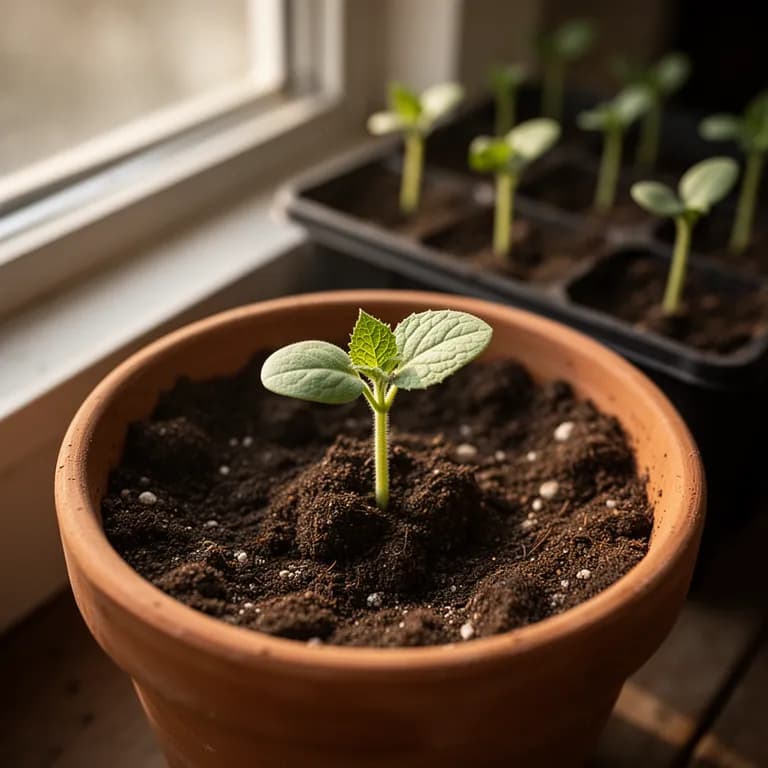
Las semillas germinan en suelo cálido en 7-14 días. Las semillas grandes y planas producen plántulas vigorosas con cotiledones anchos. Las semillas de melón de invierno necesitan una temperatura del suelo constante de al menos 21°C (70°F) para germinar bien y se pudrirán en suelo frío y húmedo.
Establecimiento de la guía
Las hojas verdaderas se desarrollan rápidamente y muestran la característica forma profundamente lobulada. La guía empieza a extenderse por el suelo, produciendo zarcillos que se sujetan a soportes o plantas vecinas. Las raíces se expanden con vigor durante esta fase, formando la base para la gran carga de frutos que vendrá después.
Crecimiento rápido de la guía
Las guías entran en un crecimiento explosivo, alargándose 15-30 cm por día con calor y produciendo hojas grandes y peludas que dan sombra al suelo. La planta emite ramas laterales y zarcillos en todas direcciones. Esta fase de alto gasto energético requiere mucho alimento y humedad constante.
Floración y polinización
Las flores amarillas brillantes se abren por la mañana; primero aparecen las flores masculinas y una o dos semanas después las femeninas. Las flores femeninas se identifican por el pequeño ovario hinchado en la base, parecido a un melón en miniatura. La polinización exitosa requiere actividad de las abejas durante las pocas horas de la mañana en que cada flor permanece abierta.
Desarrollo del fruto
Los frutos polinizados se hinchan rápidamente y, en condiciones ideales, ganan 0,5-1 kg por semana. La cáscara desarrolla su característico recubrimiento blanco ceroso, una capa polvorienta que protege el fruto y da nombre al melón de invierno. Los frutos crecen de oblongos a cilíndricos y alcanzan 30-60 cm de longitud.
Madurez y cosecha
Los frutos alcanzan su tamaño completo, de 5 a 15 kg según la variedad y las condiciones de cultivo. La capa blanca cerosa se vuelve gruesa y polvorienta, y la cáscara se endurece hasta quedar de un verde oscuro bajo la cera. Las hojas de la guía comienzan a amarillear mientras la planta dirige la energía hacia la maduración del fruto. El fruto maduro suena hueco al golpearlo.
Siembra las semillas en interiores 3-4 semanas antes de la última helada en macetas biodegradables para evitar dañar las raíces durante el trasplante. Remoja las semillas 12 horas en agua tibia antes de plantarlas para acelerar la germinación. Mantén la temperatura del suelo en 25-30°C (77-86°F) con una manta térmica.
Cuidar Melón de Invierno mes a mes
Qué hacer cada mes para tu Melón de Invierno
Octubre
Mes actualComplete harvest before the first frost — winter melon cannot tolerate any freezing. Cure harvested fruit in a warm, well-ventilated area for one week. Store in a cool, dry place at 13-15°C (55-60°F) where fruit will keep for 3-6 months or longer.
Ten claro qué hacer en tu huerto, cada mes
Un correo al empezar cada mes: qué sembrar, plantar y hacer ahora mismo — para tu Melón de Invierno y todo lo que crece alrededor. Más un breve curso inicial para esquivar los errores clásicos.
- Qué hacer ahora mismo
- Ajustado a tu temporada
- Curso inicial incluido
Cosechar Melón de Invierno
Coseche el melón de invierno cuando los frutos desarrollen la característica capa cerosa blanquecina en la piel, señal de madurez, generalmente entre 90 y 120 días. La piel debe estar dura y resistir la presión de la uña. Los frutos pueden pesar entre 5 y 40 kg según la variedad. Corte con un cuchillo fuerte dejando un trozo de pedúnculo.
se supone que plantas al comenzar el periodo — indica tu fecha real
cuando la capa blanca cerosa esté completamente desarrollada y la cáscara esté muy dura, o en frutos inmaduros de 8-12 pulgadas mientras la piel siga verde
Almacenamiento y conservación
El melón de invierno entero se conserva durante 3-6 meses en un lugar fresco y seco gracias a su capa cerosa protectora, de ahí su nombre 'de invierno'. Una vez cortado, envuelva en film plástico y refrigere, consumiendo en 5-7 días. La pulpa puede cortarse en cubos y congelarse para uso en sopas.
Qué falla — y cómo solucionarlo
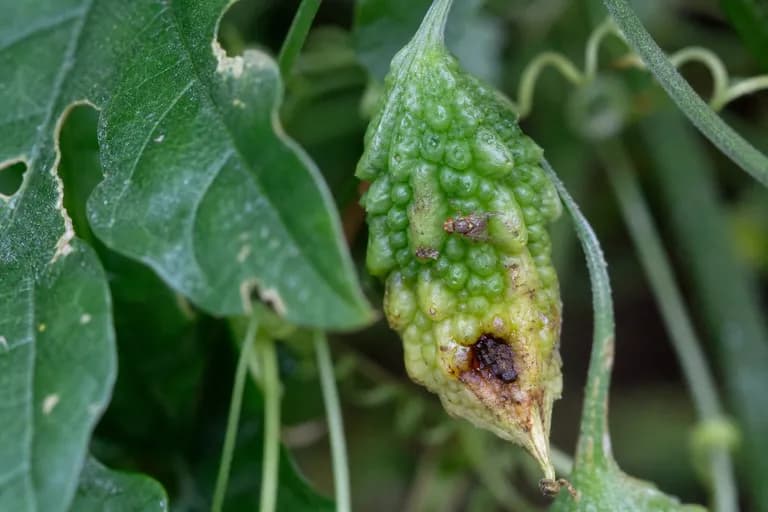
Oídio (Podosphaera xanthii)
EnfermedadPolvo blanquecino en las hojas que reduce la fotosíntesis y debilita la planta. Las hojas afectadas amarillean y se secan progresivamente.
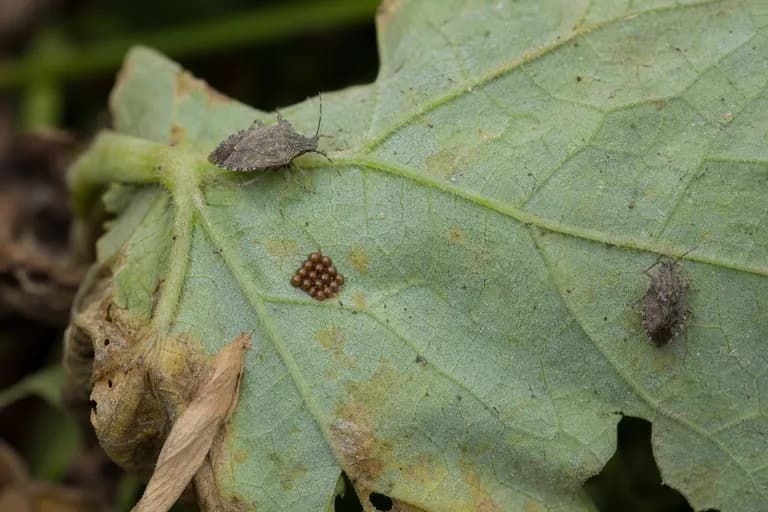
Mosca de la fruta (Bactrocera cucurbitae)
PlagaLas hembras ponen huevos dentro de los frutos jóvenes; las larvas excavan galerías que causan pudrición y caída prematura.
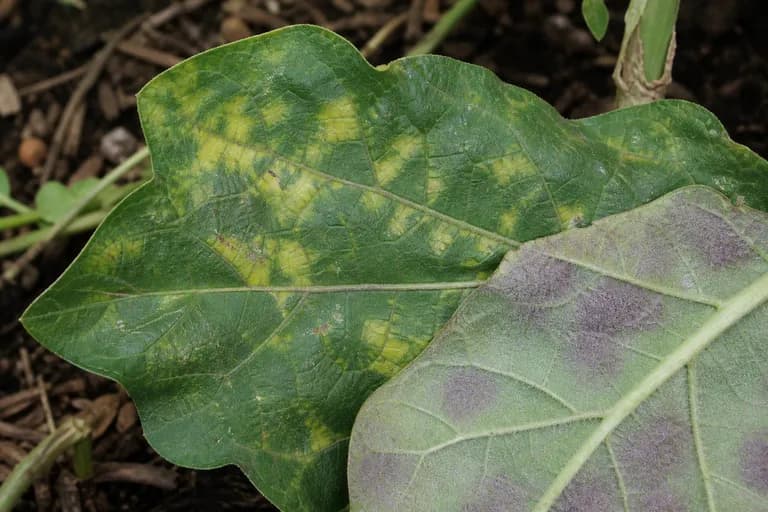
Virus del mosaico del pepino (CMV)
EnfermedadMoteado verde claro y oscuro en las hojas con deformación y enanismo. Los frutos pueden deformarse y presentar manchas irregulares.
Solución de problemas comunes
El principal problema es el espacio: las plantas se extienden 3-5 metros y los frutos son enormes. En jardines pequeños, elija variedades mini o cultive en espaldera robusta con redes que sostengan los frutos. Necesita una temporada cálida larga (90-120 días sin heladas). La polinización puede ser insuficiente; polinice a mano si es necesario.
Consejos de cultivo
- Give winter melon vines room to roam. Each plant needs a minimum of 3-5 meters of spreading space, or a very sturdy trellis rated for at least 25 kg per fruit. Underestimating space requirements is the most common mistake new growers make.
- Start seeds indoors to gain a critical head start on the long growing season. Winter melon needs 100-160 frost-free days to produce mature fruit — in zones 7-8, indoor starting 4-6 weeks before last frost is essential for a successful harvest.
- Rich soil is non-negotiable. Work in at least 10 cm of compost and a generous amount of well-rotted manure before planting. Winter melon is a heavy feeder that needs abundant nutrients to fuel its massive vine growth and large fruit development.
- Hand-pollinate for reliable fruit set, especially in urban gardens with limited pollinator populations. In the early morning when flowers are open, use a small brush or pluck a male flower and touch its pollen directly to the stigma of a female flower.
- Limit fruit count per vine to 2-3 melons if you want the largest possible fruit for long-term storage. More fruit per vine means smaller individual melons. Pinch off additional female flowers once your target fruit count is set.
- Place a thick layer of straw, a wooden board, or a melon cradle under each developing fruit to prevent bottom rot from soil moisture contact. This is especially critical in humid climates or during rainy periods.
- Water consistently with 3-5 cm per week during vine growth and fruit development, then reduce watering as fruit approaches maturity. Drip irrigation is ideal — overhead watering promotes powdery mildew on the large leaf surfaces.
- Harvest timing is critical for storage quality. Wait until the waxy white bloom covers the entire fruit surface and the stem begins to dry and crack. Immature fruit with thin wax coating stores poorly and has weaker flavor.
Cultiva tu mejor Melón de Invierno — y todo lo que la rodea.
Empieza un plan gratis hoy. Diseña tus bancales, coloca tu Melón de Invierno y deja que PlotMyGarden gestione el momento, el espaciado, las asociaciones y los recordatorios de la semilla a la cesta.
Elige tu Melón de Invierno
Giant Winter Melon
La variedad estándar que produce frutos enormes de 15-40 kg con pulpa blanca y sabor delicado. Requiere mucho espacio y una temporada larga. 100-120 días.
Mini Winter Melon
Variedad compacta con frutos de 2-4 kg, ideal para jardines pequeños y consumo familiar. Misma calidad que la variedad grande pero más manejable. 80-95 días.
Fuzzy Melon (Mo Gua)
Variedad cubierta de vellosidad fina en lugar de cera. Frutos más pequeños (1-2 kg) cosechados jóvenes. Textura más tierna. 60-70 días.
Winter melon retails for $1-3 per pound at Asian grocery stores and $3-6 per pound at specialty markets. A single vine producing 20-40 kg of fruit represents $45-120 worth of produce from a $2-3 seed packet. The extraordinary storage life means zero waste — unlike most garden produce, you can consume winter melon at your own pace over 6-12 months without any need for canning, freezing, or dehydrating. Growing your own also gives you access to the freshest possible fruit for soups and stir-fries, with a quality that far surpasses anything shipped long distances.
Recetas rápidas
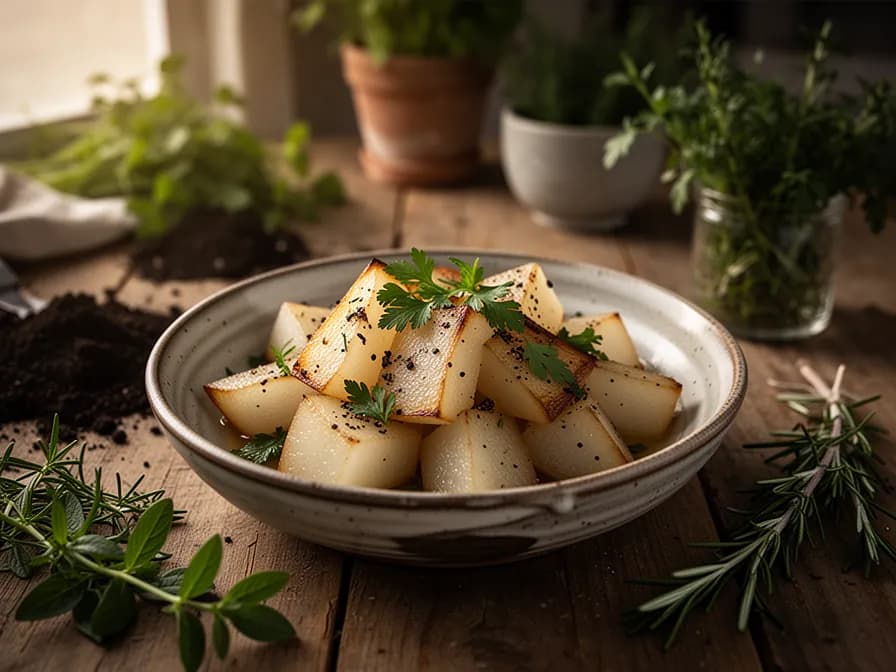
Classic Winter Melon Soup
45 minA light, nourishing Chinese soup where cubes of winter melon become beautifully translucent as they simmer in a savory broth with dried shrimp and goji berries. This is the most traditional and beloved way to prepare winter melon across East and Southeast Asia.
8 ingredientesStir-Fried Winter Melon with Garlic and Oyster Sauce
20 minSliced winter melon stir-fried at high heat with garlic and a savory oyster sauce glaze. The slices maintain a pleasant bite while absorbing the rich umami flavors — a quick weeknight side dish that pairs beautifully with steamed rice.
8 ingredientesWinter Melon and Pork Rib Stew
90 minA hearty, comforting stew where fall-apart tender pork ribs and soft winter melon chunks meld together in a deeply savory broth. Slow simmering extracts collagen from the ribs and infuses the melon with rich pork flavor.
10 ingredientesUsos culinarios
El melón de invierno es un ingrediente fundamental de la cocina china. Su pulpa blanca y neutra absorbe los sabores del caldo, haciéndola ideal para sopas como la sopa de melón de invierno con cerdo y gambas secas. Se corta en cubos y se añade a guisos, estofados y currys. En la cocina cantonesa se utiliza como recipiente natural para sopas servidas dentro del melón vaciado. También se prepara en dulces y bebidas en el sudeste asiático.
Qué contiene
Beneficios para la salud
- Extremely low in calories at only 12 per 100g — winter melon is one of the lowest-calorie foods available, making it an excellent choice for weight management and calorie-controlled diets without sacrificing volume or satiety.
- The high water content of approximately 96% makes winter melon a superb hydrating food during hot weather, helping to maintain fluid balance and supporting kidney function — a benefit recognized in traditional Chinese medicine for centuries.
- Contains no fat and virtually no sodium, making it naturally heart-healthy and suitable for low-sodium diets prescribed for hypertension and cardiovascular disease.
- Rich in dietary fiber at 2.9g per 100g, supporting digestive regularity, promoting beneficial gut bacteria, and contributing to feelings of fullness that aid in appetite control.
- Provides vitamin C (14% DV per 100g) which supports immune function, collagen synthesis for healthy skin, and acts as an antioxidant to help protect cells from oxidative damage.
- Traditional Chinese and Ayurvedic medicine systems have used winter melon for millennia as a diuretic food that reduces water retention and edema — modern research supports its mild diuretic properties related to its high potassium-to-sodium ratio and water content.
De dónde viene Melón de Invierno
Winter melon (Benincasa hispida) is native to Southeast Asia, with its center of origin believed to be in the region spanning southern China, Indonesia, and the Malay Peninsula. Archaeological evidence suggests it has been cultivated for at least 2,000 years, with references appearing in ancient Chinese agricultural texts from the Han Dynasty period. The plant spread throughout tropical and subtropical Asia along ancient trade routes, becoming a dietary staple in China, Japan, India, and across Southeast Asia.
In traditional Chinese medicine, winter melon has been classified as a cooling food for centuries, prescribed to reduce excess body heat, relieve water retention, and support kidney function. This medicinal reputation, combined with its extraordinary storage qualities — whole fruits can last 6-12 months in a cool, dry place without refrigeration — made winter melon an invaluable food crop in an era before modern preservation methods. The ability to harvest in summer and eat throughout winter gave the fruit its common English name.
Winter melon plays important roles in the cuisines of nearly every Asian culture. In China, it is essential in soups, stews, and elaborate banquet presentations. In India, it is known as 'petha' and is used to make a beloved translucent candy of the same name, famous in the city of Agra. In Southeast Asia, it appears in savory curries, sweet desserts, and the enormously popular winter melon tea. Today, winter melon is grown commercially across tropical Asia, with China and India being the largest producers. It has gained a foothold in home gardens worldwide wherever summers are warm enough, and is increasingly available in international grocery stores, introducing this ancient Asian staple to new audiences around the globe.
Melón de Invierno: ¿sabías que?
Datos fascinantes sobre Melón de Invierno
Despite its name, winter melon is a warm-season crop that must be grown during summer — the 'winter' in its name refers to its extraordinary storage life of 6-12 months, allowing summer-harvested fruit to be eaten throughout the winter.
Melón de Invierno: preguntas frecuentes
¿Cuándo debo plantar Melón de Invierno?
¿Cuáles son buenas plantas acompañantes para Melón de Invierno?
¿En qué zonas de rusticidad puede crecer Melón de Invierno?
¿Cuánto sol necesita Melón de Invierno?
¿A qué distancia debo espaciar Melón de Invierno?
¿Qué plagas y enfermedades afectan a Melón de Invierno?
¿Cómo almaceno Melón de Invierno después de la cosecha?
¿Cuáles son las mejores variedades de Melón de Invierno para cultivar?
¿Qué suelo necesita Melón de Invierno?
How do I know when winter melon is ready to harvest?
How long can I store winter melon after harvest?
Can I grow winter melon vertically on a trellis?
Why are my winter melon flowers falling off without producing fruit?
Is winter melon the same as wax gourd or ash gourd?
Can I eat winter melon raw or does it need to be cooked?
Acabas de leer la teoría. Ahora cultívala en piloto automático.
Todo lo que hace que Melón de Invierno sea delicado — el momento, el espaciado, las asociaciones, la ventana de cosecha — es justo lo que PlotMyGarden resuelve por ti, para cada planta de tu huerto.
Un plan que conoce tu clima
Indica tu ubicación una vez. Recibe fechas de siembra, abonado y cosecha basadas en tu última helada real y el pronóstico en vivo — sin adivinar con un sobre genérico.
De la sección “Cuándo plantar”Planificador de bancales de arrastrar y soltar
Diseña bancales sobre una cuadrícula. Cada planta encaja con su espaciado correcto y ves toda la temporada antes de gastar un céntimo en semillas.
De la sección “Cultivo”Conflictos de asociación, detectados a tiempo
Más de 200 buenas y malas combinaciones comprobadas en vivo mientras plantas — para que un error que arruine la temporada nunca llegue a la tierra.
De la sección “Asociaciones”Recordatorios que sí vas a seguir
“Riega las judías.” “Recoge hoy antes de que se pase.” Oportunos, concretos y ligados a las plantas que de verdad cultivas.
De la sección “Cosecha”Escalonado, programado
¿Quieres cosechar seis semanas en vez de seis días? Reparte tus siembras automáticamente y te avisa cuando toca el siguiente lote.
De la sección “Cuándo plantar”Un registro que se vuelve más listo
Cada cosecha que registras le enseña tu huerto. El plan del año que viene parte de lo que de verdad funcionó en tu suelo, no en un manual.
De la sección “Resumen”Planta estos junto a Melón de Invierno
Más Cucurbitáceas
Cultiva tu mejor Melón de Invierno — y todo lo que la rodea.
Empieza un plan gratis hoy. Diseña tus bancales, coloca tu Melón de Invierno y deja que PlotMyGarden gestione el momento, el espaciado, las asociaciones y los recordatorios de la semilla a la cesta.