Calabaza Turbante
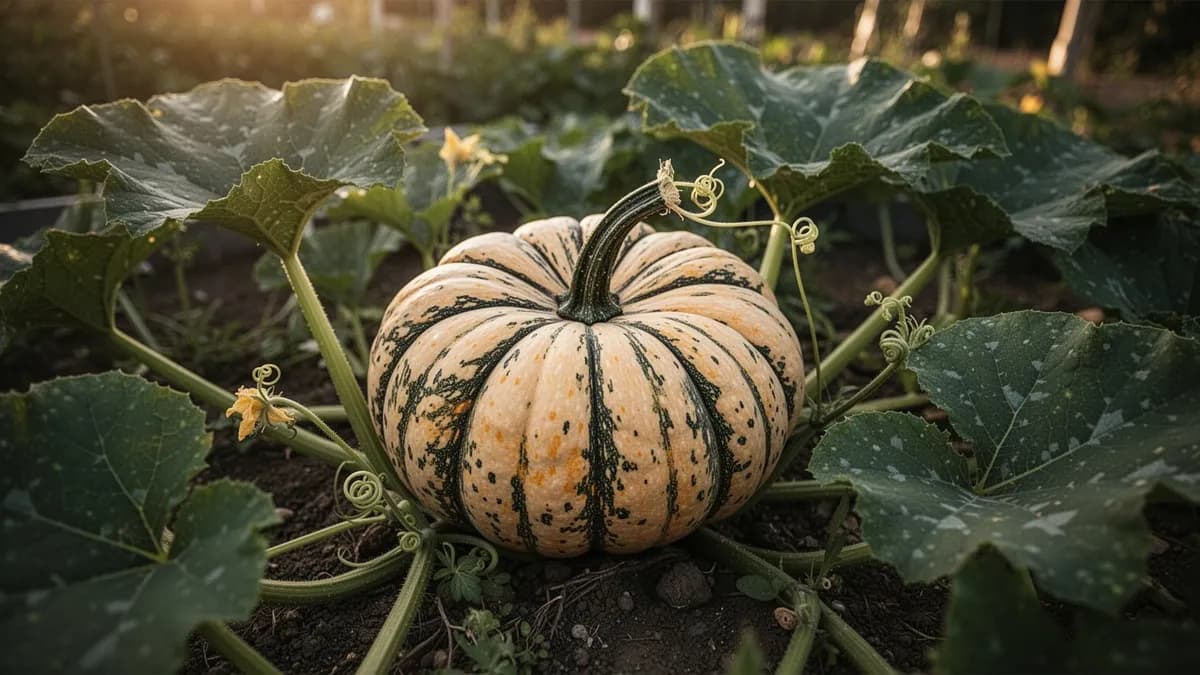
La calabaza Turbante (Cucurbita maxima) es una variedad ornamental y comestible espectacular, reconocible al instante por su forma característica que recuerda a un turbante otomano con una protuberancia superior multicolor.





En esta páginaResumen
Conoce Calabaza Turbante
La calabaza Turbante (Cucurbita maxima) es una variedad ornamental y comestible espectacular, reconocible al instante por su forma característica que recuerda a un turbante otomano con una protuberancia superior multicolor. Sus frutos combinan tonos de naranja, verde, blanco y rojo, y su pulpa dulce y ligeramente harinosa la hace apta tanto para decoración otoñal como para uso culinario.
Cuándo plantar Calabaza Turbante
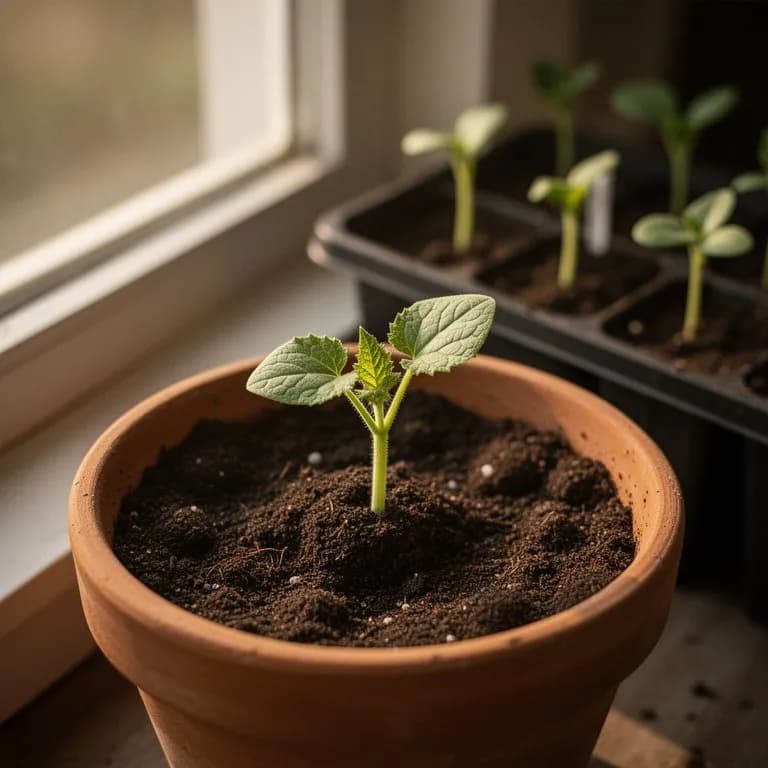
Sembrar en interior 3-4 semanas antes de la última helada en macetas individuales de 8-10 cm a 2 cm de profundidad, manteniendo 22-27 °C para germinar en 7-10 días. Trasplantar con cuidado al exterior cuando el suelo supere los 18 °C. En climas cálidos se puede sembrar directamente en el exterior en mayo-junio.
Tu año de Calabaza Turbante
Ajustado a Zona 7 · temporada típica · la helada se va hacia el 2 abr y vuelve hacia el 1 nov
Planta Calabaza Turbante May – Jun y cosecha Sep – Oct. Consulta los métodos de plantación y elige tu clima para adaptar los periodos.
Cómo cultivar Calabaza Turbante
La calabaza Turbante necesita pleno sol y mucho espacio, ya que sus guías rastreras pueden extenderse 4-6 metros en todas direcciones. Prepare el suelo con abundante compost y estiércol bien descompuesto, creando montículos elevados de 30 cm para mejorar el drenaje y la temperatura del suelo.
Siembre directamente o trasplante después de las últimas heladas cuando el suelo alcance al menos 18 °C, dejando 1,5-2 metros entre plantas. Riegue profundamente y con regularidad durante la floración y el cuajado de frutos, reduciendo gradualmente el riego a medida que los frutos maduran para favorecer el endurecimiento de la corteza.
Fertilice cada dos semanas con un abono rico en fósforo y potasio durante la fructificación. Limite a 2-3 frutos por planta para obtener calabazas de buen tamaño y color intenso. Coloque una tabla o lecho de paja debajo de cada fruto para protegerlo del contacto directo con el suelo húmedo y prevenir pudriciones.
2 plantas caben en un bancal de 120 × 240 cm
Cada Calabaza Turbante pide 120 cm de margen. El planificador guarda ese marco por ti — cada planta, cada bancal.
Los mejores vecinos de Calabaza Turbante
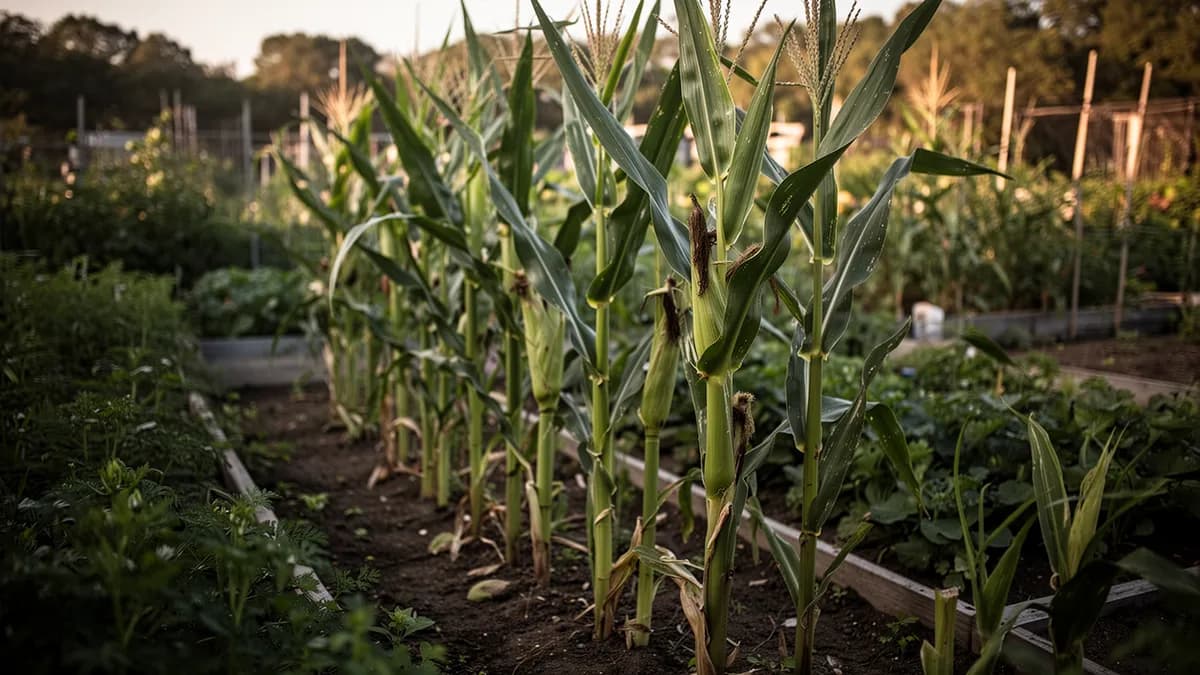
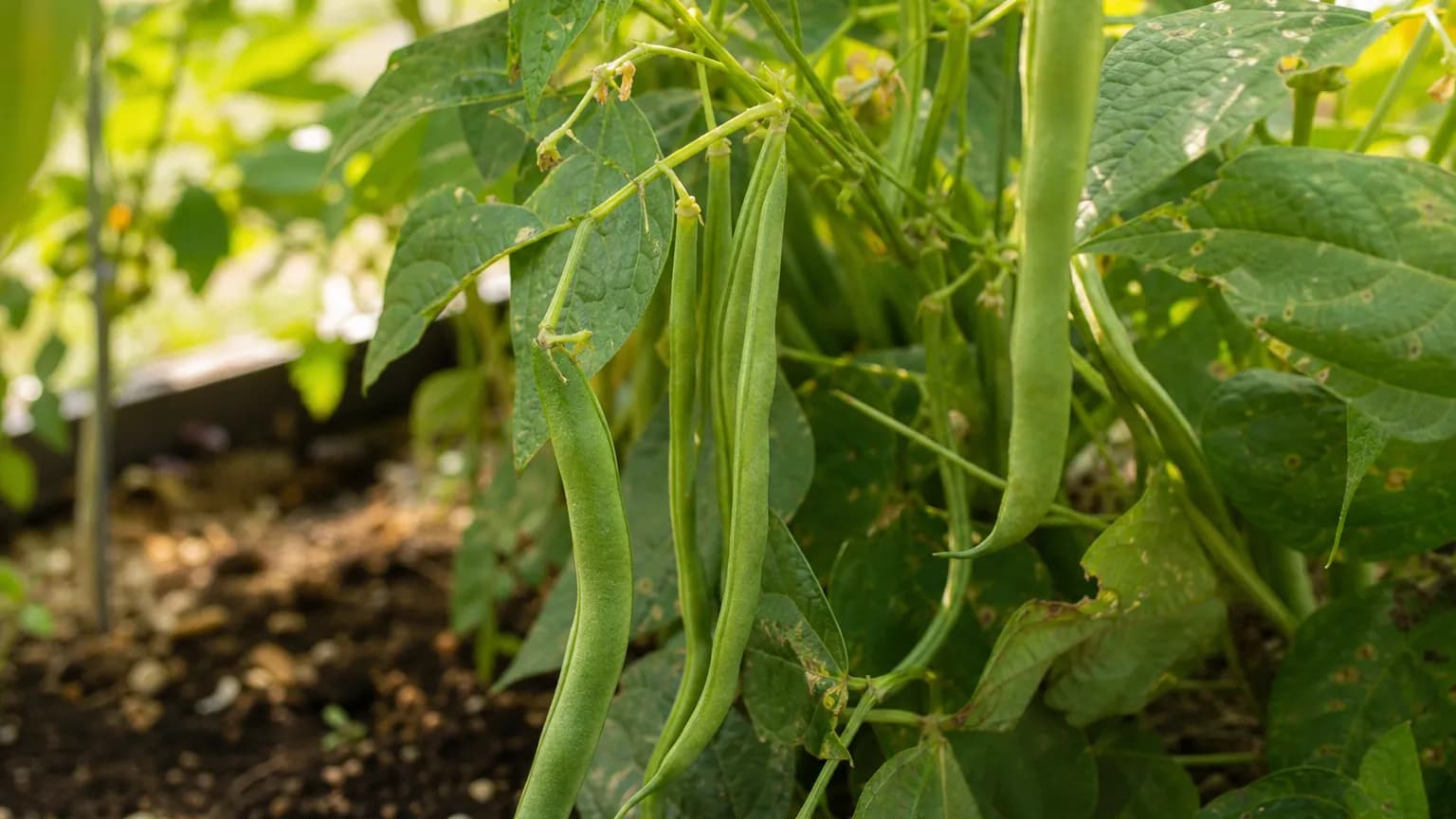
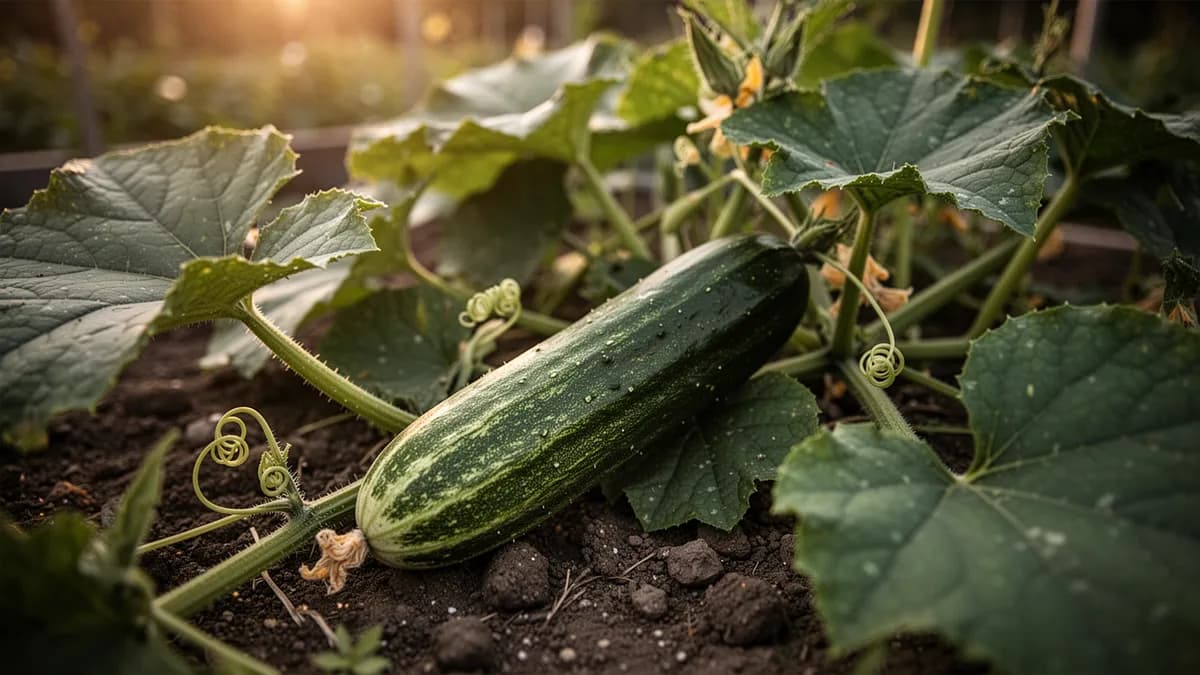
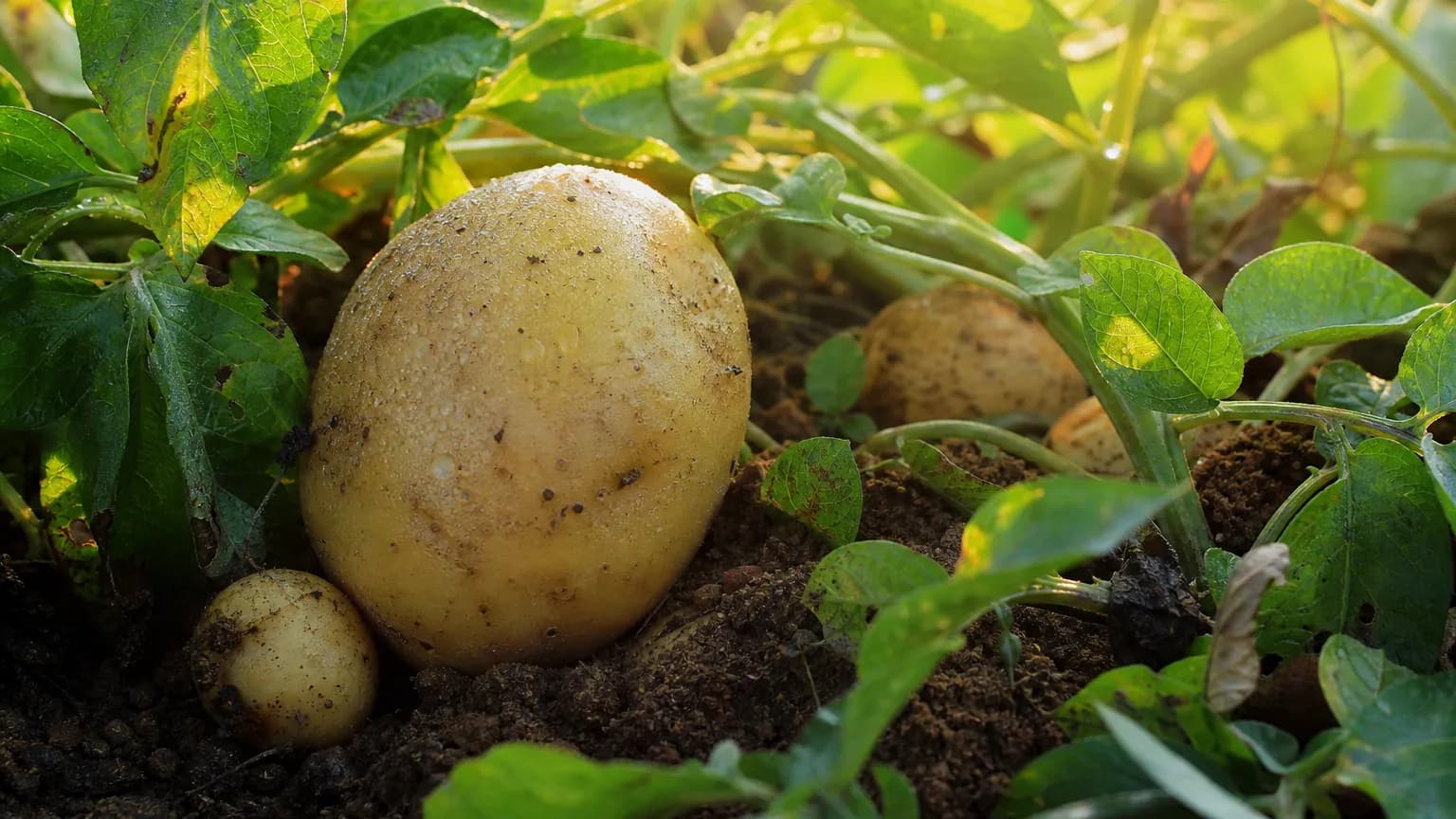
Forma parte de la asociación tradicional de las tres hermanas junto con el maíz y los frijoles trepadores, una combinación sinérgica de cultivos de origen mesoamericano. Los girasoles y las caléndulas son excelentes compañeros que atraen polinizadores, mientras que debe evitarse la proximidad con patatas y otras cucurbitáceas.
Maíz va a su lado. Papa no.
Saber de huerto de siempre, cotejado con la tabla real de Calabaza Turbante — prueba cualquier planta que cultives.
Prueba Calabaza Turbante en un bancal, aquí mismo
Un bancal real del planificador con Calabaza Turbante ya plantado. Toca una planta compañera para colocarla y mira cómo responde la comprobación de vecinos: verde para buenos vecinos, rojo si hay conflicto.


Guías de cultivo relacionadas
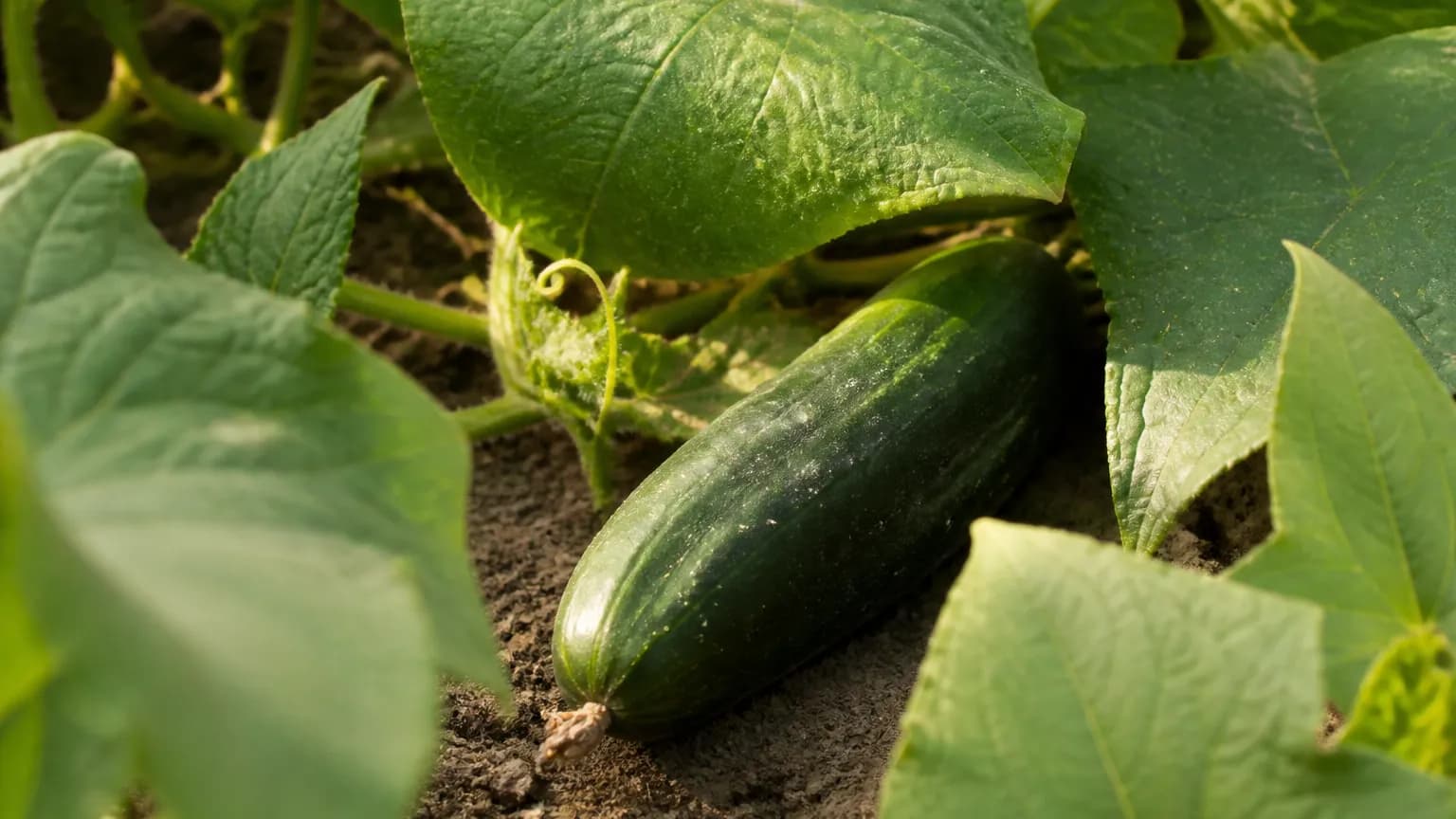
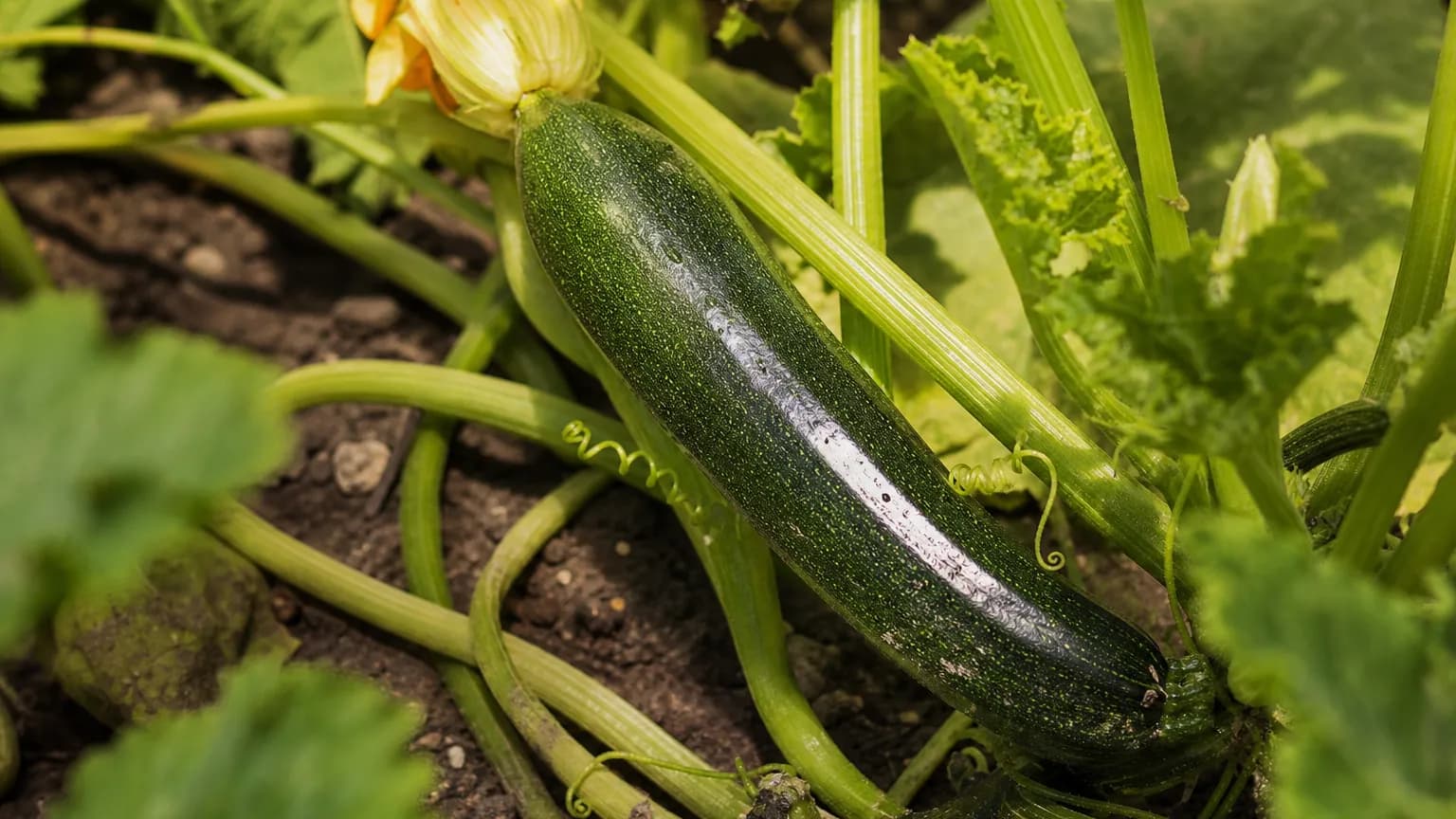
Abónalo bien
Requiere un suelo muy fértil, profundo y bien drenado con pH entre 6,0 y 7,0, generosamente enmendado con compost y estiércol bien descompuesto. Aplique fertilizante rico en potasio y fósforo cada dos semanas durante la fructificación para producir frutos de buen tamaño y color intenso.
Temperatura ideal
Compatibilidad de zonas de rusticidad
De la semilla a la cosecha, etapa por etapa
Inicio de la siembra
Las semillas germinan en suelo cálido y primero emiten una gruesa raíz pivotante blanca antes de que dos cotiledones anchos y redondeados asomen a la superficie. La germinación requiere temperaturas del suelo de al menos 18 °C y tarda de 5 a 10 días. Las semillas grandes contienen reservas de energía abundantes para un crecimiento temprano vigoroso.
Desarrollo de la enredadera
Aparecen las hojas verdaderas con la característica forma grande y lobulada del calabacero. Las enredaderas empiezan a extenderse con rapidez, emitiendo zarcillos que se aferran a todo lo que tocan. El sistema radicular se expande velozmente y la guía principal puede crecer de 10 a 15 cm por día en condiciones cálidas.
Floración
Las flores grandes y de color amarillo brillante se abren por la mañana. Primero aparecen las flores masculinas en tallos largos, seguidas 7 a 10 días después por las flores femeninas, reconocibles por la pequeña hinchazón en su base. Cada flor se abre solo un día y debe ser polinizada por abejas o a mano durante esa ventana.
Desarrollo del fruto
Los frutos polinizados con éxito se hinchan rápidamente y el distintivo capuchón turbanado comienza a formarse cuando el extremo de la flor se abulta hacia fuera en segmentos lobulados y coloridos. La piel del fruto pasa de verde a su combinación madura de naranja, crema y verde a lo largo de varias semanas. Cada planta suele cuajar de 3 a 5 frutos.
Maduración
El fruto alcanza su tamaño completo de 2 a 4 kg y la cáscara se endurece progresivamente. Los colores se intensifican hasta su patrón final y vivo de naranja, verde, crema y a veces rojo. El tallo que conecta el fruto con la planta se seca y se vuelve corchoso. Las hojas empiezan a amarillear y a decaer mientras la planta canaliza toda su energía hacia la maduración.
Cosecha y curado
Cosecha cuando el tallo esté completamente seco y corchoso, la cáscara esté totalmente dura y los colores sean intensos. Corta el tallo con tijeras dejando un mango de 5 a 7 cm. Cura en un lugar cálido, seco y bien ventilado a 27 a 30 °C durante 10 a 14 días para endurecer la piel y sanar pequeñas heridas.
Siembra las semillas a 2,5 cm de profundidad después de que haya pasado todo riesgo de heladas y el suelo esté constantemente cálido. Si comienzas en interior, usa macetas grandes y biodegradables para no perturbar el sistema radicular sensible durante el trasplante.
Cuidar Calabaza Turbante mes a mes
Qué hacer cada mes para tu Calabaza Turbante
Octubre
Mes actualHarvest mature squash before hard frost. Cut stems with pruners leaving 5-7 cm attached. Cure in a warm, well-ventilated area at 27-30°C for 10-14 days. Remove all vines and debris from the garden bed.
Ten claro qué hacer en tu huerto, cada mes
Un correo al empezar cada mes: qué sembrar, plantar y hacer ahora mismo — para tu Calabaza Turbante y todo lo que crece alrededor. Más un breve curso inicial para esquivar los errores clásicos.
- Qué hacer ahora mismo
- Ajustado a tu temporada
- Curso inicial incluido
Cosechar Calabaza Turbante
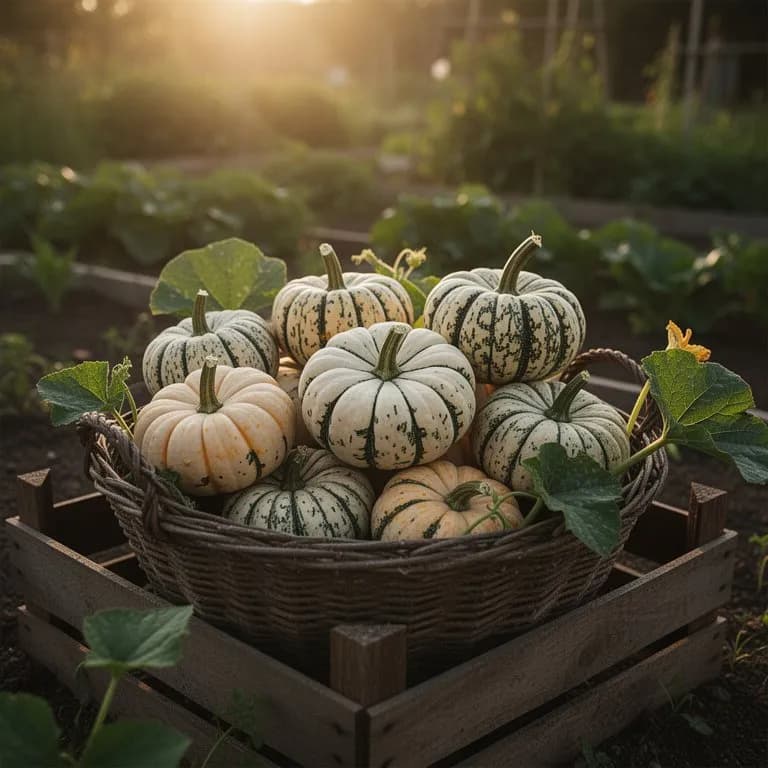
Cosechar cuando la corteza esté completamente dura y no se pueda rayar con la uña, generalmente entre 90 y 110 días después de la siembra. Corte con tijeras dejando al menos 10 cm de pedúnculo adherido para prolongar la conservación y evitar la entrada de patógenos por la herida de corte.
se supone que plantas al comenzar el periodo — indica tu fecha real
Coloca una tabla, paja o cartón debajo de los frutos en desarrollo para evitar la pudrición por contacto con el suelo. Reduce ligeramente el riego para concentrar los azúcares en la pulpa. No muevas ni gires los frutos en la planta, ya que esto puede dañar la unión del tallo.
Almacenamiento y conservación
Curar al sol durante 10-14 días después de la cosecha para endurecer completamente la corteza, luego almacenar en un lugar fresco, seco y ventilado entre 10-15 °C donde se conservan durante 3-6 meses. También se puede cocinar la pulpa y congelarla en porciones para uso posterior en sopas y purés.
Qué falla — y cómo solucionarlo
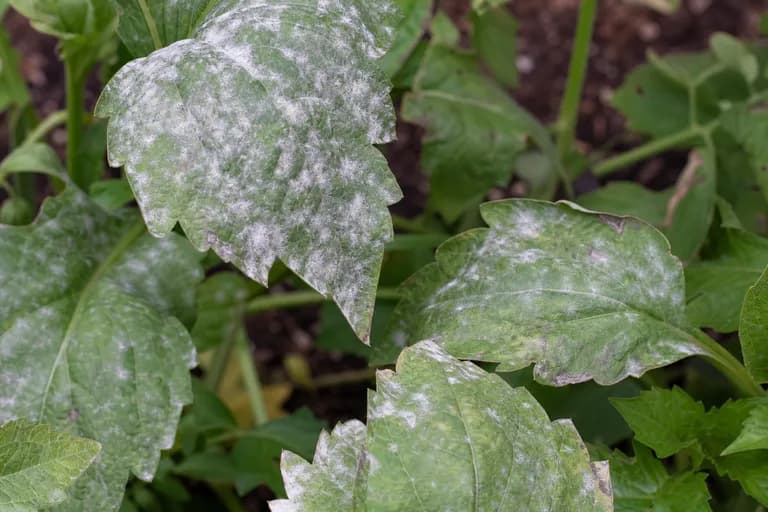
Oídio
EnfermedadManchas blancas pulverulentas en las hojas que se expanden gradualmente cubriendo toda la superficie foliar, reduciendo la capacidad fotosintética y la calidad de los frutos.
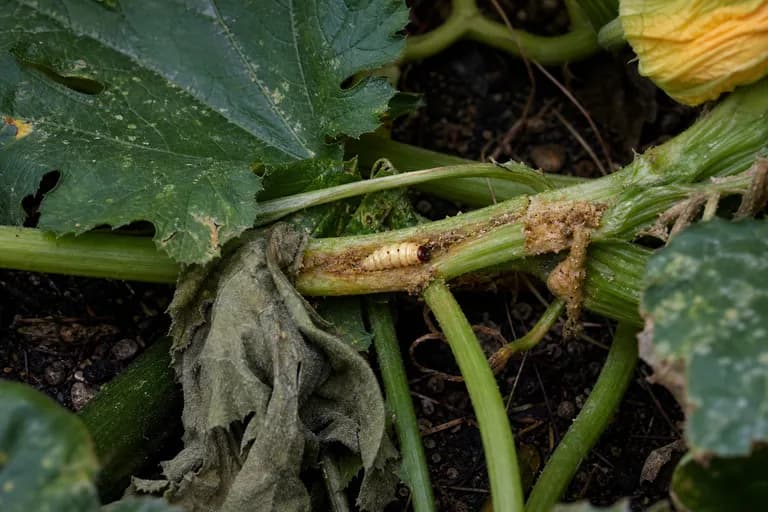
Barrenador de la vid
PlagaLas larvas excavan galerías en los tallos causando marchitez repentina de secciones enteras de la guía, con excrementos de aspecto de serrín visible en la base del tallo afectado.
Podredumbre del fruto
EnfermedadManchas blandas y acuosas en la parte inferior del fruto que contacta con el suelo, extendiéndose rápidamente y destruyendo la calabaza antes de su maduración.
Solución de problemas comunes
Necesita una temporada de crecimiento larga de al menos 100 días sin heladas, lo que puede ser problemático en climas frescos. Sus guías extensas requieren mucho espacio y pueden invadir áreas del huerto destinadas a otros cultivos si no se guían y podan adecuadamente.
Consejos de cultivo
- Build planting hills enriched with generous amounts of aged compost and well-rotted manure. Turban squash is a heavy feeder and the best fruit quality comes from rich, fertile soil with a pH of 6.0-6.8.
- Allow 2-3 meters of space per plant for the sprawling vines — overcrowding leads to poor air circulation, increased disease pressure, and fewer fruit per plant. Alternatively, train vines up a sturdy trellis with slings to support developing fruit.
- Pollination is the critical make-or-break step. Female flowers open for only one day. If you see female flowers wilting without setting fruit, hand-pollinate early in the morning using a soft brush to transfer pollen from a male flower's anther to the female flower's stigma.
- Limit each vine to 3-5 developing fruit by removing additional female flowers after your target number has set. This concentrates the plant's energy into fewer, larger, higher-quality squash with better color and longer storage life.
- Water consistently during vine growth and fruit development — 2.5 cm per week — but reduce watering as fruit approaches maturity. Excess moisture late in the season promotes rot and reduces the rind's ability to cure properly.
- Prevent fruit rot by placing a board, thick straw pad, or piece of cardboard beneath each developing squash. Direct soil contact in wet conditions is the primary cause of bottom rot in winter squash.
- Harvest timing is critical for storage success. The stem must be fully dry and corky, the rind must resist a fingernail scratch, and the ground spot (where the fruit rests on the soil) should have changed from white to cream or yellow.
- Cure squash for 10-14 days in a warm, dry, well-ventilated location before moving to cool storage. Proper curing toughens the skin, heals harvest wounds, and can double the storage life from 2-3 months to 4-6 months.
Cultiva tu mejor Calabaza Turbante — y todo lo que la rodea.
Empieza un plan gratis hoy. Diseña tus bancales, coloca tu Calabaza Turbante y deja que PlotMyGarden gestione el momento, el espaciado, las asociaciones y los recordatorios de la semilla a la cesta.
Elige tu Calabaza Turbante
Turk's Turban
La variedad clásica con frutos de 1,5-3 kg que combinan colores naranja, verde, blanco y rojo en patrones únicos. Excelente como decoración otoñal, madura en 95-110 días.
Giraumon Turban
Variedad francesa con frutos más grandes de 3-5 kg y pulpa más dulce y densa ideal para cocinar. Colores vivos y forma de turbante pronunciada, madura en 100-115 días.
American Turban
Selección americana con frutos medianos de 2-4 kg y colores predominantemente naranja y verde. Buena productividad y excelente para sopas, madura en 95-105 días.
Turban squash seeds cost $2-4 per packet, and each plant can produce 3-5 squash worth $4-8 each at farmers markets, where specialty winter squash commands premium prices. A single hill of turban squash can yield $15-40 worth of produce. The exceptional storage life of 3-6 months means your harvest provides fresh, home-grown squash well into winter, replacing store-bought butternut or other winter squash at $2-4 per pound. The ornamental value adds further savings — a single decorative turban squash at a farm stand or craft store costs $5-10.
Recetas rápidas
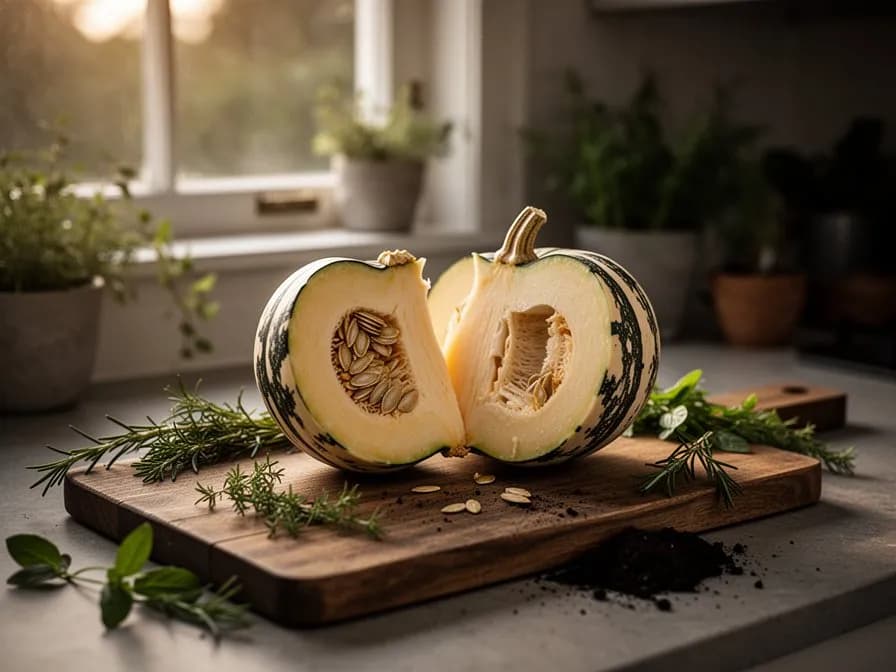
Stuffed Turban Squash
55 minThe turban cap lifts off to create a natural lid, and the hollowed body becomes a stunning edible serving bowl. Filled with a savory mix of wild rice, cranberries, and herbs, then baked until the flesh is fork-tender and golden.
9 ingredientes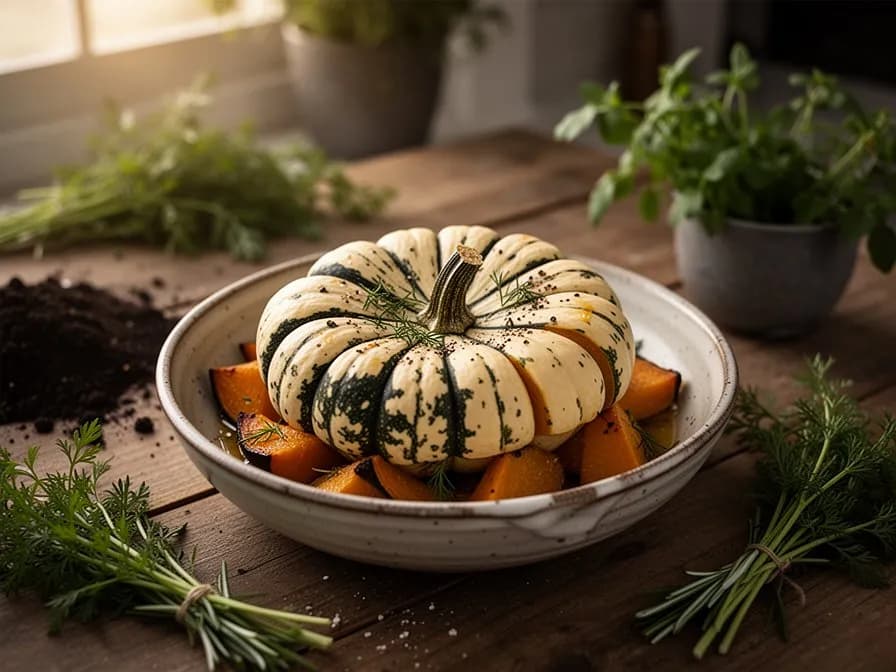
Roasted Turban Squash Wedges
40 minThick wedges roasted at high heat until deeply caramelized and tender, bringing out the sweet, nutty flavor. A drizzle of maple glaze and a sprinkle of smoked salt make this a showstopping autumn side dish.
7 ingredientesTurban Squash and Apple Soup
45 minA silky, warming soup that pairs the sweet flesh of turban squash with tart apples and warming spices. Finished with a swirl of cream and toasted pumpkin seeds for contrast and crunch.
9 ingredientesUsos culinarios
La pulpa dulce y ligeramente harinosa es excelente para sopas cremosas, purés, horneada con mantequilla y especias como canela y nuez moscada, y en gratinados otoñales. Las calabazas pequeñas se pueden usar como recipiente decorativo y comestible para servir sopas o guisos directamente en la mesa.
Qué contiene
Beneficios para la salud
- Exceptionally high in beta-carotene, which the body converts to vitamin A — essential for maintaining healthy vision, robust immune function, and proper cell growth and differentiation.
- Rich in antioxidants including beta-carotene, alpha-carotene, and lutein that help neutralize free radicals and may reduce the risk of certain cancers and age-related macular degeneration.
- Good source of dietary fiber that supports digestive regularity, feeds beneficial gut bacteria, and contributes to a healthy microbiome.
- Contains potassium which helps regulate blood pressure by counteracting the effects of sodium, supporting cardiovascular health and proper muscle function.
- Low glycemic index compared to many starchy foods, making roasted turban squash a satisfying, slow-releasing carbohydrate option suitable for blood sugar management.
- Provides vitamin C and manganese that work together to support collagen production, wound healing, and bone metabolism.
De dónde viene Calabaza Turbante
Turban squash (Cucurbita maxima) traces its ancestry to South America, where wild ancestors of C. maxima originated in the lowlands of Bolivia, Argentina, and Uruguay. Indigenous peoples domesticated these squashes thousands of years ago, selecting for larger fruit size, sweeter flesh, and longer storage life. The distinctive turban shape likely emerged through deliberate or accidental selection by pre-Columbian growers who favored the unusual blossom-end protrusion for its beauty and ease of identification.
After the European arrival in the Americas, turban squash was among the many Cucurbita varieties brought back to Europe by Spanish and Portuguese explorers in the 16th century. The squash quickly found favor in France, where it became known as 'Giraumon Turban' and was incorporated into the rich vegetable traditions of Provencal and Southern French cuisine. By the 17th and 18th centuries, turban squash appeared in European botanical illustrations, seed catalogs, and kitchen gardens across the continent. It was valued both as a reliable winter food source and as an ornamental curiosity for its striking, multicolored form.
In North America, turban squash has occupied a dual role as both a culinary ingredient and a decorative object. Its vivid orange, green, cream, and sometimes red coloring makes it a staple of autumn displays, harvest festivals, and Thanksgiving centerpieces. However, this ornamental popularity has somewhat overshadowed its excellent eating quality — the flesh is sweet, fine-grained, and comparable to butternut squash when roasted or used in soups. Today, turban squash is grown by home gardeners and small farms worldwide, prized for its beauty, its flavor, and its remarkable ability to store for months without refrigeration.
Calabaza Turbante: ¿sabías que?
Datos fascinantes sobre Calabaza Turbante
Turban squash gets its name from its distinctive shape — the blossom end of the fruit bulges outward in colorful lobed segments that resemble an ornate turban or a small cap perched atop the main body of the squash.
Calabaza Turbante: preguntas frecuentes
¿Cuándo debo plantar Calabaza Turbante?
¿Cuáles son buenas plantas acompañantes para Calabaza Turbante?
¿En qué zonas de rusticidad puede crecer Calabaza Turbante?
¿Cuánto sol necesita Calabaza Turbante?
¿A qué distancia debo espaciar Calabaza Turbante?
¿Qué plagas y enfermedades afectan a Calabaza Turbante?
¿Cómo almaceno Calabaza Turbante después de la cosecha?
¿Cuáles son las mejores variedades de Calabaza Turbante para cultivar?
¿Qué suelo necesita Calabaza Turbante?
Is turban squash edible or just decorative?
How do I remove the turban cap for stuffing?
Why did my turban squash not develop its turban shape?
How long can I store turban squash after harvest?
Can I save seeds from my turban squash for next year?
What causes turban squash to rot on the vine before ripening?
Acabas de leer la teoría. Ahora cultívala en piloto automático.
Todo lo que hace que Calabaza Turbante sea delicado — el momento, el espaciado, las asociaciones, la ventana de cosecha — es justo lo que PlotMyGarden resuelve por ti, para cada planta de tu huerto.
Un plan que conoce tu clima
Indica tu ubicación una vez. Recibe fechas de siembra, abonado y cosecha basadas en tu última helada real y el pronóstico en vivo — sin adivinar con un sobre genérico.
De la sección “Cuándo plantar”Planificador de bancales de arrastrar y soltar
Diseña bancales sobre una cuadrícula. Cada planta encaja con su espaciado correcto y ves toda la temporada antes de gastar un céntimo en semillas.
De la sección “Cultivo”Conflictos de asociación, detectados a tiempo
Más de 200 buenas y malas combinaciones comprobadas en vivo mientras plantas — para que un error que arruine la temporada nunca llegue a la tierra.
De la sección “Asociaciones”Recordatorios que sí vas a seguir
“Riega las judías.” “Recoge hoy antes de que se pase.” Oportunos, concretos y ligados a las plantas que de verdad cultivas.
De la sección “Cosecha”Escalonado, programado
¿Quieres cosechar seis semanas en vez de seis días? Reparte tus siembras automáticamente y te avisa cuando toca el siguiente lote.
De la sección “Cuándo plantar”Un registro que se vuelve más listo
Cada cosecha que registras le enseña tu huerto. El plan del año que viene parte de lo que de verdad funcionó en tu suelo, no en un manual.
De la sección “Resumen”Planta estos junto a Calabaza Turbante
Más Cucurbitáceas
Mantén Calabaza Turbante lejos de estos
Cultiva tu mejor Calabaza Turbante — y todo lo que la rodea.
Empieza un plan gratis hoy. Diseña tus bancales, coloca tu Calabaza Turbante y deja que PlotMyGarden gestione el momento, el espaciado, las asociaciones y los recordatorios de la semilla a la cesta.