Kuri Rojo
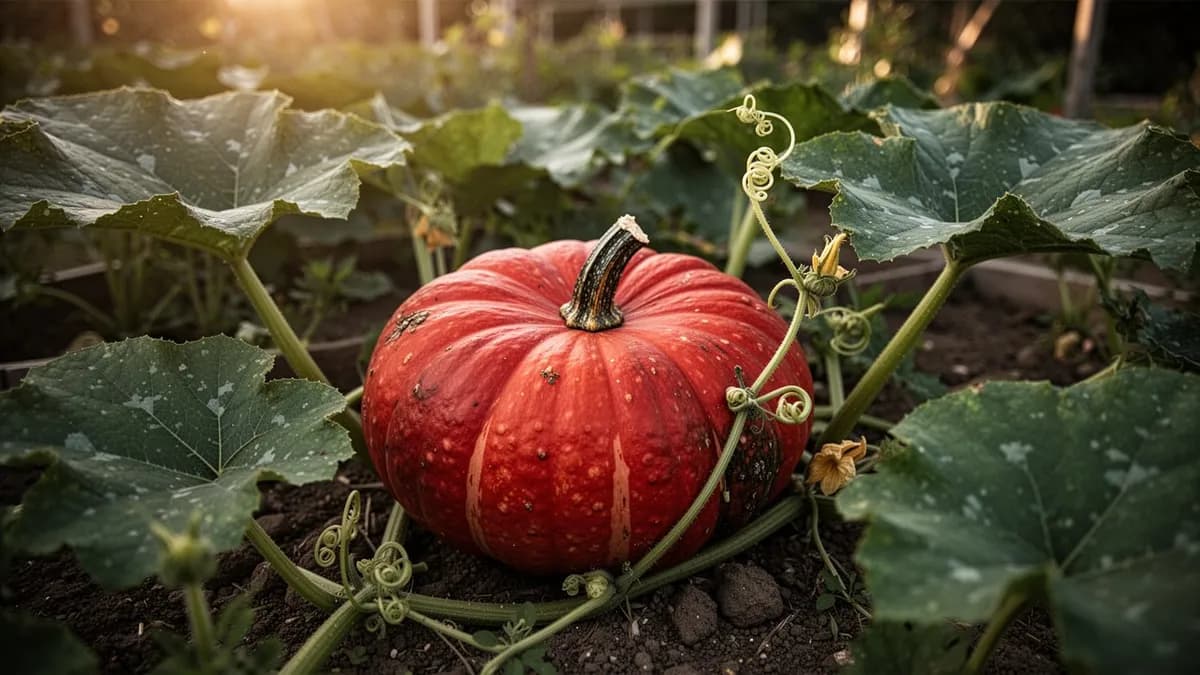
La calabaza kuri roja (Cucurbita maxima), también conocida como potimarron en Francia, es una calabaza de invierno de origen japonés con una llamativa cáscara rojo-anaranjada en forma de lágrima y pulpa firme, dulce y harinosa con un sutil sabor a castaña.





En esta páginaResumen
Conoce Kuri Rojo
La calabaza kuri roja (Cucurbita maxima), también conocida como potimarron en Francia, es una calabaza de invierno de origen japonés con una llamativa cáscara rojo-anaranjada en forma de lágrima y pulpa firme, dulce y harinosa con un sutil sabor a castaña. Su piel se ablanda completamente durante la cocción y es comestible, eliminando la necesidad de pelarla.
Cuándo plantar Kuri Rojo
Siembre directamente al aire libre cuando la temperatura del suelo supere los 18 °C, o inicie en interior 3-4 semanas antes en macetas de turba biodegradables. Plante 2-3 semillas a 2,5 cm de profundidad y aclare a la más vigorosa. La germinación ocurre en 7-10 días a 21-27 °C. Trasplante con cuidado para no perturbar las raíces.
Tu año de Kuri Rojo
Ajustado a Zona 7 · temporada típica · la helada se va hacia el 2 abr y vuelve hacia el 1 nov
Planta Kuri Rojo May – Jun y cosecha Sep – Oct. Consulta los métodos de plantación y elige tu clima para adaptar los periodos.
Cómo cultivar Kuri Rojo
Plante en pleno sol en suelo fértil, bien drenado y rico en materia orgánica con pH entre 6,0 y 7,0. Prepare montículos o camas elevadas enriquecidas con compost maduro. Siembre 2-3 semillas a 2,5 cm de profundidad por montículo, espaciados 90-120 cm, y aclare a la plántula más vigorosa.
Las enredaderas son menos extensas que otras calabazas de invierno, lo que la hace adecuada para huertos de tamaño medio. Proporcione un enrejado resistente si desea cultivar en vertical para ahorrar espacio. Riegue profundamente con 3-4 cm semanales, preferiblemente con riego por goteo.
Fertilice con compost al plantar y aplique abono rico en potasio cuando comiencen a formarse los frutos para mejorar el dulzor. Coloque paja o cartón bajo los frutos para evitar el contacto directo con el suelo húmedo. Limite la producción a 3-5 frutos por planta para obtener calabazas de buen tamaño y sabor concentrado.
2 plantas caben en un bancal de 120 × 240 cm
Cada Kuri Rojo pide 120 cm de margen. El planificador guarda ese marco por ti — cada planta, cada bancal.
Los mejores vecinos de Kuri Rojo
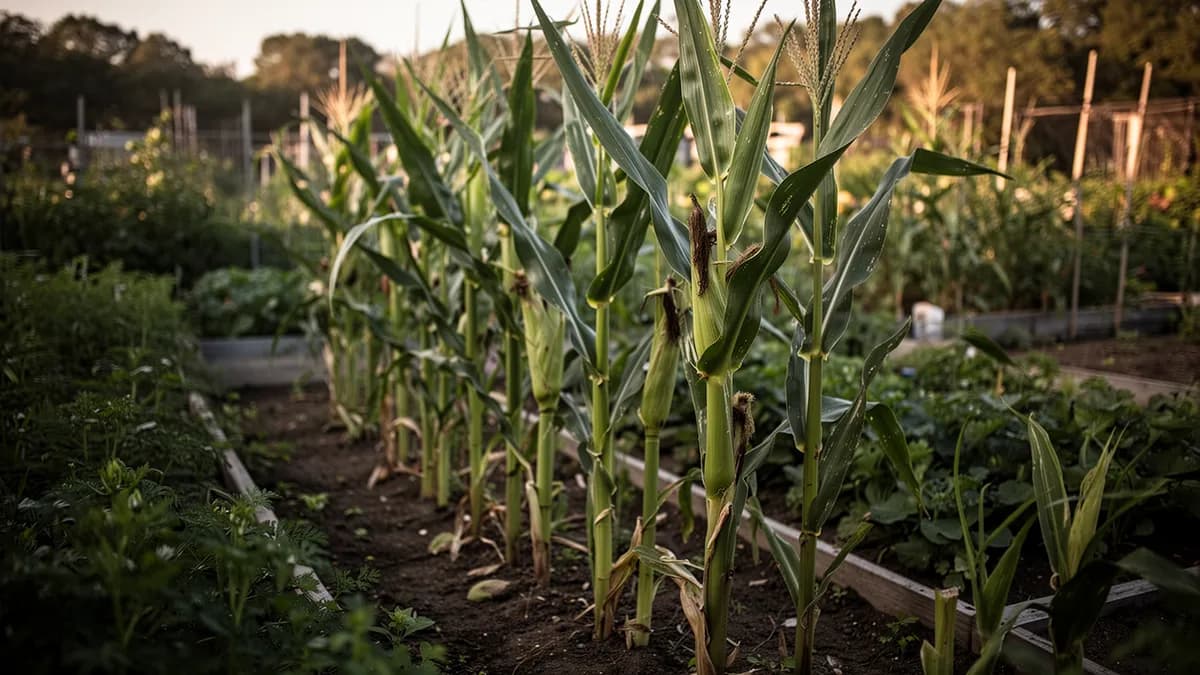
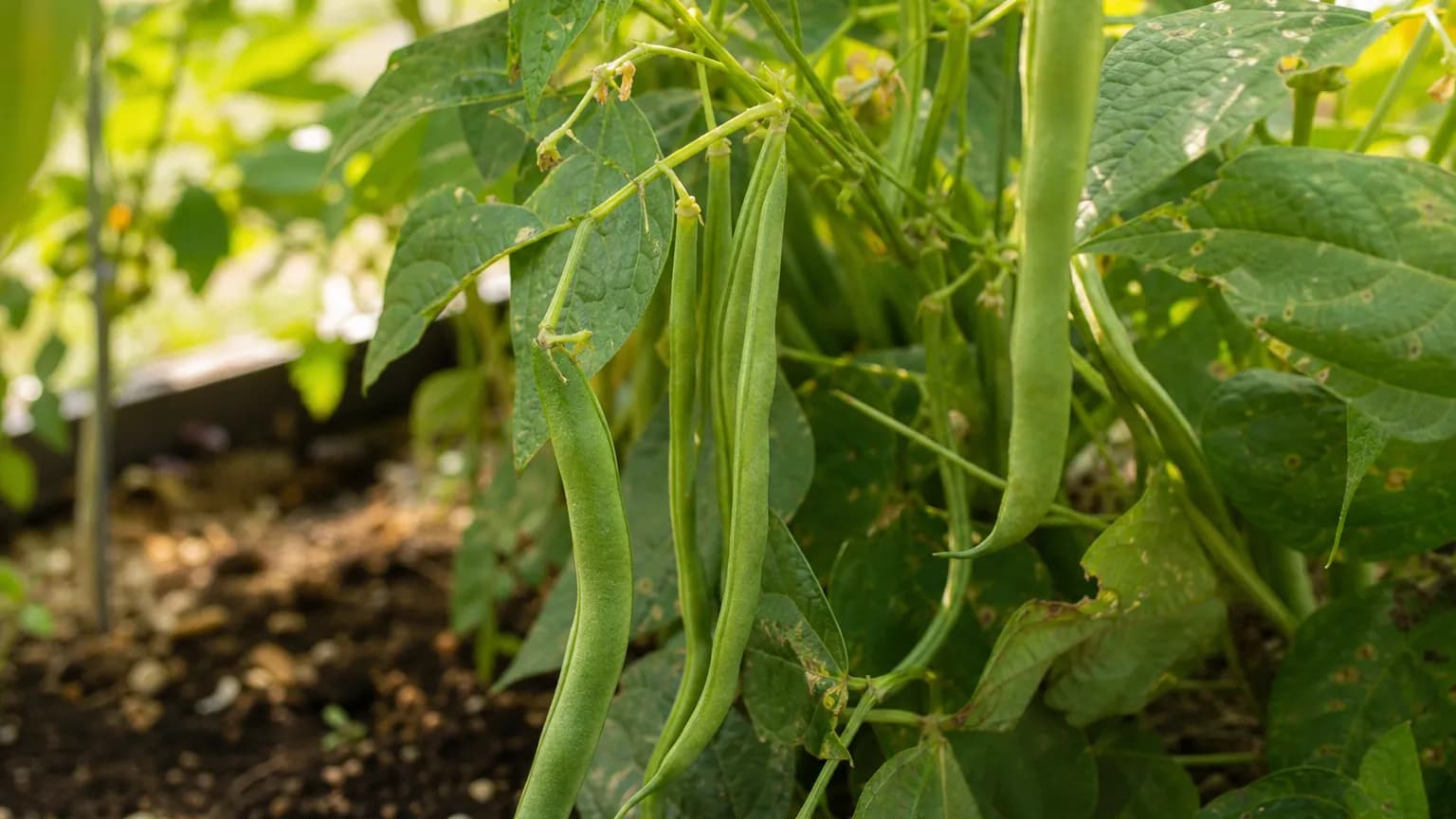
Se asocia bien con maíz y frijoles en la clásica milpa de las Tres Hermanas. Las caléndulas y capuchinas plantadas cerca repelen escarabajos y otras plagas. La albahaca y el eneldo atraen polinizadores beneficiosos. Evite plantar cerca de patatas.
Maíz va a su lado. Papa no.
Saber de huerto de siempre, cotejado con la tabla real de Kuri Rojo — prueba cualquier planta que cultives.
Prueba Kuri Rojo en un bancal, aquí mismo
Un bancal real del planificador con Kuri Rojo ya plantado. Toca una planta compañera para colocarla y mira cómo responde la comprobación de vecinos: verde para buenos vecinos, rojo si hay conflicto.


Guías de cultivo relacionadas
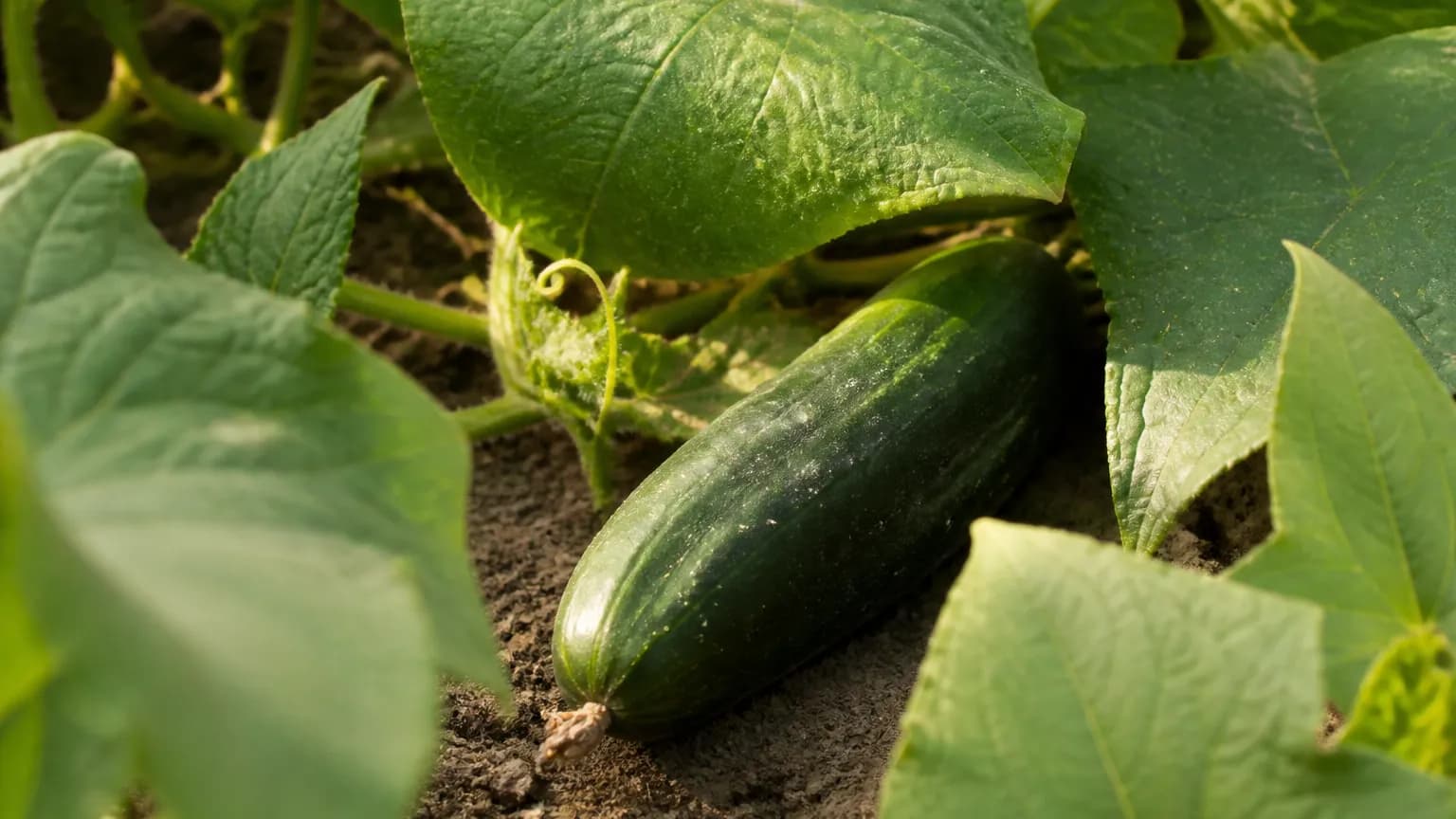
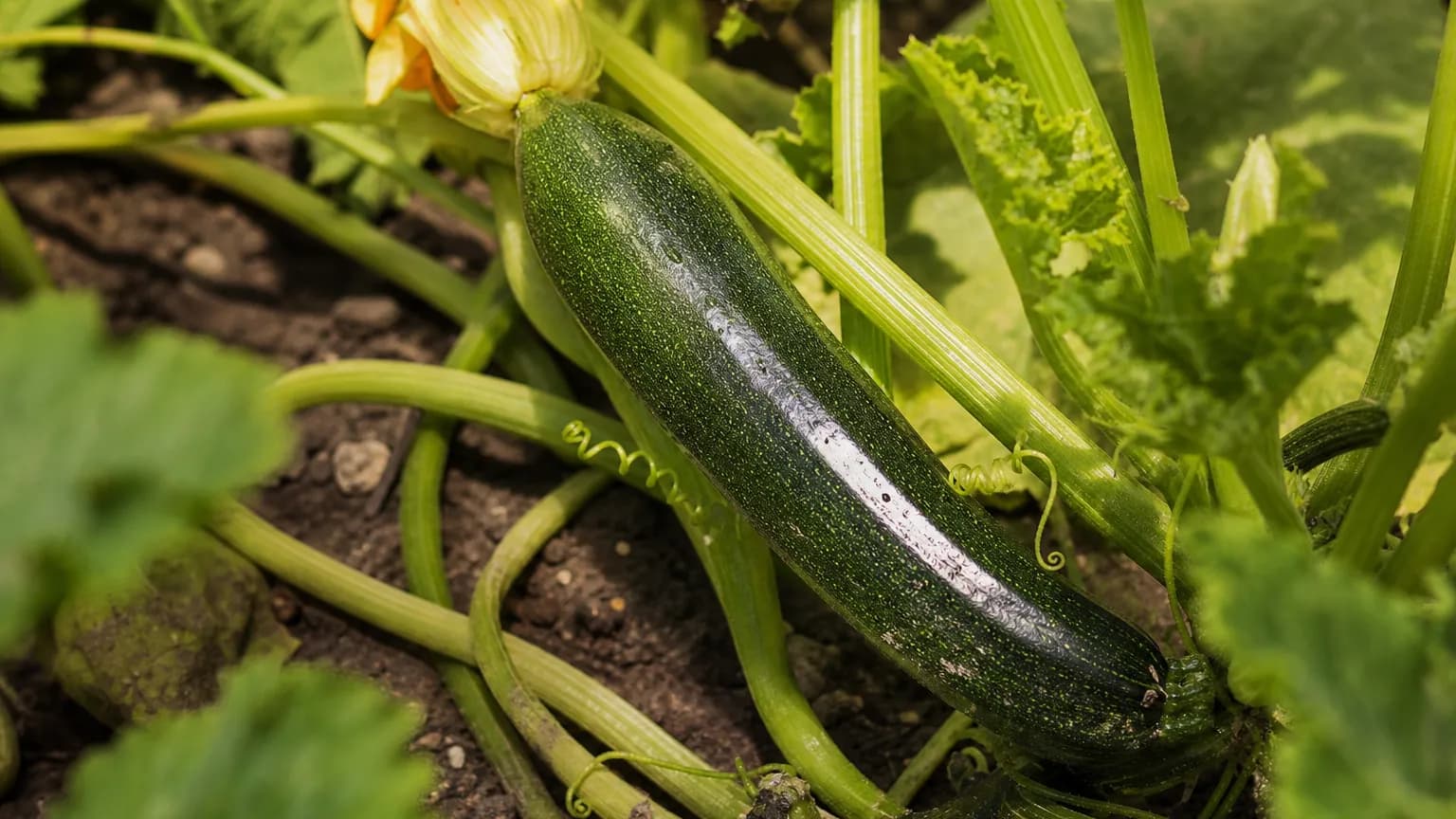
Abónalo bien
Requiere suelos fértiles, profundos y bien drenados con pH entre 6,0 y 7,0. Incorpore abundante compost o estiércol bien descompuesto antes de la siembra. Aplique fertilizante equilibrado al plantar y cambie a abono rico en potasio cuando aparezcan los primeros frutos para mejorar el dulzor y la conservación.
Temperatura ideal
Compatibilidad de zonas de rusticidad
De la semilla a la cosecha, etapa por etapa
Siembra
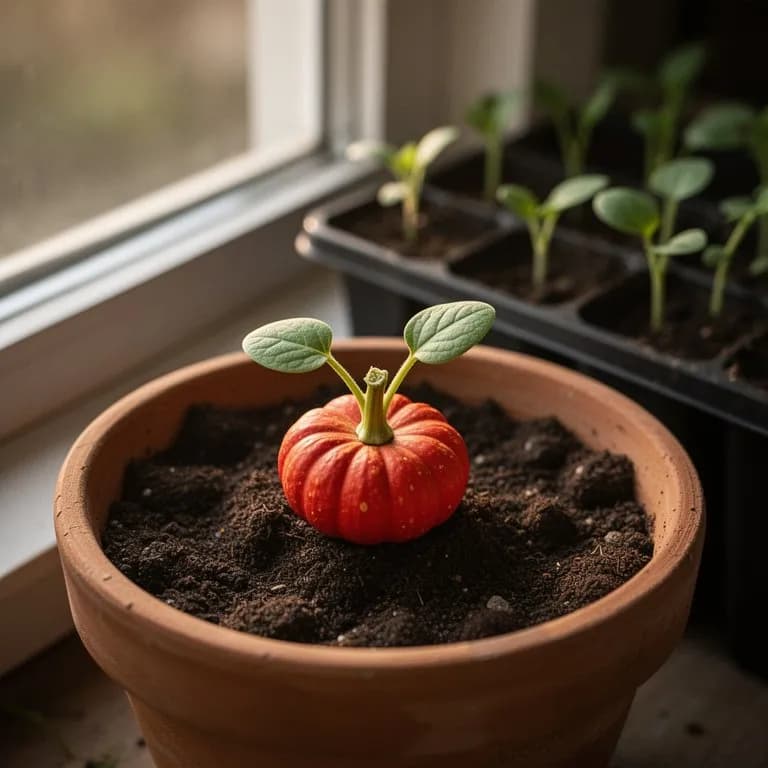
Las semillas se inician en interior 3-4 semanas antes de la última helada en macetas profundas individuales para proteger la sensible raíz pivotante. Las semillas grandes y planas germinan en 7-10 días con temperaturas del sustrato de 21-29°C (70-85°F). Primero emergen los cotiledones redondeados, que se abren rápidamente para impulsar el crecimiento inicial.
Trasplante y establecimiento de la vid
Las plántulas endurecidas se trasplantan a montículos enriquecidos con compost cuando ya no hay riesgo de heladas y las noches se mantienen por encima de 10°C (50°F). Las primeras hojas verdaderas aparecen profundamente lobuladas. La planta desarrolla un sistema radicular robusto y empieza a emitir brotes laterales que formarán las vides principales.
Crecimiento rápido de la vid
Las vides entran en un crecimiento explosivo y se alargan 10-15 cm por día durante el clima cálido. Las hojas grandes y de textura áspera forman un dosel denso que da sombra al suelo y suprime las malezas. Las vides secundarias se ramifican desde los brotes principales. Las puntas de la vid se curvan y avanzan con fuerza en busca de más espacio.
Floración y polinización
Primero aparecen flores masculinas en tallos largos y delgados, seguidas de flores femeninas que se distinguen por el pequeño fruto hinchado en su base. Cada flor se abre solo una mañana, y la polinización exitosa por abejas o a mano es esencial para el cuajado. Las flores femeninas no polinizadas se marchitan y caen en pocos días.
Desarrollo del fruto
Los frutos polinizados se hinchan rápidamente durante 3-4 semanas, pasando del verde al característico color rojo anaranjado intenso. La piel se engrosa y se endurece a medida que la pulpa se densifica por dentro. Los frutos suelen alcanzar 2-3 kg (4-6 lbs) cada uno. Limita cada vid a 3-4 frutos para obtener una pulpa más dulce y densa.
Cosecha y curado
Los frutos están listos cuando la piel es uniformemente rojo anaranjada intensa, lo bastante dura para no hundirse al presionarla con una uña, y el tallo se ha vuelto marrón y corchoso. Corta de la vid con un cuchillo afilado dejando 5-8 cm de tallo. Cura en un lugar cálido y bien ventilado a 27-29°C (80-85°F) durante 10-14 días para cicatrizar las marcas superficiales y convertir los almidones en azúcares.
Remoja las semillas durante la noche en agua tibia para ablandar la cubierta y acelerar la germinación. Colócalas de canto a 2,5 cm de profundidad para evitar que el agua se acumule sobre la superficie plana. Usa una manta térmica ajustada a 27°C (80°F) y mantén la mezcla uniformemente húmeda, pero nunca encharcada.
Cuidar Kuri Rojo mes a mes
Qué hacer cada mes para tu Kuri Rojo
Octubre
Mes actualComplete final harvests before frost. Continue curing recently harvested fruits. Move cured squash to a cool, dry storage area at 10-13°C (50-55°F). Pull spent vines and compost healthy plant material. Note variety performance for future planning.
Ten claro qué hacer en tu huerto, cada mes
Un correo al empezar cada mes: qué sembrar, plantar y hacer ahora mismo — para tu Kuri Rojo y todo lo que crece alrededor. Más un breve curso inicial para esquivar los errores clásicos.
- Qué hacer ahora mismo
- Ajustado a tu temporada
- Curso inicial incluido
Cosechar Kuri Rojo
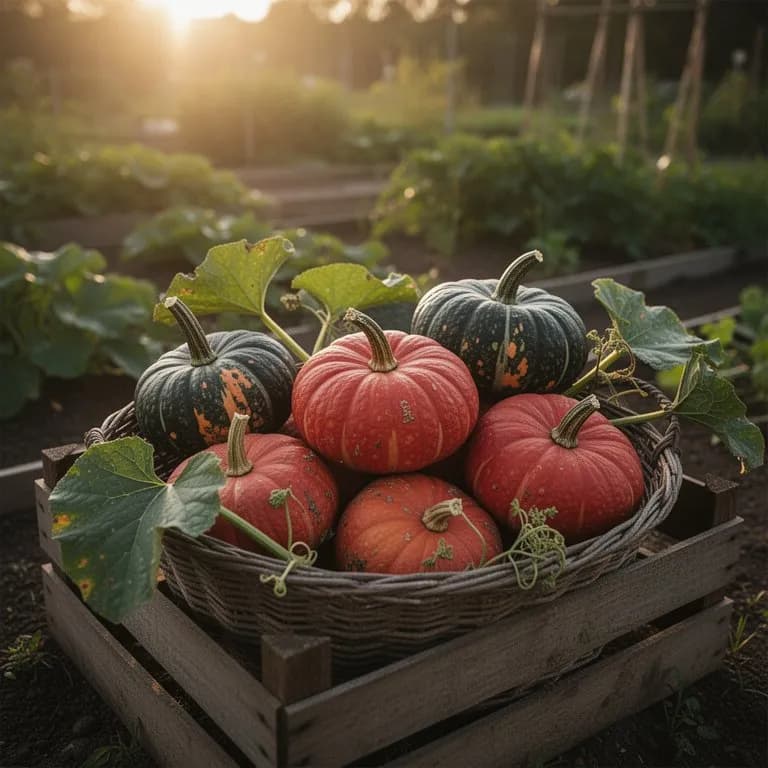
Coseche cuando la cáscara esté completamente dura y de color rojo-anaranjado uniforme, y el pedúnculo esté seco y corchoso, generalmente 85-100 días después de la siembra. Corte dejando 5-7 cm de pedúnculo para prolongar la conservación. Cure al sol durante 1-2 semanas antes de almacenar para endurecer la piel y concentrar los azúcares.
se supone que plantas al comenzar el periodo — indica tu fecha real
Cosecha cuando la piel sea uniformemente rojo anaranjada intensa, dura y no se hunda al presionarla con una uña; normalmente 90-100 días después de plantar.
Almacenamiento y conservación
Las calabazas bien curadas se conservan en un lugar fresco, seco y ventilado a 10-15 °C durante 3-4 meses. La pulpa cocida puede congelarse en porciones durante 6-8 meses. También es excelente para preparar purés, sopas y conservas al baño maría. La piel comestible simplifica la preparación.
Qué falla — y cómo solucionarlo
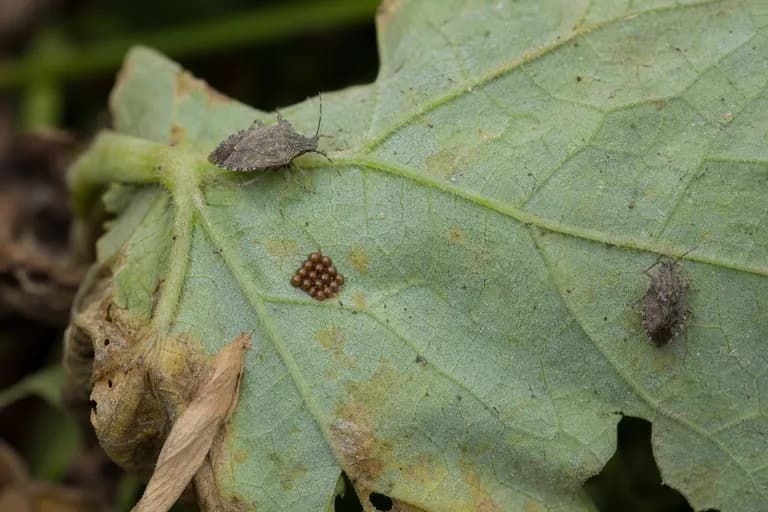
Oídio (Podosphaera xanthii)
EnfermedadPolvo blanco harinoso en la superficie de las hojas que avanza hasta cubrir toda la planta, reduciendo la fotosíntesis y debilitando la producción.
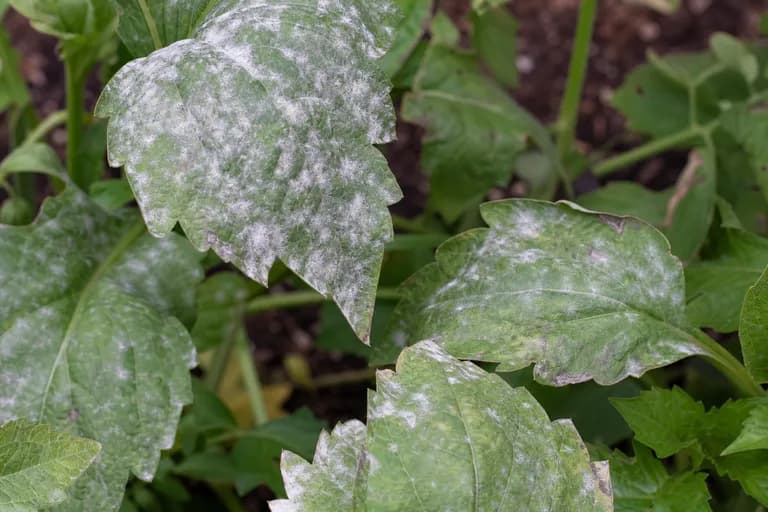
Escarabajo del pepino (Diabrotica spp.)
PlagaAgujeros en hojas y flores, cicatrices en los frutos jóvenes. Puede transmitir marchitez bacteriana.
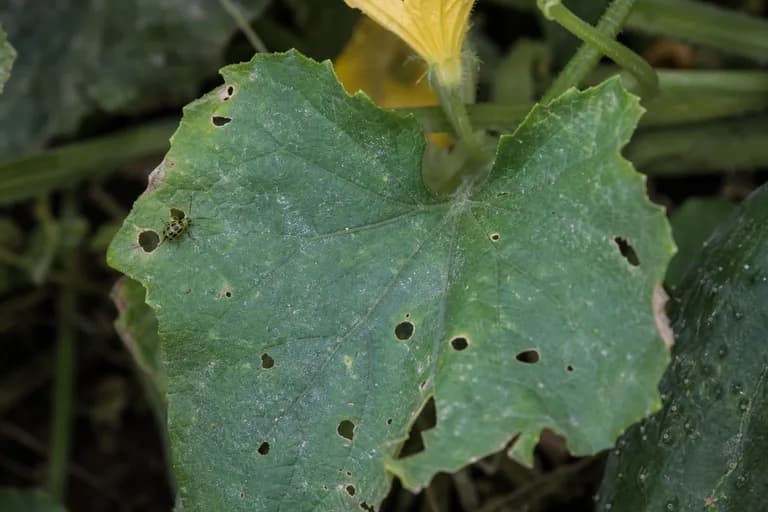
Pudrición del fruto (Phytophthora capsici)
EnfermedadManchas acuosas oscuras en los frutos en contacto con el suelo que se expanden rápidamente, causando pudrición blanda y maloliente.
Solución de problemas comunes
La calabaza kuri roja es generalmente una planta robusta con pocos problemas. El principal riesgo es el oídio en climas húmedos, que se controla con buena circulación de aire. La cosecha tardía después de heladas fuertes puede dañar la piel y reducir la capacidad de almacenamiento. Frutos en contacto directo con suelo húmedo pueden pudrirse.
Consejos de cultivo
- Start with the right variety for your climate. Red Kuri (Uchiki Kuri) is the most reliable and widely adapted red kabocha, while Sunshine offers superior disease resistance and Ambercup is ideal for smaller gardens with its compact 3-4 pound fruits.
- Never rush planting. Squash seeds and seedlings are highly sensitive to cold. Wait until soil temperatures are genuinely 18°C (65°F) or above before transplanting or direct sowing — using a soil thermometer removes all guesswork.
- Build enriched planting mounds. Mix generous amounts of compost and aged manure into each planting site. Kabocha is a heavy feeder that rewards rich soil with denser, sweeter flesh and higher yields.
- Hand-pollinate for reliable fruit set. Male flowers appear first — when the female flowers open (identifiable by the miniature fruit at the base), transfer pollen early in the morning using a small brush or by touching the male anthers directly to the female stigma.
- Limit fruits per vine for maximum quality. Allow only 3-4 fruits to develop per vine by removing additional female flowers after you have enough fruits set. Fewer fruits means the plant concentrates its energy into producing larger, sweeter squash.
- Reduce watering as fruits approach maturity. Cutting back irrigation during the final 2-3 weeks before harvest concentrates sugars in the flesh and toughens the skin for better storage — continue just enough to prevent vine wilt.
- Cure before storing. This step is non-negotiable for good flavor and long storage. Keep harvested fruits in a warm, well-ventilated area at 27-29°C (80-85°F) for 10-14 days. Uncured kabocha tastes bland and stores poorly.
- Always leave a long stem when harvesting. Cut 5-8 cm of stem and never carry fruits by the stem. A broken or missing stem is the number one cause of storage rot — it creates a direct entry point for bacteria and fungi.
Cultiva tu mejor Kuri Rojo — y todo lo que la rodea.
Empieza un plan gratis hoy. Diseña tus bancales, coloca tu Kuri Rojo y deja que PlotMyGarden gestione el momento, el espaciado, las asociaciones y los recordatorios de la semilla a la cesta.
Elige tu Kuri Rojo
Red Kuri (Uchiki Kuri)
La variedad clásica con cáscara rojo-anaranjada brillante y forma de lágrima. Pulpa dulce con sabor a castaña. Peso de 1-2 kg. 92-95 días.
Orange Hokkaido
Selección japonesa con piel anaranjada y pulpa más dulce. Frutos algo más pequeños y uniformes. Excelente para sopas cremosas. 85-90 días.
Baby Red Hubbard
Variedad compacta con frutos pequeños de 1-1,5 kg, ideales para porciones individuales. Piel roja con textura más rugosa. 95-100 días.
A single red kabocha plant grown from a $3-4 seed packet (containing 15-25 seeds) can produce 12-30 kg of squash, with specialty kabocha and Red Kuri squash selling for $3-6 per pound at grocery stores and farmers markets. Growing just 2-3 plants can easily yield $80-200 worth of squash per season. The savings multiply further because kabocha stores for months without refrigeration, replacing expensive winter produce purchases for months after harvest.
Recetas rápidas
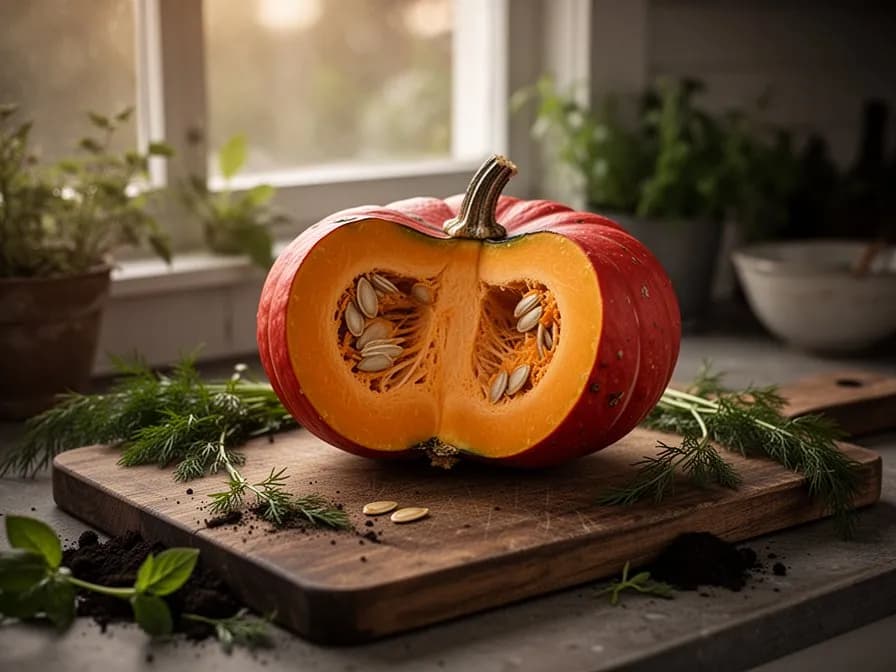
Classic Kabocha Tempura
30 minThin crescent slices of red kabocha dipped in ice-cold tempura batter and fried until golden and shatteringly crisp. The natural sweetness of the squash caramelizes slightly against the light, airy coating — a staple of Japanese tempura restaurants.
7 ingredientes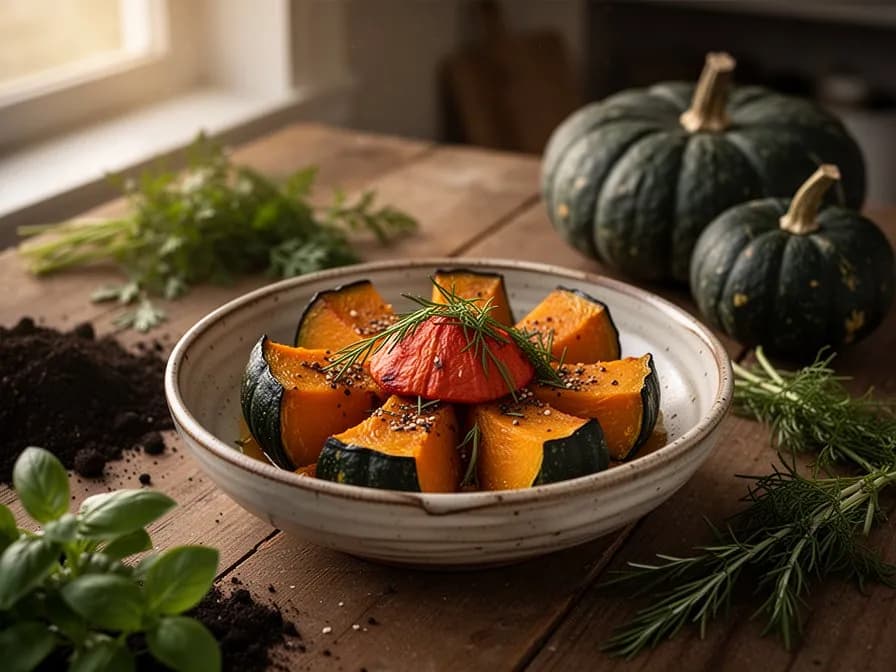
Creamy Roasted Kabocha Soup
45 minKabocha roasted until deeply caramelized, then blended into a velvety soup that needs almost no cream — the dense flesh creates an impossibly smooth texture on its own. A touch of ginger and miso adds warmth and umami depth.
8 ingredientesSimmered Kabocha (Kabocha no Nimono)
25 minA comforting Japanese home-cooking classic where kabocha chunks are gently simmered in a sweet savory dashi broth until tender and infused with umami. The skin softens beautifully and becomes part of the dish, adding color and texture.
6 ingredientesUsos culinarios
Ideal para sopas cremosas donde su sabor a castaña destaca maravillosamente. La piel se ablanda completamente al cocinar, permitiendo cocinar sin pelar. Excelente asada en gajos con hierbas y aceite de oliva, en puré, gratinada o como relleno de raviolis y gnocchi. En Japón se prepara en tempura. También sirve para tartas y postres otoñales.
Qué contiene
Beneficios para la salud
- Exceptionally high in beta-carotene, which the body converts to vitamin A — essential for vision health, immune function, and healthy skin. The deep red-orange flesh indicates one of the highest carotenoid concentrations among common vegetables.
- Contains complex carbohydrates with a relatively low glycemic index compared to other starchy vegetables, providing sustained energy without the blood sugar spikes associated with refined carbohydrates.
- Rich in dietary fiber that supports digestive regularity, feeds beneficial gut bacteria, and may help regulate cholesterol levels when consumed as part of a balanced diet.
- Provides vitamin C that supports immune function, collagen synthesis, and acts as an antioxidant to protect cells from free radical damage.
- The edible skin contains additional fiber and concentrated micronutrients including iron and B vitamins — cooking kabocha with the skin on maximizes its nutritional value.
- Contains potassium that supports healthy blood pressure, proper muscle contraction, and fluid balance — an important mineral often lacking in modern diets.
De dónde viene Kuri Rojo
Red kabocha squash belongs to the species Cucurbita maxima, which originated in South America where wild ancestors were gathered and gradually domesticated thousands of years ago in the Andean region. Spanish and Portuguese explorers carried squash seeds across the globe during the Age of Exploration, and it was Portuguese traders who introduced kabocha-type squash to Japan from Cambodia in the 1540s. The Japanese name 'kabocha' is itself a corruption of 'Cambodia,' reflecting this origin story.
Over the following centuries, Japanese farmers selectively bred kabocha for dense, sweet, dry flesh suited to their cuisine — qualities quite different from the watery, stringy squash common in Western gardens. The result was a distinct class of winter squash prized for its chestnut-like flavor, smooth texture, and thin edible skin. Red-skinned varieties such as Red Kuri (Uchiki Kuri) emerged from this Japanese breeding tradition and were later brought to France, where they became enormously popular under the name 'Potimarron.' French gardeners and chefs embraced the red kabocha for its exceptional soup-making qualities and its ability to thrive in European growing conditions.
Today, red kabocha varieties are grown worldwide from Japan and Southeast Asia to Europe, North America, and Australia. They occupy a special place in Japanese food culture, where kabocha is one of the most commonly eaten vegetables and features in everything from simmered home dishes and tempura to soups, sweets, and seasonal celebrations. The winter solstice tradition of eating kabocha remains widely observed across Japan. In Western kitchens, red kabocha has gained a devoted following among chefs and home cooks who value its superior flavor, natural sweetness, and versatility compared to standard pumpkin and butternut varieties.
Kuri Rojo: ¿sabías que?
Datos fascinantes sobre Kuri Rojo
The name 'kabocha' comes from 'Cambodia' — Portuguese traders introduced the squash to Japan from Cambodia in the 16th century, and the Japanese adapted the country name into their word for this now-beloved vegetable.
Kuri Rojo: preguntas frecuentes
¿Cuándo debo plantar Kuri Rojo?
¿Cuáles son buenas plantas acompañantes para Kuri Rojo?
¿En qué zonas de rusticidad puede crecer Kuri Rojo?
¿Cuánto sol necesita Kuri Rojo?
¿A qué distancia debo espaciar Kuri Rojo?
¿Qué plagas y enfermedades afectan a Kuri Rojo?
¿Cómo almaceno Kuri Rojo después de la cosecha?
¿Cuáles son las mejores variedades de Kuri Rojo para cultivar?
¿Qué suelo necesita Kuri Rojo?
What is the difference between red kabocha and green kabocha?
Can I eat the skin of red kabocha squash?
Why does my kabocha taste bland or watery?
How long can I store red kabocha squash?
How do I know when red kabocha is ready to harvest?
Can I grow red kabocha vertically on a trellis?
Acabas de leer la teoría. Ahora cultívala en piloto automático.
Todo lo que hace que Kuri Rojo sea delicado — el momento, el espaciado, las asociaciones, la ventana de cosecha — es justo lo que PlotMyGarden resuelve por ti, para cada planta de tu huerto.
Un plan que conoce tu clima
Indica tu ubicación una vez. Recibe fechas de siembra, abonado y cosecha basadas en tu última helada real y el pronóstico en vivo — sin adivinar con un sobre genérico.
De la sección “Cuándo plantar”Planificador de bancales de arrastrar y soltar
Diseña bancales sobre una cuadrícula. Cada planta encaja con su espaciado correcto y ves toda la temporada antes de gastar un céntimo en semillas.
De la sección “Cultivo”Conflictos de asociación, detectados a tiempo
Más de 200 buenas y malas combinaciones comprobadas en vivo mientras plantas — para que un error que arruine la temporada nunca llegue a la tierra.
De la sección “Asociaciones”Recordatorios que sí vas a seguir
“Riega las judías.” “Recoge hoy antes de que se pase.” Oportunos, concretos y ligados a las plantas que de verdad cultivas.
De la sección “Cosecha”Escalonado, programado
¿Quieres cosechar seis semanas en vez de seis días? Reparte tus siembras automáticamente y te avisa cuando toca el siguiente lote.
De la sección “Cuándo plantar”Un registro que se vuelve más listo
Cada cosecha que registras le enseña tu huerto. El plan del año que viene parte de lo que de verdad funcionó en tu suelo, no en un manual.
De la sección “Resumen”Planta estos junto a Kuri Rojo
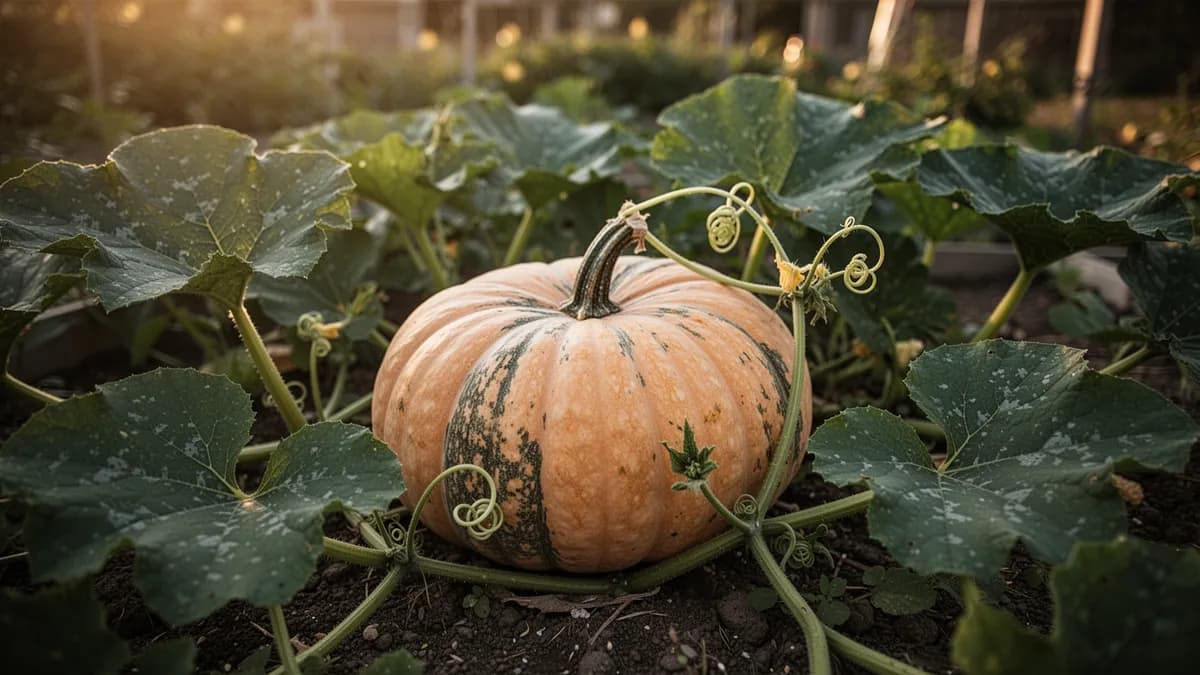
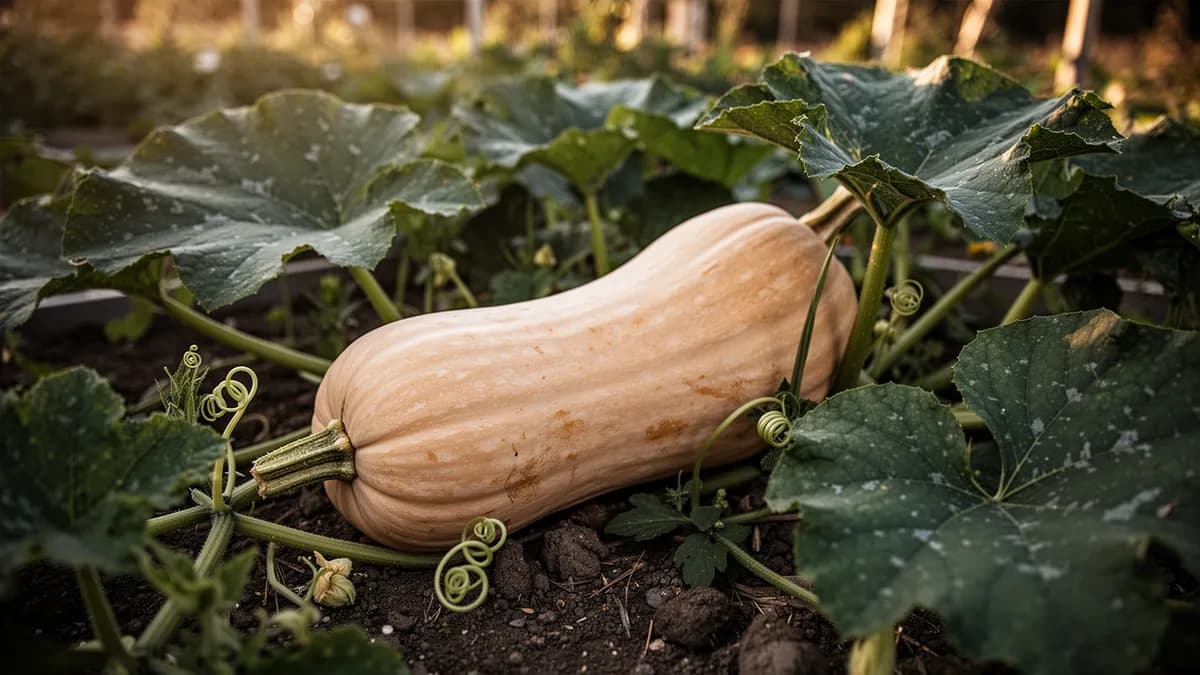
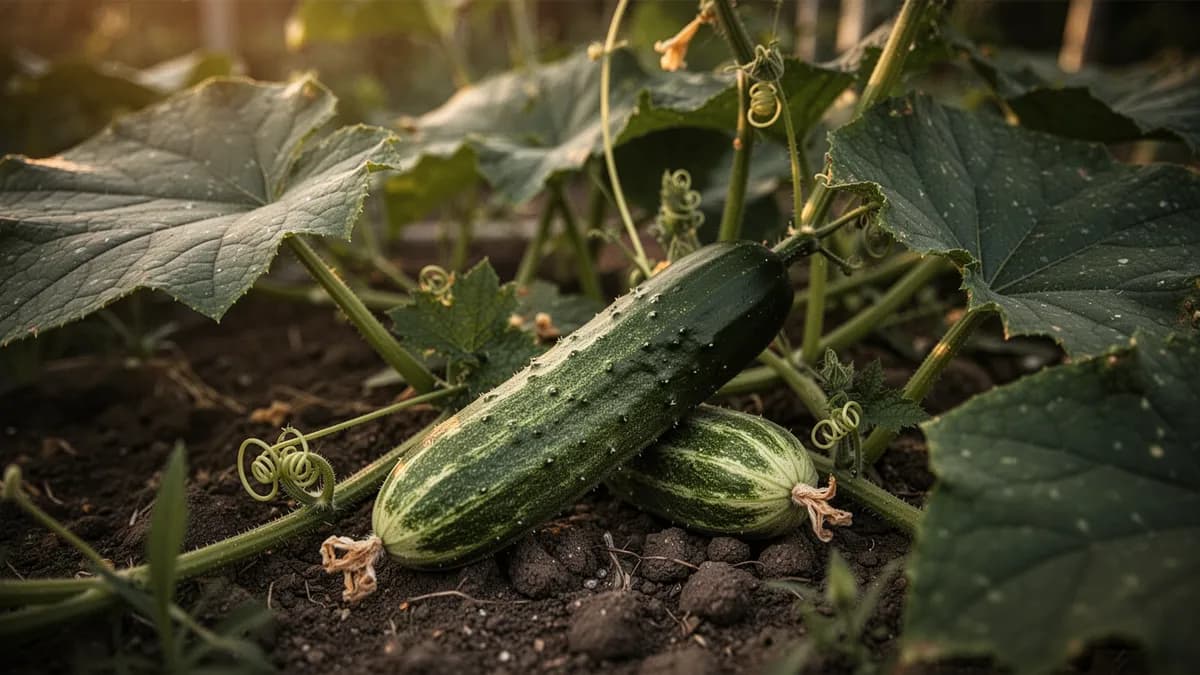
Más Cucurbitáceas
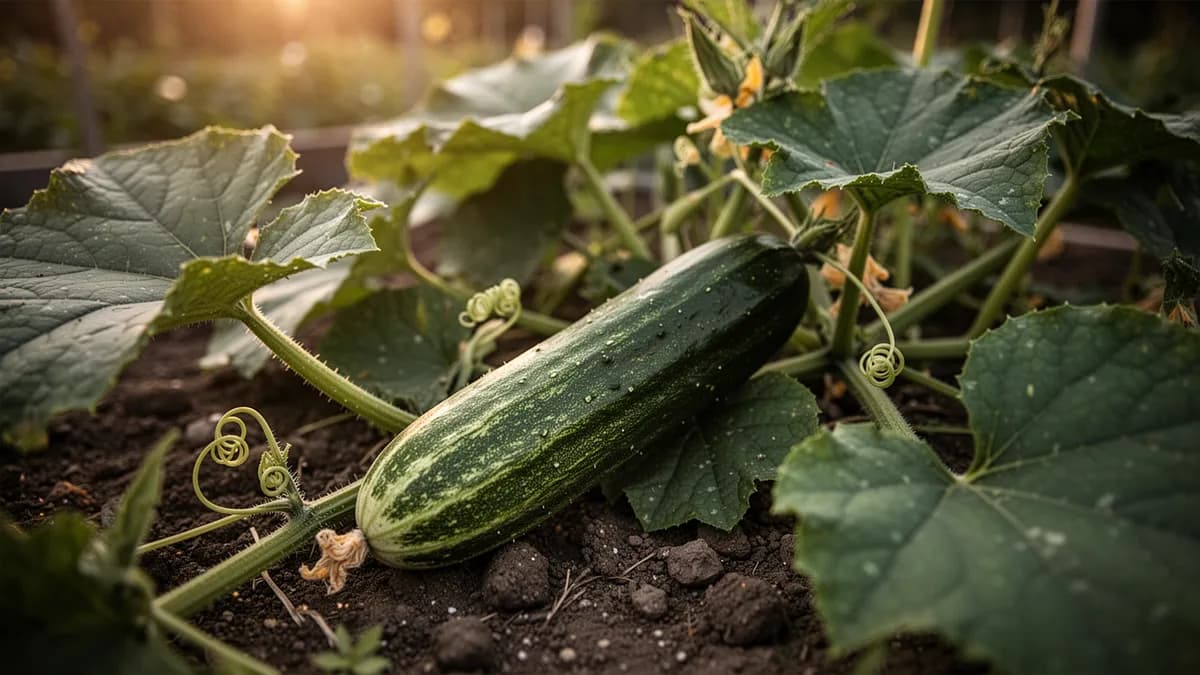
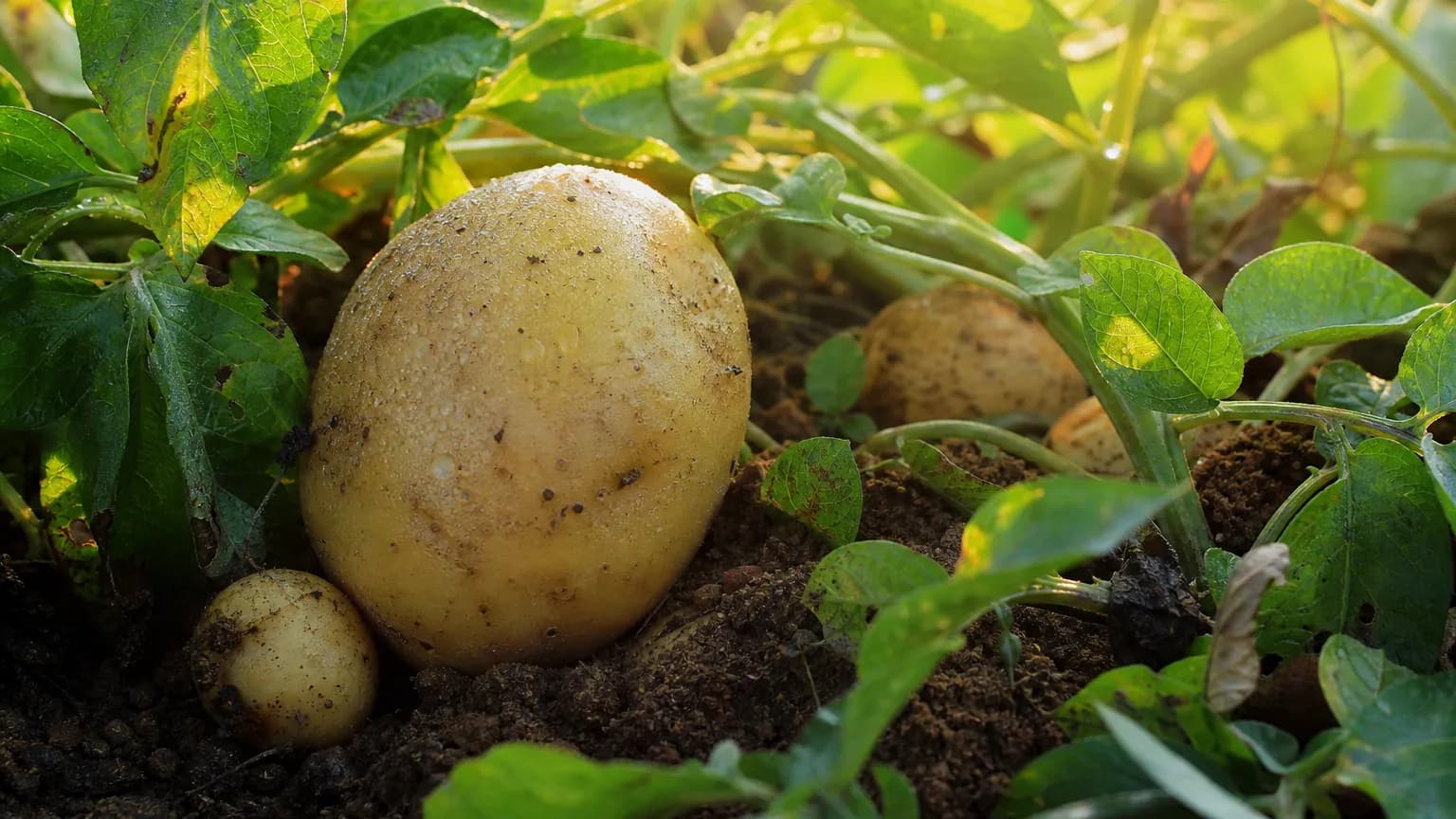
Mantén Kuri Rojo lejos de estos
Cultiva tu mejor Kuri Rojo — y todo lo que la rodea.
Empieza un plan gratis hoy. Diseña tus bancales, coloca tu Kuri Rojo y deja que PlotMyGarden gestione el momento, el espaciado, las asociaciones y los recordatorios de la semilla a la cesta.