Fruta Gac
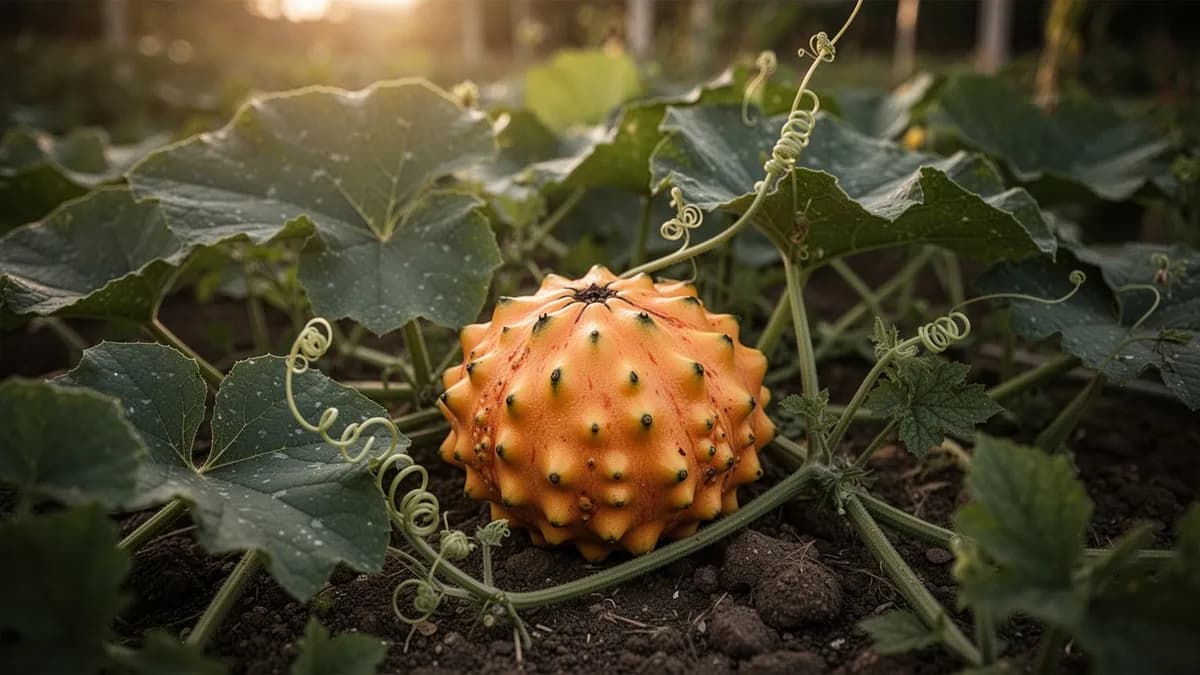
La fruta gac (Momordica cochinchinensis) es una cucurbitácea trepadora tropical originaria del sudeste asiático, especialmente Vietnam, donde es considerada un superalimento por su extraordinario contenido en betacaroteno y licopeno.





En esta páginaResumen
Conoce Fruta Gac
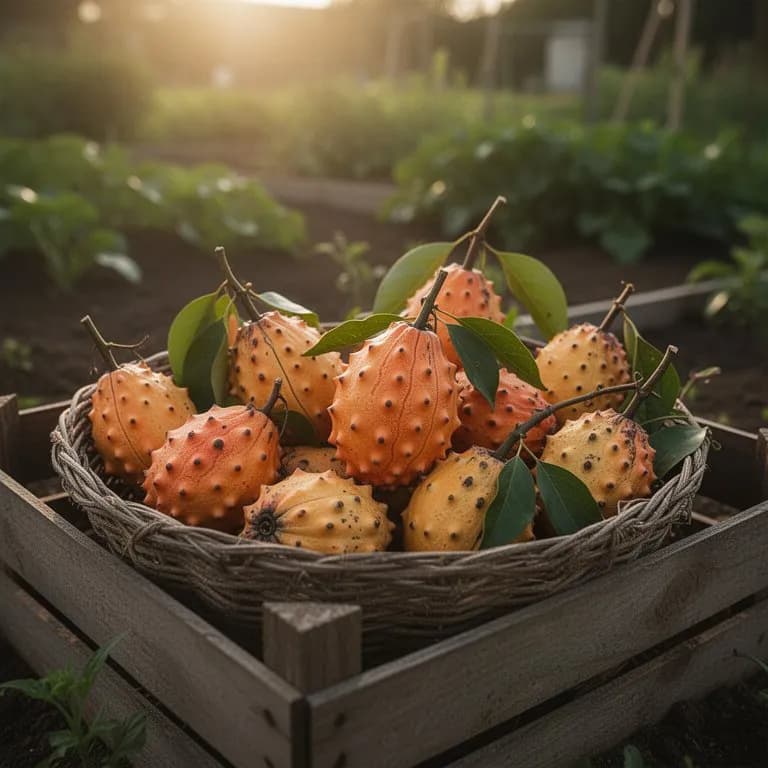
La fruta gac (Momordica cochinchinensis) es una cucurbitácea trepadora tropical originaria del sudeste asiático, especialmente Vietnam, donde es considerada un superalimento por su extraordinario contenido en betacaroteno y licopeno. Sus frutos espinosos de color rojo anaranjado intenso contienen una pulpa y membranas de color rojo brillante que se utilizan tradicionalmente para colorear el arroz glutinoso en festividades.
Cuándo plantar Fruta Gac
Escarifique las semillas con papel de lija y remójelas en agua tibia durante 24 horas antes de sembrar. Siembre en macetas individuales a 2 cm de profundidad en sustrato cálido a 25-30 °C. La germinación puede tardar 2-4 semanas y ser irregular. Trasplante al aire libre o al invernadero cuando las plántulas tengan 4-6 hojas verdaderas y las temperaturas nocturnas superen los 15 °C.
Tu año de Fruta Gac
Ajustado a Zona 7 · temporada típica · la helada se va hacia el 2 abr y vuelve hacia el 1 nov
Planta Fruta Gac Abr – May y cosecha Sep – Nov. Consulta los métodos de plantación y elige tu clima para adaptar los periodos.
Cómo cultivar Fruta Gac
Cultive en el lugar más cálido y soleado del jardín, ya que la fruta gac necesita una temporada larga de calor para producir frutos maduros. En climas templados, es preferible cultivar en invernadero o como planta de maceta grande. El suelo debe ser fértil, bien drenado y rico en materia orgánica con pH entre 6,0 y 7,0.
Proporcione un enrejado muy resistente de al menos 3-4 m de altura, ya que las enredaderas vigorosas pueden alcanzar 10-15 m de longitud. Plante las plántulas a 1-2 m de distancia después de que la temperatura nocturna supere los 15 °C. La planta es dioica, por lo que necesita ejemplares masculinos y femeninos para la fructificación.
Riegue abundantemente durante el crecimiento activo, proporcionando 3-5 cm semanales. Fertilice mensualmente con un abono equilibrado, aumentando el potasio cuando aparezcan los primeros frutos. En climas con inviernos suaves, las raíces tuberosas sobreviven bajo tierra y rebrotan en primavera. Proteja las raíces con acolchado grueso en zonas con heladas ligeras.
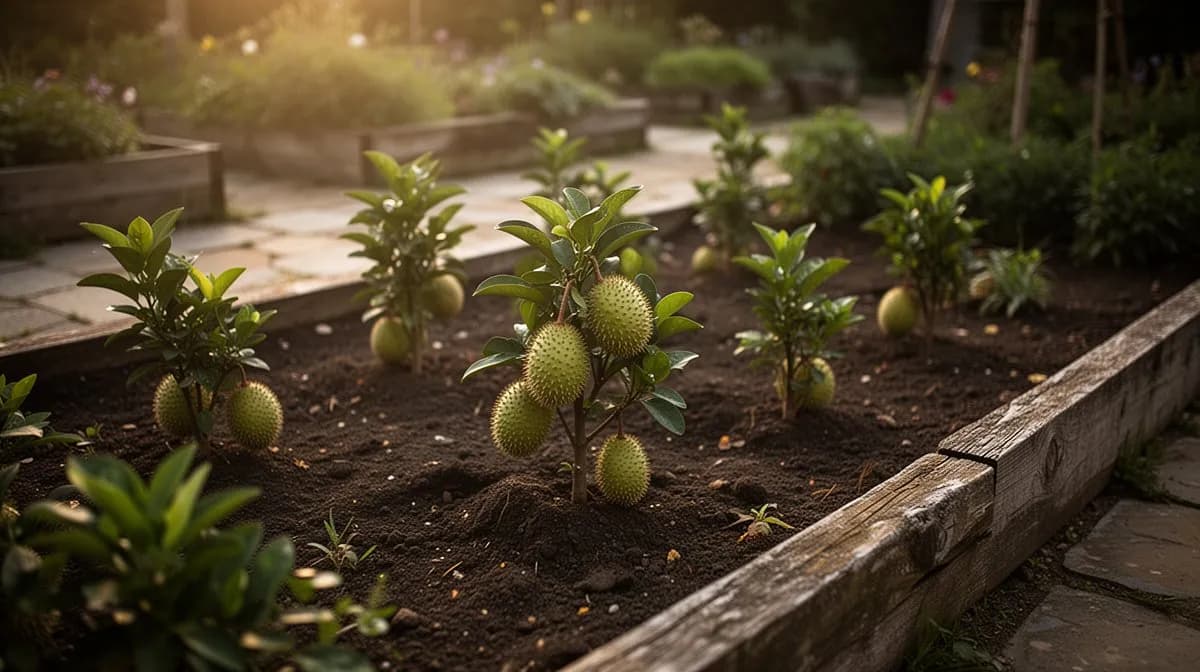
Para Fruta Gac un bancal de 120 × 240 cm se queda corto
Cada Fruta Gac pide 150 cm de margen. El planificador guarda ese marco por ti — cada planta, cada bancal.
Guías de cultivo relacionadas
Abónalo bien
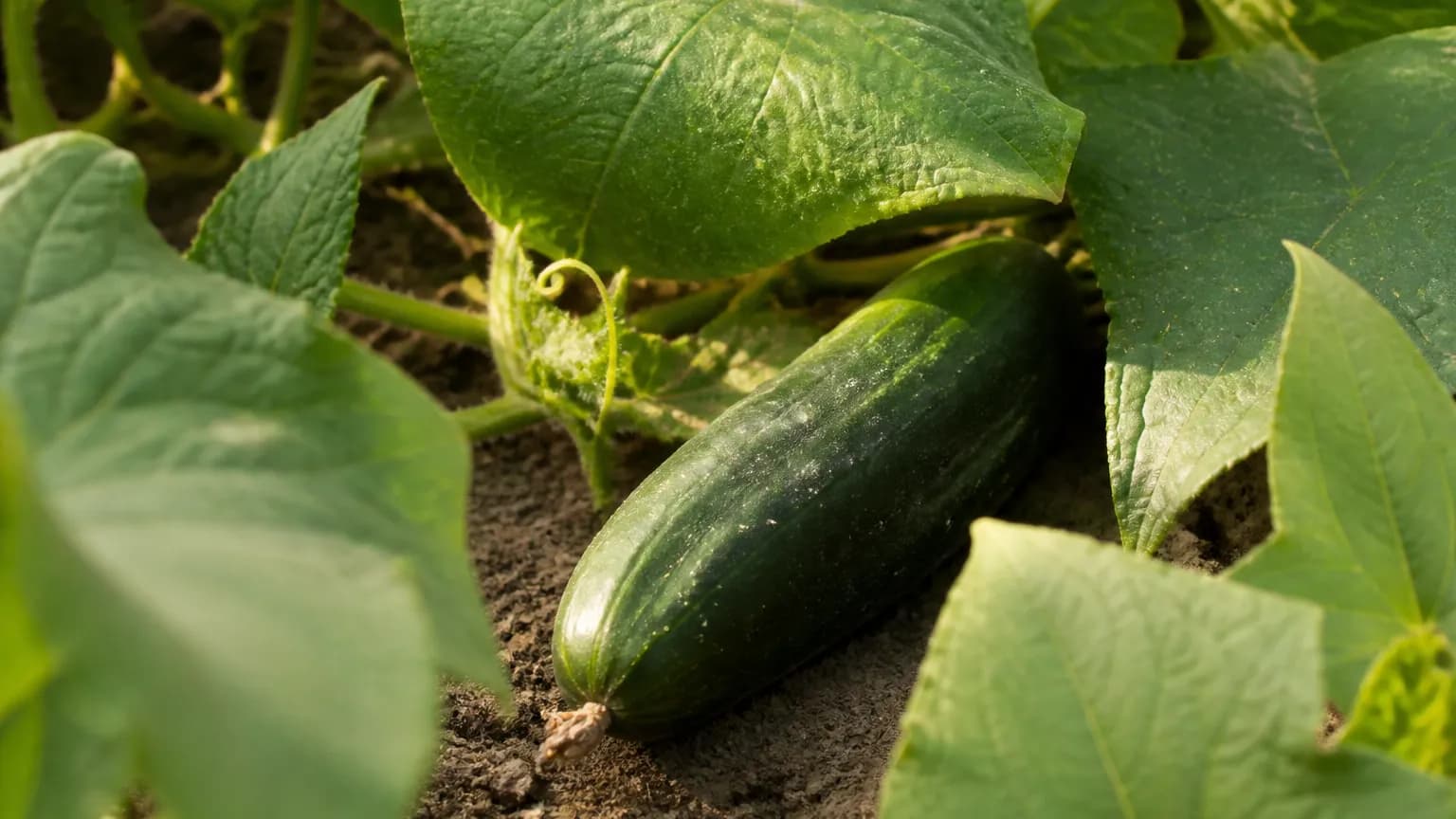
Requiere suelos fértiles, profundos y bien drenados con pH entre 6,0 y 7,0. Incorpore abundante compost o estiércol bien descompuesto antes de la plantación. Fertilice mensualmente con un abono equilibrado durante el crecimiento vegetativo y aumente el potasio cuando comience la fructificación. Las raíces tuberosas necesitan suelo suelto para desarrollarse.
Temperatura ideal
Compatibilidad de zonas de rusticidad
De la semilla a la cosecha, etapa por etapa
Germinación de semillas
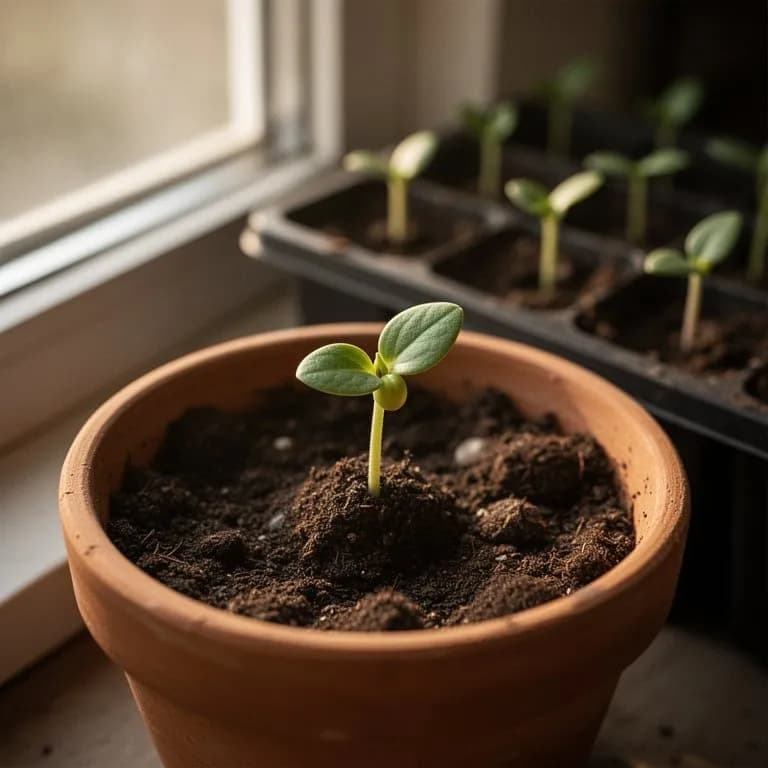
Las semillas de gac tienen una cubierta extremadamente dura y plana que requiere escarificación o remojo antes de sembrarlas. Las semillas se remojan en agua tibia durante 24-48 horas o se lima con cuidado la cubierta exterior para permitir la entrada de humedad. La germinación ocurre en 10-21 días en suelo cálido a 25-30°C (77-86°F). Los primeros cotiledones redondeados emergen a la superficie del suelo.
Plántula y establecimiento de la enredadera
Se desarrollan las hojas verdaderas con la forma palmada profundamente lobulada característica, con tres a cinco lóbulos puntiagudos. Los zarcillos aparecen rápidamente mientras la planta busca apoyo. La enredadera crece con rapidez en condiciones cálidas, estableciendo un sistema radicular fuerte que incluye un gran tubérculo subterráneo para ذخena de energía.
Crecimiento rápido de la enredadera
La enredadera entra en una fase de crecimiento explosivo, extendiéndose varios metros en todas direcciones y cubriendo su soporte con un follaje denso y exuberante. Las grandes hojas palmadas crean un efecto de dosel. El tubérculo subterráneo aumenta significativamente, almacenando energía para la fructificación. En condiciones tropicales la enredadera puede crecer 10-15 cm por día.
Desarrollo del fruto
Las flores femeninas polinizadas se desarrollan en frutos redondos u oblongos cubiertos de espinas suaves. Los frutos comienzan verdes y crecen hasta 10-15 cm de diámetro en 8-10 semanas. En el interior se desarrolla un mesocarpio naranja espeso (pulpa) que rodea las semillas envueltas en arilos rojos intensos ricos en carotenoides. Los frutos maduran de verde a naranja-rojo intenso.
Cosecha
Los frutos están listos para cosechar cuando la piel se vuelve completamente naranja-roja y las espinas se ablandan. Un fruto de gac maduro cede ligeramente al presionarlo y puede empezar a agrietarse en el extremo floral. Los frutos maduran de forma secuencial durante varias semanas, lo que permite un periodo de cosecha prolongado. Corta los frutos de la enredadera con un cuchillo afilado y deja un tallo corto adherido.
Después de la cosecha
El gac es una enredadera tropical perenne que puede sobrevivir inviernos suaves en climas adecuados y rebrotar en primavera desde sus raíces tuberosas. Las semillas también pueden guardarse para futuras siembras.
Escarifica un borde de la cubierta dura de la semilla con una lima o papel de lija antes de remojarla durante 24-48 horas en agua tibia. Siembra a 2-3 cm de profundidad en un sustrato cálido y bien drenado. Usa una manta térmica para mantener 28°C (82°F) y lograr la germinación más rápida.
Cuidar Fruta Gac mes a mes
Qué hacer cada mes para tu Fruta Gac
Octubre
Mes actualContinue harvesting ripening fruits. Late-season fruits may be smaller. Begin reducing fertilizer as the vine starts its natural decline. Save seeds from the best fruits for next season — clean, dry, and store in a cool place.
Ten claro qué hacer en tu huerto, cada mes
Un correo al empezar cada mes: qué sembrar, plantar y hacer ahora mismo — para tu Fruta Gac y todo lo que crece alrededor. Más un breve curso inicial para esquivar los errores clásicos.
- Qué hacer ahora mismo
- Ajustado a tu temporada
- Curso inicial incluido
Cosechar Fruta Gac
Coseche los frutos cuando estén completamente rojos y la piel ceda ligeramente a la presión, generalmente 180-220 días después de la siembra. Los frutos maduros se abren fácilmente para revelar la pulpa y las membranas rojas que rodean las semillas. Maneje con cuidado ya que las espinas pueden pinchar. Coseche por la mañana para máxima frescura.
se supone que plantas al comenzar el periodo — indica tu fecha real
Cosecha cuando la piel se vuelva de verde a naranja-rojo brillante y las espinas se ablanden, aproximadamente 4-5 meses después de la polinización.
Almacenamiento y conservación
Los frutos frescos tienen una vida útil corta de solo 2-3 días a temperatura ambiente. Refrigerados pueden durar hasta una semana. La pulpa roja puede congelarse en porciones para uso posterior durante 6-8 meses. Tradicionalmente, la pulpa se mezcla con arroz glutinoso y se cocina inmediatamente. El aceite de semilla de gac puede extraerse y conservarse embotellado.
Qué falla — y cómo solucionarlo
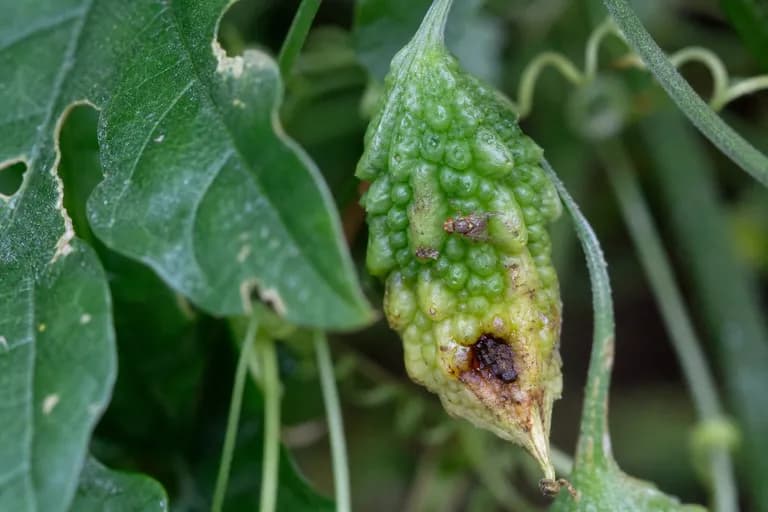
Mosca blanca (Bemisia tabaci)
PlagaPequeños insectos blancos alados en el envés de las hojas que succionan la savia, causando amarillamiento, debilitamiento y producción de melaza pegajosa.
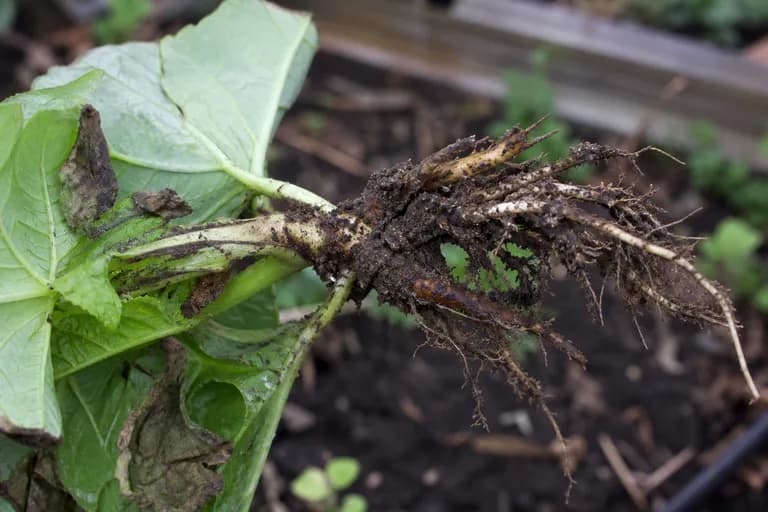
Oídio (Podosphaera xanthii)
EnfermedadPolvo blanco harinoso en la superficie de las hojas que se extiende rápidamente, reduciendo la fotosíntesis y debilitando la planta.
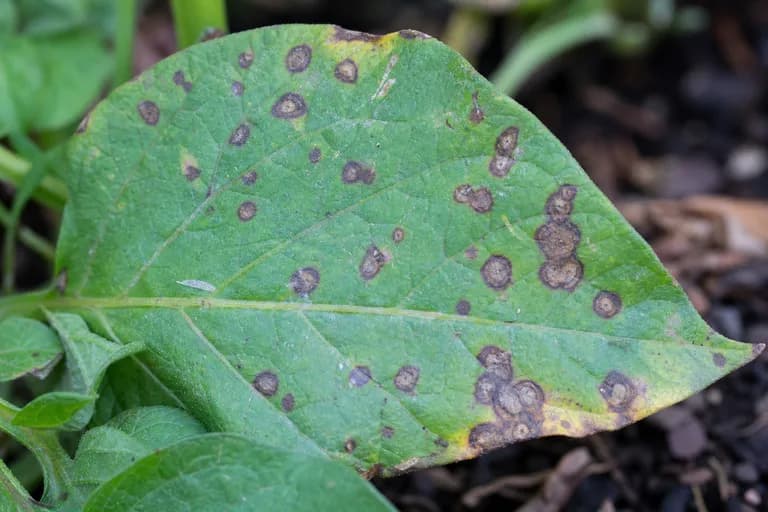
Barrenador del fruto (Diaphania indica)
PlagaLarvas que perforan los frutos jóvenes causando pudrición interna, deformación y caída prematura de los frutos.
Solución de problemas comunes
La temporada de crecimiento extremadamente larga es el principal desafío en climas templados; en muchas regiones europeas solo es viable en invernadero caliente. La necesidad de plantas masculinas y femeninas para la polinización puede ser un obstáculo. Los frutos maduros tienen una vida útil muy corta. Las heladas matan la parte aérea de la planta.
Consejos de cultivo
- Gac is dioecious — you must grow both male and female plants to get fruit. Since sex cannot be determined until flowering (often in the second year), plant at least 3-5 seeds to ensure you get both sexes. One male can pollinate 8-10 female plants.
- Build a very strong trellis, arbor, or pergola before planting. A mature gac vine can cover 20-30 square metres and the combined weight of foliage and dozens of heavy fruits is substantial. Weak structures will collapse mid-season.
- Scarify seeds before planting — the hard, flat seed coat is nearly impervious to water. Nick one edge with a file or sandpaper, then soak in warm water for 24-48 hours. Without scarification, germination rates drop below 20%.
- In subtropical zones where frost occurs, grow gac in a protected microclimate against a south-facing wall. The underground tuber can survive brief cold if buried deep and covered with 15-20 cm of mulch, but the vine will die back seasonally.
- Provide rich, well-draining soil amended heavily with compost. Gac is a heavy feeder and the large tuber requires loose, fertile soil to develop properly. Raised beds or mounds work well in areas with heavy clay.
- Water consistently and deeply — gac needs 3-5 cm of water per week during active growth and fruiting. The large leaf area transpires enormous amounts of water in hot weather. Drought stress during fruiting causes premature fruit drop.
- Hand-pollinate for the best fruit set. Use a small paintbrush to transfer pollen from a freshly opened male flower to the centre of a female flower (identified by the small swelling at its base) in the early morning hours.
- Process ripe gac fruit immediately after harvest. The arils and flesh oxidise and lose potency quickly. Scoop arils from the fruit, remove seeds, and freeze the aril in portions for year-round use in smoothies, rice dishes, and sauces.
Cultiva tu mejor Fruta Gac — y todo lo que la rodea.
Empieza un plan gratis hoy. Diseña tus bancales, coloca tu Fruta Gac y deja que PlotMyGarden gestione el momento, el espaciado, las asociaciones y los recordatorios de la semilla a la cesta.
Elige tu Fruta Gac
Gac vietnamita (estándar)
La variedad tradicional del norte de Vietnam con frutos grandes de 15-20 cm y pulpa roja intensamente pigmentada. Contenido excepcional en betacaroteno y licopeno. 180-200 días.
Gac tailandés
Variedad del sudeste asiático con frutos algo más pequeños pero más numerosos por planta. Pulpa roja brillante con buen contenido nutricional. 170-190 días.
Baby Gac
Selección con frutos más pequeños que maduran más rápidamente. Ideal para climas con temporadas de calor más cortas. Buena producción en macetas grandes. 150-170 días.
Fresh gac fruit is exceptionally rare and expensive outside Southeast Asia, typically selling for $15-30 per fruit at specialty Asian markets when available at all. Gac aril powder and supplements sell for $30-60 per 100g online. A single mature vine producing 30-60 fruits per season represents $450-1800 in equivalent market value. Since gac is a perennial that regrows from its tuber year after year, the initial investment in a plant pays for itself many times over. Growing your own gac is essentially the only way to access fresh fruit in most Western countries.
Recetas rápidas
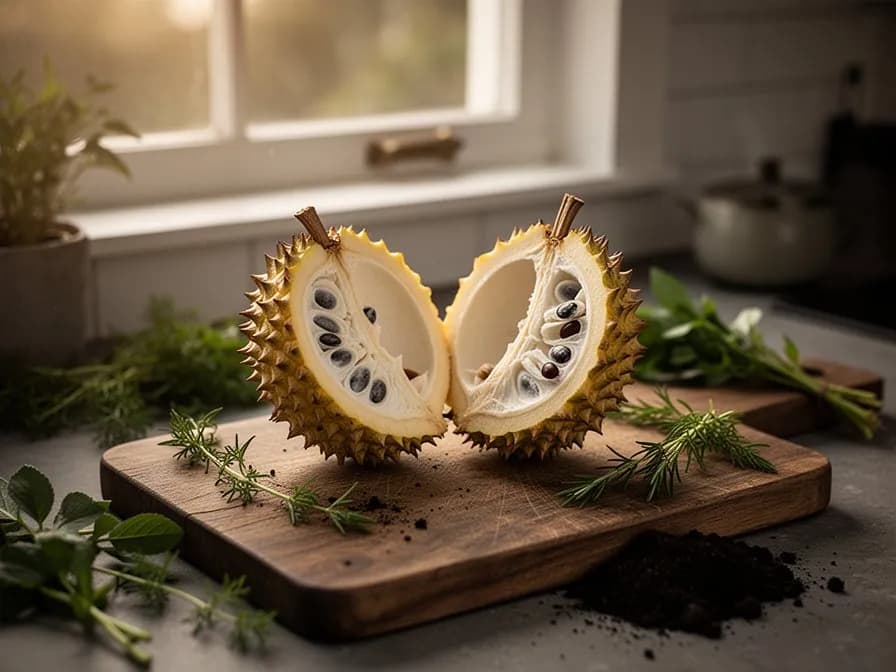
Xoi Gac (Vietnamese Gac Sticky Rice)
45 minThe most iconic gac fruit dish — glutinous rice is mixed with gac aril and coconut milk, then steamed until it turns a stunning red-orange. This celebratory dish is served at Vietnamese New Year (Tet) and weddings, symbolizing good luck and prosperity.
7 ingredientesGac Fruit Smoothie
10 minA vibrant, nutrient-packed tropical smoothie that delivers an extraordinary dose of beta-carotene and lycopene. The natural fats in gac help absorb all the carotenoids, making this one of the most nutritious smoothies possible.
7 ingredientesGac Fruit Seed Oil Dressing
15 minA brilliant red-orange dressing made by blending gac aril with oil and citrus. The intense colour and mild, slightly sweet flavour make it a stunning and highly nutritious addition to salads and grain bowls.
7 ingredientesUsos culinarios
En Vietnam, la pulpa roja de la fruta gac se mezcla tradicionalmente con arroz glutinoso para preparar el xôi gấc, un plato ceremonial de color rojo vibrante servido en bodas y festividades del Año Nuevo Lunar. La pulpa también se usa en jugos, batidos y suplementos nutricionales por su altísimo contenido en betacaroteno. Las hojas y brotes tiernos se consumen como verdura en sopas y salteados.
Qué contiene
Beneficios para la salud
- Contains the highest known concentration of beta-carotene of any fruit or vegetable — the body converts this to vitamin A, essential for vision health, immune function, and skin integrity. A single serving of gac aril provides many times the daily requirement.
- Extraordinarily rich in lycopene (70 times the concentration found in tomatoes), a powerful antioxidant associated with reduced risk of prostate cancer, heart disease, and age-related macular degeneration in numerous epidemiological studies.
- The natural fatty acids in gac seeds and arils (oleic and linoleic acid) dramatically enhance the bioavailability of the fat-soluble carotenoids, making the nutrients far more absorbable than from supplements alone.
- High levels of vitamin E (alpha-tocopherol) work synergistically with the carotenoids to provide exceptional antioxidant protection against cellular damage from free radicals.
- Traditional use for promoting eye health is supported by modern research — the combination of beta-carotene, lycopene, and lutein in gac may help prevent age-related macular degeneration and cataracts.
- Contains zeaxanthin, another carotenoid that accumulates in the retina and acts as a natural blue-light filter, further supporting long-term eye health and vision preservation.
De dónde viene Fruta Gac
Gac fruit (Momordica cochinchinensis) is native to the tropical regions of Southeast Asia, ranging from southern China through Vietnam, Laos, Cambodia, Thailand, and into northeastern India and Bangladesh. The plant grows wild in forests and along riverbanks, climbing over trees and shrubs with its vigorous tendrils. Its species name 'cochinchinensis' refers to Cochinchina, the historic name for southern Vietnam, where the fruit has been cultivated and revered for centuries.
In Vietnam, gac holds a uniquely important cultural position. Xoi gac, the brilliant red-orange sticky rice coloured and flavoured with gac aril, is considered essential at Tet (Lunar New Year) celebrations, weddings, and other auspicious occasions. The vivid red colour symbolises luck, prosperity, and happiness in Vietnamese culture. Historical records suggest gac has been cultivated in Vietnam for at least 500 years, and it is mentioned in traditional Vietnamese medical texts as a remedy for eye ailments, dry skin, and childhood nutritional deficiencies.
In traditional Chinese medicine, gac seeds (known as 'mu bie zi') have been used for over a thousand years, primarily as a topical treatment for skin conditions, wounds, and swelling. The fruit flesh and arils gained prominence as a food only in the last few centuries as their extraordinary nutritional properties became better understood. In recent decades, scientific analysis revealed that gac arils contain the highest known concentrations of beta-carotene and lycopene of any fruit or vegetable, sparking intense international interest. Today, gac is cultivated commercially in Vietnam, Thailand, and Australia, and gac-derived supplements, oils, and powders are exported worldwide. Despite this growing global awareness, gac remains largely unknown outside of Southeast Asian communities, making it one of the great undiscovered superfruits of the tropical world.
Fruta Gac: ¿sabías que?
Datos fascinantes sobre Fruta Gac
Gac fruit (Momordica cochinchinensis) contains the highest concentration of beta-carotene of any known fruit or vegetable — the red arils surrounding its seeds have up to 10 times more beta-carotene per gram than carrots and 70 times more lycopene than tomatoes.
Fruta Gac: preguntas frecuentes
¿Cuándo debo plantar Fruta Gac?
¿En qué zonas de rusticidad puede crecer Fruta Gac?
¿Cuánto sol necesita Fruta Gac?
¿A qué distancia debo espaciar Fruta Gac?
¿Qué plagas y enfermedades afectan a Fruta Gac?
¿Cómo almaceno Fruta Gac después de la cosecha?
¿Cuáles son las mejores variedades de Fruta Gac para cultivar?
¿Qué suelo necesita Fruta Gac?
Can I grow gac fruit in a temperate climate?
How do I tell male and female gac plants apart?
Why is my gac vine growing vigorously but not producing fruit?
What parts of the gac fruit are edible?
How do I store and preserve gac fruit?
Is gac fruit safe for everyone to eat?
Acabas de leer la teoría. Ahora cultívala en piloto automático.
Todo lo que hace que Fruta Gac sea delicado — el momento, el espaciado, las asociaciones, la ventana de cosecha — es justo lo que PlotMyGarden resuelve por ti, para cada planta de tu huerto.
Un plan que conoce tu clima
Indica tu ubicación una vez. Recibe fechas de siembra, abonado y cosecha basadas en tu última helada real y el pronóstico en vivo — sin adivinar con un sobre genérico.
De la sección “Cuándo plantar”Planificador de bancales de arrastrar y soltar
Diseña bancales sobre una cuadrícula. Cada planta encaja con su espaciado correcto y ves toda la temporada antes de gastar un céntimo en semillas.
De la sección “Cultivo”Conflictos de asociación, detectados a tiempo
Más de 200 buenas y malas combinaciones comprobadas en vivo mientras plantas — para que un error que arruine la temporada nunca llegue a la tierra.
De la sección “Asociaciones”Recordatorios que sí vas a seguir
“Riega las judías.” “Recoge hoy antes de que se pase.” Oportunos, concretos y ligados a las plantas que de verdad cultivas.
De la sección “Cosecha”Escalonado, programado
¿Quieres cosechar seis semanas en vez de seis días? Reparte tus siembras automáticamente y te avisa cuando toca el siguiente lote.
De la sección “Cuándo plantar”Un registro que se vuelve más listo
Cada cosecha que registras le enseña tu huerto. El plan del año que viene parte de lo que de verdad funcionó en tu suelo, no en un manual.
De la sección “Resumen”Más Cucurbitáceas
Cultiva tu mejor Fruta Gac — y todo lo que la rodea.
Empieza un plan gratis hoy. Diseña tus bancales, coloca tu Fruta Gac y deja que PlotMyGarden gestione el momento, el espaciado, las asociaciones y los recordatorios de la semilla a la cesta.