Chayote
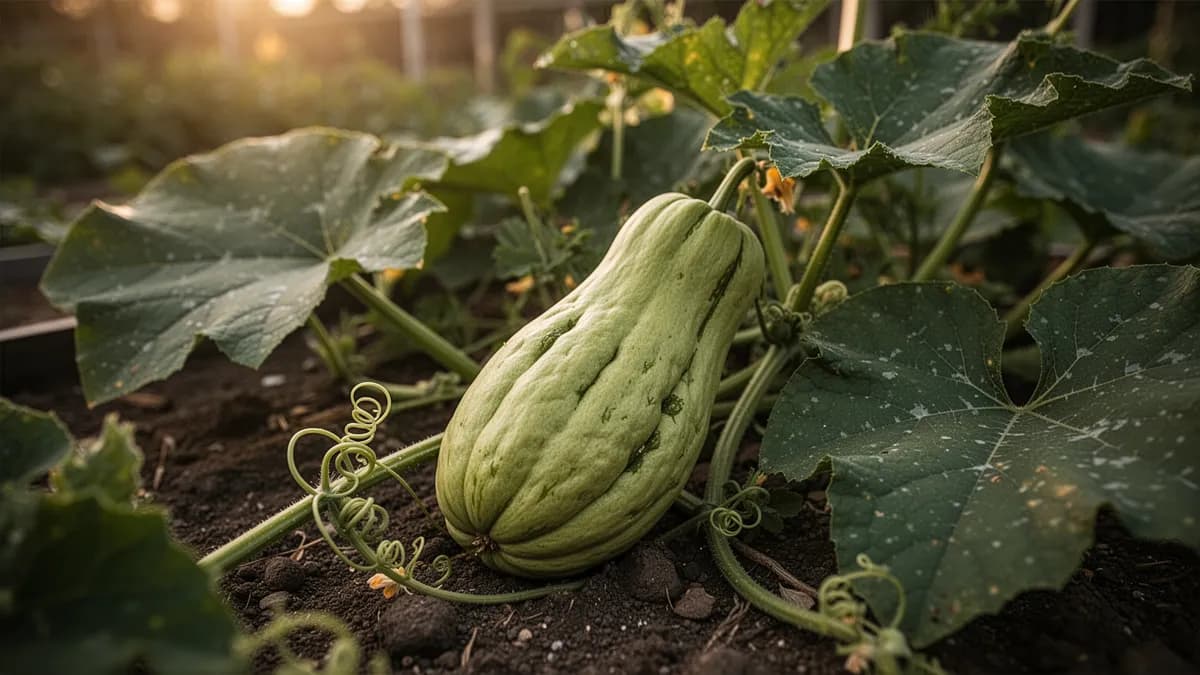
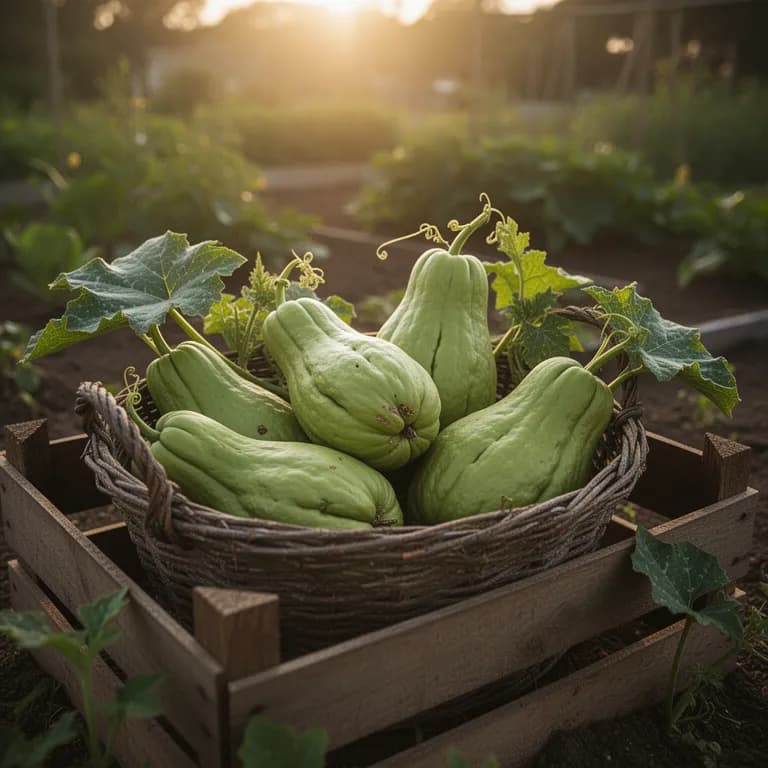
El chayote (Sechium edule) es una cucurbitácea perenne originaria de Mesoamérica que produce frutos piriformes de piel verde o blanca con una sola semilla grande y plana.





En esta páginaResumen
Conoce Chayote
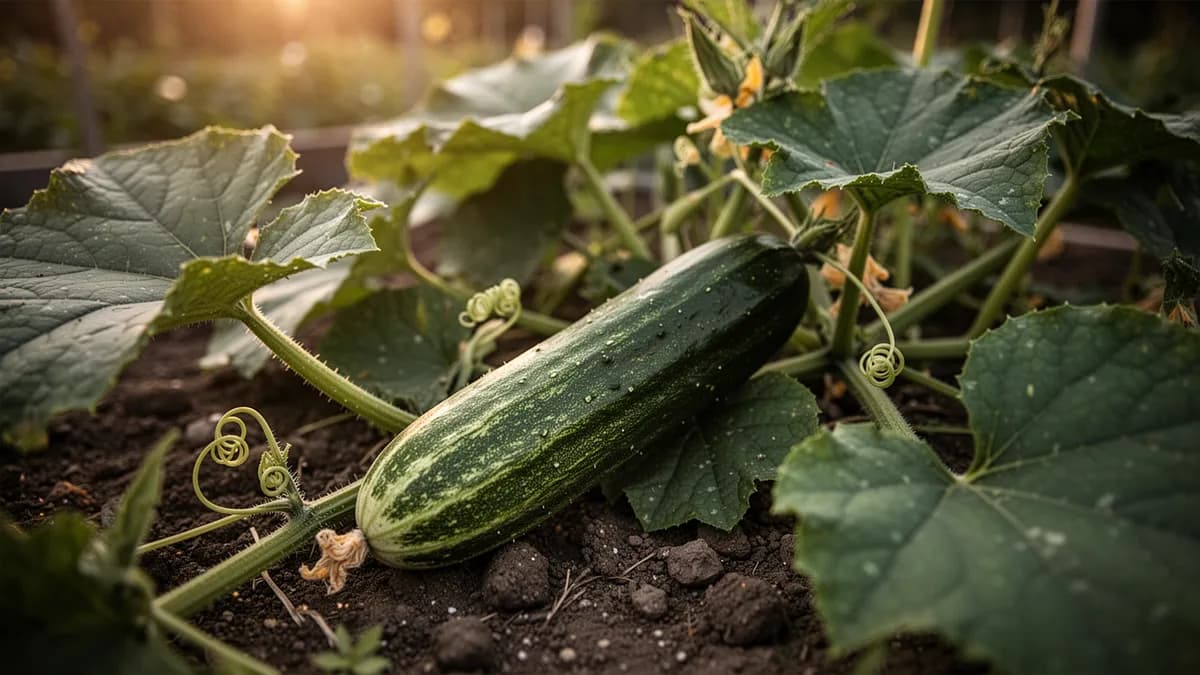
El chayote (Sechium edule) es una cucurbitácea perenne originaria de Mesoamérica que produce frutos piriformes de piel verde o blanca con una sola semilla grande y plana. Toda la planta es comestible: los frutos, las hojas tiernas, los brotes y las raíces tuberosas. Es un ingrediente fundamental de la cocina mexicana y centroamericana, apreciado por su sabor suave y textura crujiente.
Cuándo plantar Chayote
El chayote se propaga plantando el fruto entero con la semilla germinada. Coloque un fruto maduro en un lugar cálido y luminoso hasta que brote (2-4 semanas). Plante con el brote hacia arriba, enterrando 2/3 del fruto. No use semillas separadas del fruto.
Tu año de Chayote
Ajustado a Zona 7 · temporada típica · la helada se va hacia el 2 abr y vuelve hacia el 1 nov
Planta Chayote Mar – May y cosecha Sep – Nov. Consulta los métodos de plantación y elige tu clima para adaptar los periodos.
Cómo cultivar Chayote
El chayote se propaga plantando el fruto entero con la semilla germinada, colocándolo en ángulo de 45° con la parte ancha hacia abajo y el extremo con el brote asomando justo por encima del suelo. Plante cuando las temperaturas nocturnas superen 15 °C.
Proporcione un soporte muy robusto (pérgola, enrejado fuerte o cerca) ya que las enredaderas son extraordinariamente vigorosas y pueden alcanzar 10-15 metros, cubriendo grandes superficies. Riegue abundantemente con 4-5 cm semanales durante el crecimiento activo.
Fertilice mensualmente con compost y abono equilibrado. Las plantas son perennes en climas libres de heladas y producen más abundantemente en su segundo y tercer año. En climas con heladas, proteja la corona con acolchado grueso en invierno o cultive como anual. La producción de frutos comienza 3-4 meses después de la plantación.
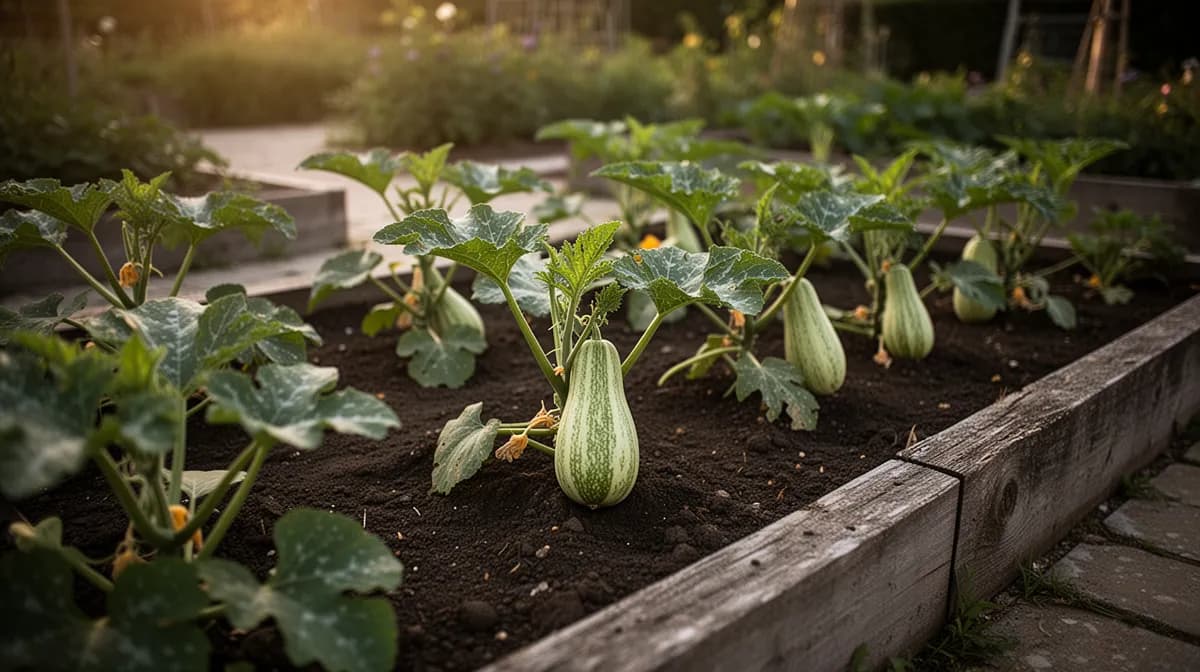
Para Chayote un bancal de 120 × 240 cm se queda corto
Cada Chayote pide 150 cm de margen. El planificador guarda ese marco por ti — cada planta, cada bancal.
Los mejores vecinos de Chayote
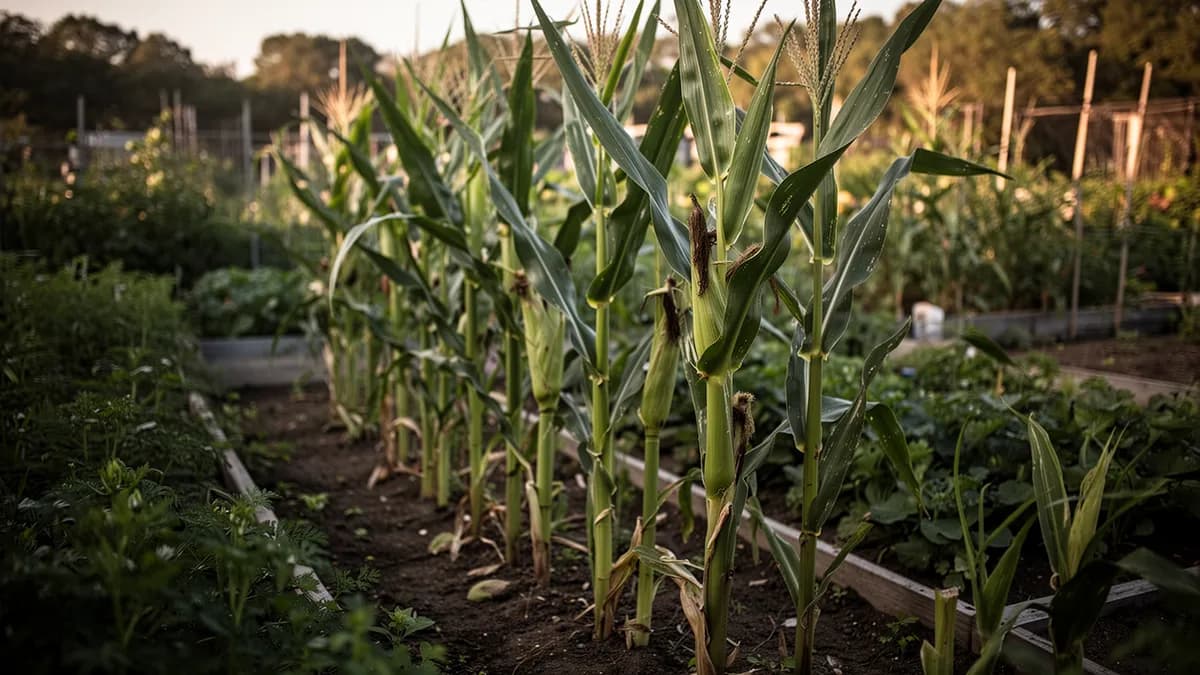
El chayote necesita mucho espacio y una estructura de soporte robusta. Plante donde las enredaderas puedan expandirse sin competir. Los frijoles y el maíz son compañeros tradicionales mesoamericanos. Evite plantar bajo árboles frutales que necesitan luz.
Maíz va a su lado.
Saber de huerto de siempre, cotejado con la tabla real de Chayote — prueba cualquier planta que cultives.
Prueba Chayote en un bancal, aquí mismo
Un bancal real del planificador con Chayote ya plantado. Toca una planta compañera para colocarla y mira cómo responde la comprobación de vecinos: verde para buenos vecinos, rojo si hay conflicto.


Guías de cultivo relacionadas
Abónalo bien
Suelos ricos, profundos y bien drenados con pH 6,0-7,0. Las plantas son grandes y voraces; enmiende generosamente con compost. Fertilice mensualmente con abono equilibrado. Las raíces tuberosas necesitan suelos sueltos y profundos.
Temperatura ideal
Compatibilidad de zonas de rusticidad
De la semilla a la cosecha, etapa por etapa
Brote del fruto
A diferencia de la mayoría de las hortalizas, la chayota se propaga plantando el fruto entero. La única semilla grande germina dentro del fruto y emite un brote desde el extremo del tallo. Desde la base se desarrolla un sistema radicular. El propio fruto aporta nutrientes al brote joven durante esta fase crítica de establecimiento.
Establecimiento de la vid
La vid joven crece rápidamente una vez establecida, produciendo hojas en forma de corazón y zarcillos fuertes que se sujetan a cualquier soporte disponible. El desarrollo de las raíces es vigoroso durante esta fase y va formando el sistema radicular tuberoso que almacena energía para años de crecimiento futuro en plantaciones perennes.
Crecimiento vegetativo vigoroso
La vid entra en un crecimiento explosivo y, bajo condiciones cálidas, puede extenderse fácilmente 30-40 pies en una sola temporada. El follaje denso cubre por completo la estructura de soporte. El sistema radicular tuberoso se desarrolla bajo tierra y almacena carbohidratos para el rebrote perenne. Las ramas laterales se expanden con rapidez.
Floración
Aparecen pequeñas flores de color blanco verdoso en racimos en las axilas de las hojas. La chayota es monoica, con flores masculinas y femeninas separadas en la misma planta. Las flores masculinas aparecen en racimos, mientras que las femeninas son solitarias. Los días más cortos del otoño suelen desencadenar la floración más intensa.
Desarrollo del fruto
Los frutos en forma de pera se desarrollan rápidamente a partir de flores femeninas polinizadas y alcanzan el tamaño de cosecha en 25-30 días. Cada fruto contiene una sola semilla grande y plana, rodeada de una pulpa crujiente y de sabor suave. En zonas sin heladas, la producción continúa durante semanas y docenas de frutos maduran de forma sucesiva.
Cosecha máxima y dormancia perenne
La producción alcanza su punto máximo en otoño, cuando los días más cortos desencadenan una fructificación abundante. Una vid sana puede producir 50-100 frutos o más antes de la helada. En plantaciones perennes, la vid se seca tras la helada, pero la enorme raíz tuberosa sobrevive para rebrotar la primavera siguiente con aún más vigor.
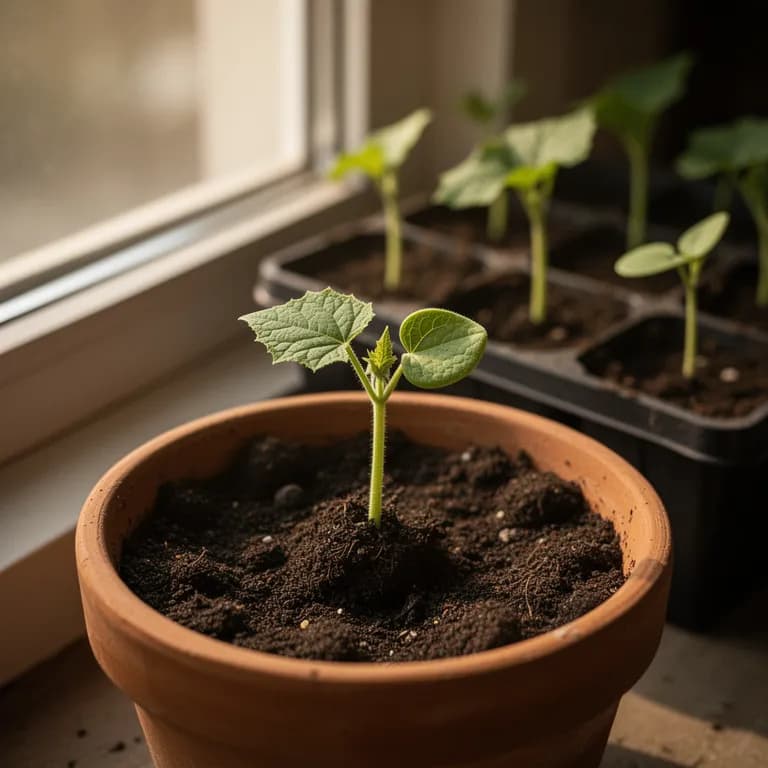
Coloca el fruto en un lugar cálido y luminoso en interiores para iniciar el brote. Cuando aparezca un brote de 10-15 cm, planta el fruto de lado, en un ángulo de 45 grados, dejando el brote expuesto. Mantén el suelo húmedo de forma constante, pero sin encharcarlo.
Cuidar Chayote mes a mes
Qué hacer cada mes para tu Chayote
Octubre
Mes actualPeak harvest month in most regions. Check vines every 2-3 days and harvest fruits at 10-15 cm before the seed inside hardens. In frost-prone areas, harvest all remaining fruits before the first freeze. A single vine may produce dozens of fruits this month.
Ten claro qué hacer en tu huerto, cada mes
Un correo al empezar cada mes: qué sembrar, plantar y hacer ahora mismo — para tu Chayote y todo lo que crece alrededor. Más un breve curso inicial para esquivar los errores clásicos.
- Qué hacer ahora mismo
- Ajustado a tu temporada
- Curso inicial incluido
Cosechar Chayote
Coseche los frutos cuando midan 10-15 cm de largo y estén firmes y de color verde uniforme, 90-120 días tras la plantación. Los frutos tiernos y jóvenes son los más sabrosos. Corte con tijeras dejando 2-3 cm de pedúnculo. Una planta establecida puede producir 50-100 frutos por temporada.
se supone que plantas al comenzar el periodo — indica tu fecha real
Atrae polinizadores plantando flores compañeras cerca. Las abejas son esenciales para el cuajado del fruto. Evita el uso de pesticidas durante la floración. Continúa con riegos y abonados regulares para cubrir las demandas energéticas de la producción floral.
Almacenamiento y conservación
Los frutos frescos se conservan a temperatura ambiente 2-3 semanas o en refrigerador hasta un mes. No congele crudos (se vuelven esponjosos); cocine antes de congelar. También se pueden encurtir o deshidratar en rodajas.
Qué falla — y cómo solucionarlo
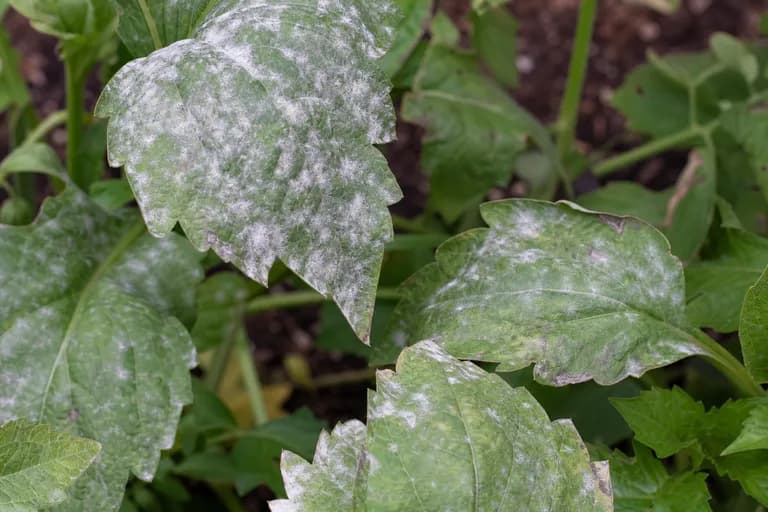
Oídio (Podosphaera xanthii)
EnfermedadPolvo blanco en hojas que progresa a necrosis.
Mosca de la fruta (Anastrepha spp.)
PlagaPunciones en frutos, larvas internas, pudrición.
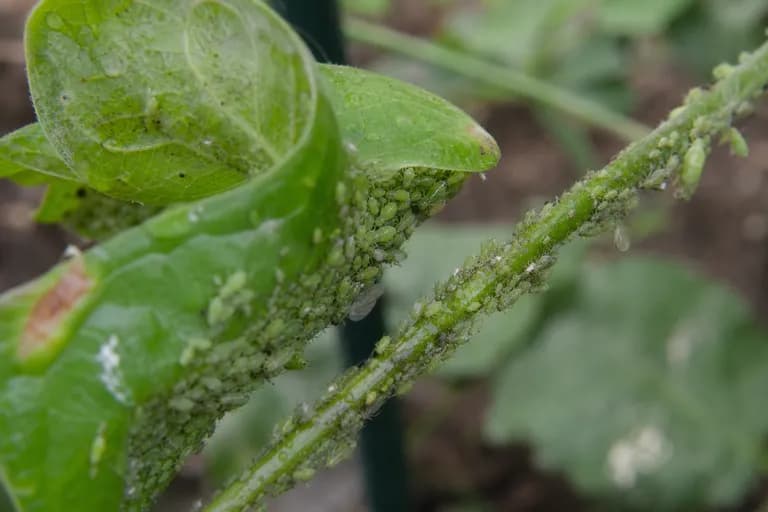
Pulgón del melón (Aphis gossypii)
PlagaColonias en brotes tiernos y envés de hojas.
Solución de problemas comunes
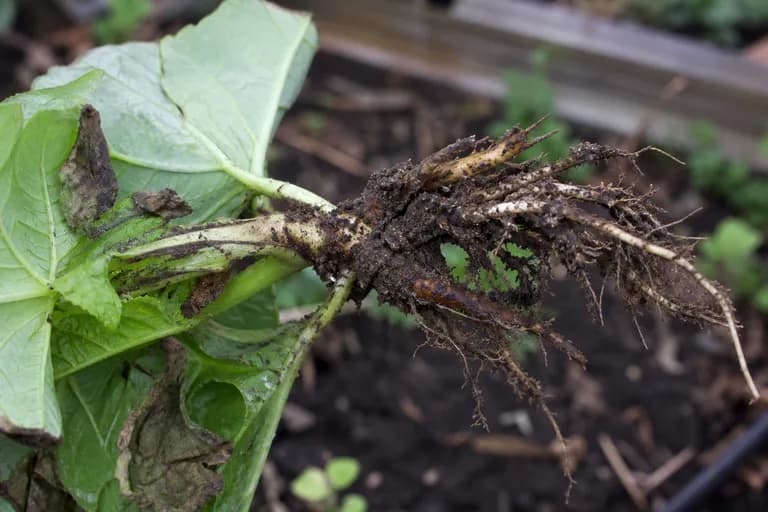
Las enredaderas son extremadamente vigorosas y pueden invadir todo sin soporte adecuado. No tolera heladas. En climas templados, la temporada puede ser insuficiente para producción abundante como anual. El fruto contiene una savia que puede irritar la piel sensible.
Consejos de cultivo
- Start with a grocery store chayote and be patient. Place the fruit in a warm, bright spot and wait for the shoot to emerge from the stem end — this can take 2-6 weeks. Do not remove the seed from the fruit; the entire fruit is the planting unit.
- Build your trellis before you plant, and make it much stronger than you think necessary. A mature chayote vine with fruit can weigh hundreds of pounds. Chain-link fencing, heavy-duty arbors, or reinforced pergolas work well. Lightweight garden trellises will collapse.
- Plant the sprouted fruit on its side at a 45-degree angle, half-buried with the sprouted end sticking up and out of the soil. Planting too deep or fully covering the fruit invites rot.
- Water deeply and consistently — chayote is a tropical plant that needs 2-3 inches of water per week during active growth. Drought stress dramatically reduces fruit production and can kill first-year plants.
- Be patient for fruit production in temperate climates. Chayote typically flowers in response to shortening day lengths in late summer and autumn, so fruits may not appear until September or October. Plan accordingly and ensure a long frost-free window.
- In zones 8-9, protect the root crown in winter with a heavy mulch mound of 15-20 cm of straw, leaves, or wood chips. The tuberous root can survive mild ground freezes if insulated, and the vine will resprout stronger the following spring.
- Harvest young shoots and tendrils throughout the growing season as a bonus green vegetable. They are delicious stir-fried with garlic and are considered a delicacy in many Asian cuisines.
- Save your best, most uniform fruits for next year's planting stock. Store them in a cool, dark place through winter, then move to warmth and light in late winter to initiate sprouting for the new season.
Cultiva tu mejor Chayote — y todo lo que la rodea.
Empieza un plan gratis hoy. Diseña tus bancales, coloca tu Chayote y deja que PlotMyGarden gestione el momento, el espaciado, las asociaciones y los recordatorios de la semilla a la cesta.
Elige tu Chayote
Chayote Verde (tipo mexicano)
La variedad más común con frutos piriformes verde claro de piel lisa. Sabor suave y versátil. 90-120 días.
Chayote Blanco
Variedad con frutos de color blanco-crema, más dulce y tierno que el verde. Popular en mercados gourmet.
Chayote Espinoso
Variedad con espinas blandas en la superficie del fruto. Sabor más pronunciado. Común en Centroamérica.
Perulero (tipo costarricense)
Variedad grande y redondeada de color verde oscuro. Pulpa densa y firme. Popular en Costa Rica.
A single chayote fruit from the grocery store costs $1-3 and can be sprouted to grow a vine producing 50-150 fruits per season. With chayote selling for $1-3 each at Latin American markets and specialty grocers, a single vine can yield $50-300 worth of produce. The plant is also perennial in warm climates, producing larger harvests each year with no replanting cost. The edible shoots, leaves, and tuberous root add further value that most gardeners never even realize they can harvest.
Recetas rápidas
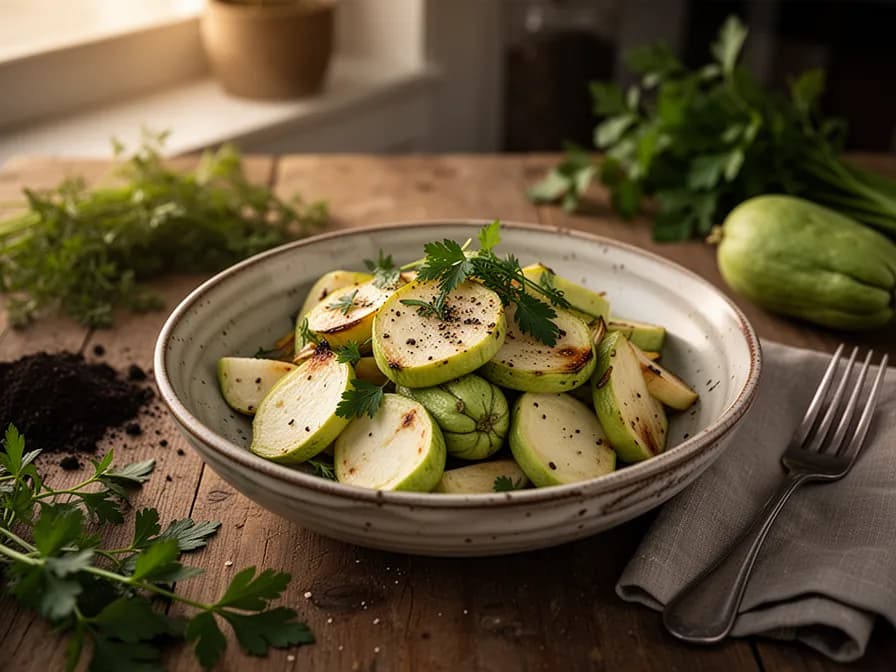
Chayote Stir-Fry with Garlic and Shrimp
20 minA quick, light stir-fry showcasing chayote's crisp-tender texture paired with succulent shrimp. The mild flesh absorbs garlic and soy sauce beautifully while maintaining a satisfying crunch similar to water chestnut.
8 ingredientesStuffed Baked Chayote
45 minHalved chayote boats filled with a savory mixture of cheese, breadcrumbs, and herbs then baked until golden — a classic Latin American preparation that transforms the mild squash into a satisfying main dish or hearty side.
7 ingredientesChayote and Lime Slaw
15 minA refreshing raw slaw that highlights chayote's crisp, cucumber-like quality. Julienned chayote dressed in lime and chili makes a vibrant side for grilled meats, tacos, or fish. No cooking required.
7 ingredientesUsos culinarios
El chayote se pela, corta y hierve como patata; se rellena con carne, queso o granos y se hornea; se añade a sopas, guisos y caldos mexicanos. Crudo rallado se añade a ensaladas. Los brotes tiernos (puntas de chayote) se saltean como verdura. Las raíces tuberosas se preparan como patatas. Es ingrediente del pipián y del caldo de chayote.
Qué contiene
Beneficios para la salud
- Extremely low in calories at only 19 per 100g, making chayote one of the best vegetables for calorie-conscious diets while still providing satisfying bulk and fiber for fullness.
- Rich in folate (vitamin B9), providing about 23% of the daily value per cup — essential for DNA synthesis, cell division, and critically important during pregnancy for fetal neural development.
- Contains anti-inflammatory compounds, particularly flavonoids and polyphenols, that research suggests may help reduce chronic inflammation associated with heart disease and metabolic syndrome.
- The dietary fiber in chayote supports digestive health, promotes regular bowel movements, feeds beneficial gut bacteria, and helps maintain stable blood sugar levels after meals.
- Traditional medicinal use of chayote leaf tea for cardiovascular health is being validated by modern research — studies have identified diuretic and blood-pressure-lowering properties in chayote leaf extracts.
- Provides vitamin C, manganese, and zinc that collectively support immune function, wound healing, and the body's antioxidant defense systems.
De dónde viene Chayote
Chayote (Sechium edule) originated in Mesoamerica, with its center of diversity in southern Mexico and Guatemala where wild relatives still grow in mountain cloud forests. Archaeological evidence and genetic studies indicate chayote was one of the earliest domesticated crops in the Americas, cultivated by pre-Columbian civilizations long before the arrival of Europeans. The Aztecs, Maya, and other Mesoamerican peoples grew chayote extensively, valuing it as a versatile food source where every part of the plant — fruit, seed, shoots, leaves, and tuberous root — could be eaten.
Spanish colonizers encountered chayote in Mexico in the 16th century and spread it throughout their colonial empire. The plant traveled to the Caribbean, South America, the Philippines, and eventually to Europe, Africa, and Asia. Its adaptability to tropical and subtropical climates made it an instant success wherever it was introduced. In Louisiana, chayote became known as 'mirliton' and was embraced by Creole cuisine — to this day, stuffed mirlitons are a beloved traditional dish in New Orleans.
Today, chayote is grown commercially across Latin America, Southeast Asia, India, and parts of Africa. Costa Rica and Mexico are the largest exporters. In the United States, it is cultivated commercially in Florida, California, and Louisiana, and is widely available in Latin American and Asian markets. The plant's extraordinary productivity, perennial nature in warm climates, and complete edibility make it increasingly attractive to permaculture practitioners and food security researchers. Modern interest has focused on the nutritional and medicinal properties of chayote, particularly compounds in the leaves and fruit that show promise for cardiovascular health and blood sugar regulation.
Chayote: ¿sabías que?
Datos fascinantes sobre Chayote
The name 'chayote' comes from the Nahuatl (Aztec) word 'chayohtli,' and the plant has been cultivated in Mesoamerica for thousands of years — archaeological evidence suggests it was domesticated before maize and beans.
Chayote: preguntas frecuentes
¿Cuándo debo plantar Chayote?
¿Cuáles son buenas plantas acompañantes para Chayote?
¿En qué zonas de rusticidad puede crecer Chayote?
¿Cuánto sol necesita Chayote?
¿A qué distancia debo espaciar Chayote?
¿Qué plagas y enfermedades afectan a Chayote?
¿Cómo almaceno Chayote después de la cosecha?
¿Cuáles son las mejores variedades de Chayote para cultivar?
¿Qué suelo necesita Chayote?
Can I grow chayote from the seed inside the fruit?
Will chayote survive winter in my climate?
Why is my chayote vine huge but not producing any fruit?
Is the flat seed inside the chayote fruit edible?
How do I eat the other edible parts of the chayote plant?
Acabas de leer la teoría. Ahora cultívala en piloto automático.
Todo lo que hace que Chayote sea delicado — el momento, el espaciado, las asociaciones, la ventana de cosecha — es justo lo que PlotMyGarden resuelve por ti, para cada planta de tu huerto.
Un plan que conoce tu clima
Indica tu ubicación una vez. Recibe fechas de siembra, abonado y cosecha basadas en tu última helada real y el pronóstico en vivo — sin adivinar con un sobre genérico.
De la sección “Cuándo plantar”Planificador de bancales de arrastrar y soltar
Diseña bancales sobre una cuadrícula. Cada planta encaja con su espaciado correcto y ves toda la temporada antes de gastar un céntimo en semillas.
De la sección “Cultivo”Conflictos de asociación, detectados a tiempo
Más de 200 buenas y malas combinaciones comprobadas en vivo mientras plantas — para que un error que arruine la temporada nunca llegue a la tierra.
De la sección “Asociaciones”Recordatorios que sí vas a seguir
“Riega las judías.” “Recoge hoy antes de que se pase.” Oportunos, concretos y ligados a las plantas que de verdad cultivas.
De la sección “Cosecha”Escalonado, programado
¿Quieres cosechar seis semanas en vez de seis días? Reparte tus siembras automáticamente y te avisa cuando toca el siguiente lote.
De la sección “Cuándo plantar”Un registro que se vuelve más listo
Cada cosecha que registras le enseña tu huerto. El plan del año que viene parte de lo que de verdad funcionó en tu suelo, no en un manual.
De la sección “Resumen”Planta estos junto a Chayote
Más Cucurbitáceas
Cultiva tu mejor Chayote — y todo lo que la rodea.
Empieza un plan gratis hoy. Diseña tus bancales, coloca tu Chayote y deja que PlotMyGarden gestione el momento, el espaciado, las asociaciones y los recordatorios de la semilla a la cesta.