Spicebush
typical season: plant Oct – Apr · set your climate
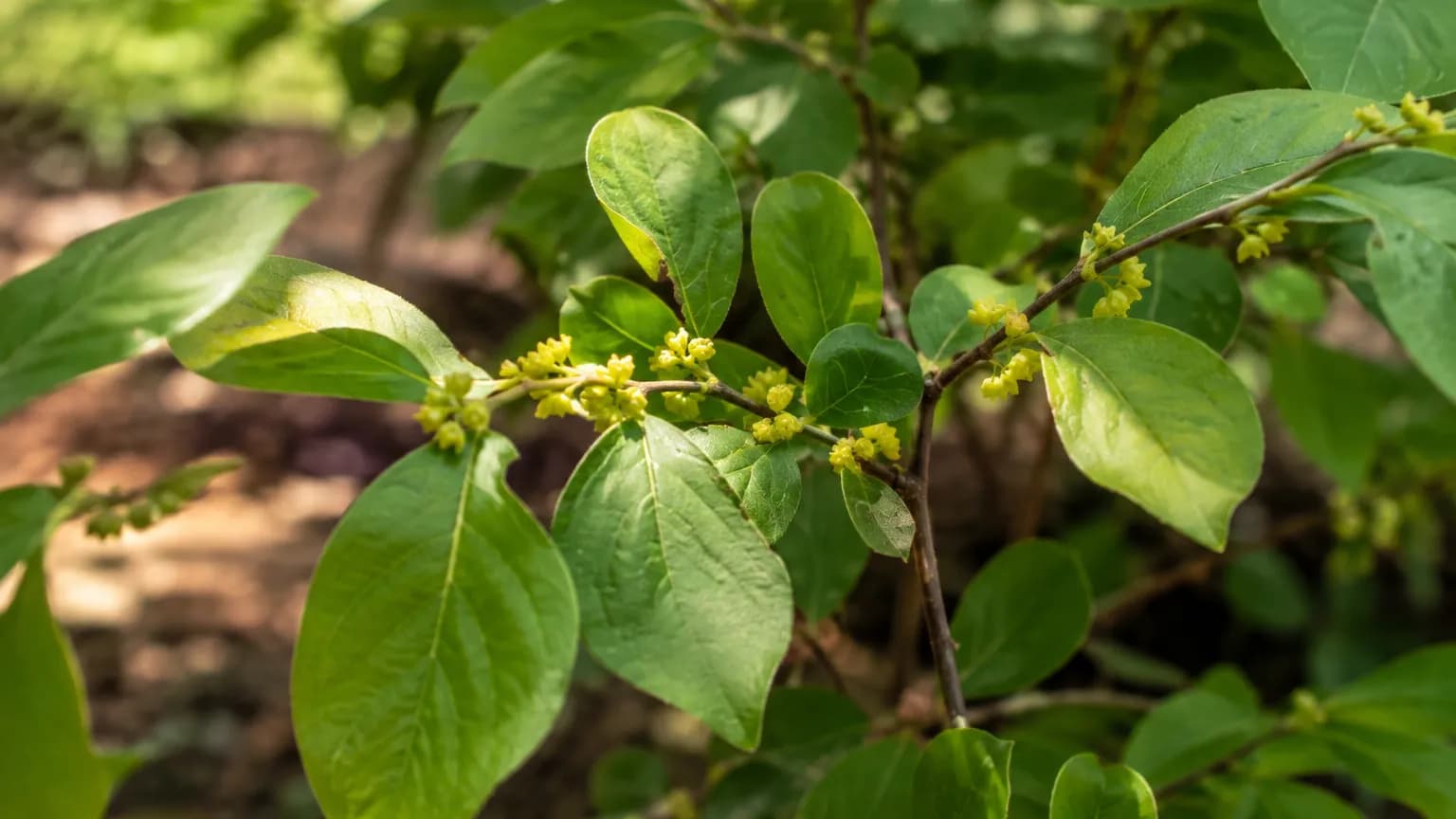
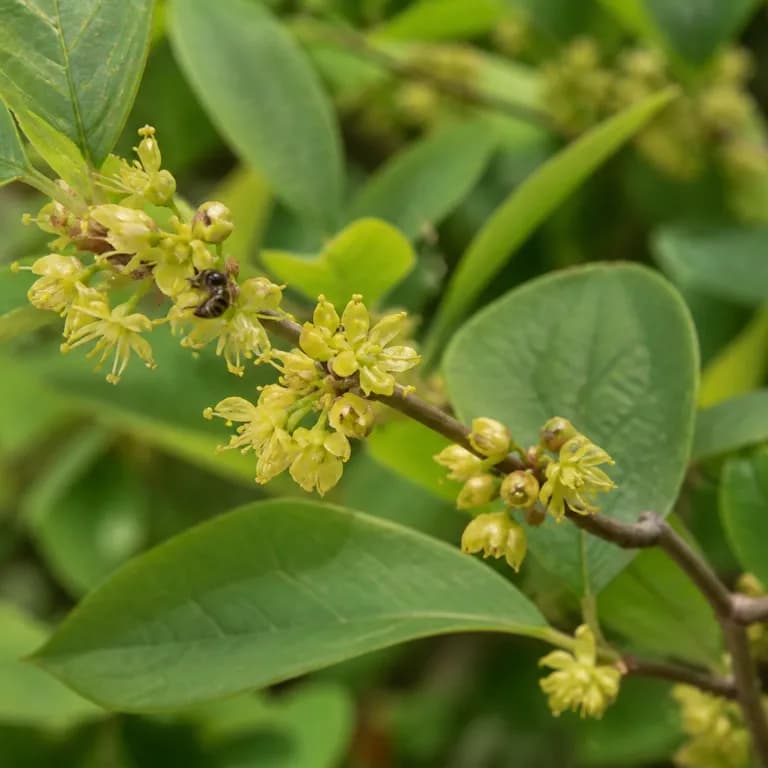
Spicebush is a native North American understory shrub that announces spring with a haze of tiny, fragrant yellow flowers along bare branches, weeks before most shrubs leaf out.
On this pageOverview
Meet Spicebush
Spicebush is a native North American understory shrub that announces spring with a haze of tiny, fragrant yellow flowers along bare branches, weeks before most shrubs leaf out. Crushed leaves and twigs release a spicy, citrus-like aroma, and female plants set glossy scarlet berries in late summer that foragers dry and grind as an allspice-like seasoning. It is the essential host plant of the spicebush swallowtail butterfly, whose caterpillars hide inside folded leaves. Adaptable, deer-resistant, and nearly pest-free, it thrives in partial shade and moist soil, finishing the year in luminous golden-yellow fall color.
When to plant Spicebush
Spicebush seed has a double dormancy, so patience is built into the process. Collect fully red berries in August or September and clean off the oily pulp, which inhibits germination. Give the cleaned seed 60 to 90 days of warm stratification at around 20 degrees Celsius, then 90 to 120 days of cold stratification in barely moist sand at 1 to 4 degrees Celsius. Sow 1 cm deep in a shaded nursery bed or deep pots and keep evenly moist; most seed germinates the spring after its cold period, roughly a year after collection, at rates around 40 percent. Grow seedlings on in dappled shade for their first year. Seed-grown plants reveal their sex only when they first flower at two to three years, so sow extra — or take softwood cuttings in early summer from a shrub of known sex, which root far more predictably.
Your Spicebush Year
Composed for Zone 7 · typical seasons · frost passes Apr 2, returns Nov 1
Plant Spicebush Mar – Apr, Oct, in bloom Aug – Sep. Check the planting methods below and set your climate to personalize these windows.
Spicebush in bloom this season? Its next window opens Oct 1
One email a few days before it opens where you garden and one two weeks before it closes.
One email per milestone, never more than one a week. Unsubscribe with one tap. No account needed.
How to grow Spicebush
Spicebush is one of the easiest native shrubs to please, asking only for the woodland-edge conditions it evolved in: dappled or partial shade, soil that stays evenly moist, and a carpet of leaf litter at its feet. Choose a site with slightly acidic to neutral soil (pH 5.5 to 7.0) — it adapts to clay and even periodically wet ground along stream banks, but not to chronic drought or deep, dry shade. Plant container-grown or balled-and-burlapped shrubs in spring or fall, spacing them about 180 cm apart, and set the root ball at the same depth it grew in the nursery.
Because spicebush is dioecious, plan the planting around fruit from the start: male and female flowers open on separate shrubs, and only females set berries — and only when a male blooms within pollinator range. Buy sexed container plants (a labeled female plus a labeled male) or plant a group of three or four seed-grown shrubs to stack the odds. Water deeply, about 2.5 cm per week, for the first two growing seasons, keep a 5 to 8 cm ring of shredded-leaf mulch over the root zone, and top-dress with compost each spring. Growth is moderate at 30 to 60 cm a year, maturing into a rounded shrub 1.8 to 3.6 meters tall and wide.
Pruning is minimal but timing matters: spicebush blooms on wood grown the previous summer, so do all shaping immediately after the flowers fade in spring. Every two or three years, remove the oldest third of the stems at ground level to keep the shrub dense and floriferous. Cut out winter-killed or crossing branches whenever you spot them, and leave any root suckers in place if you want the shrub to naturalize into a loose thicket. Avoid pruning after midsummer — every cut then removes next spring's flower buds.
Spicebush's best neighbours
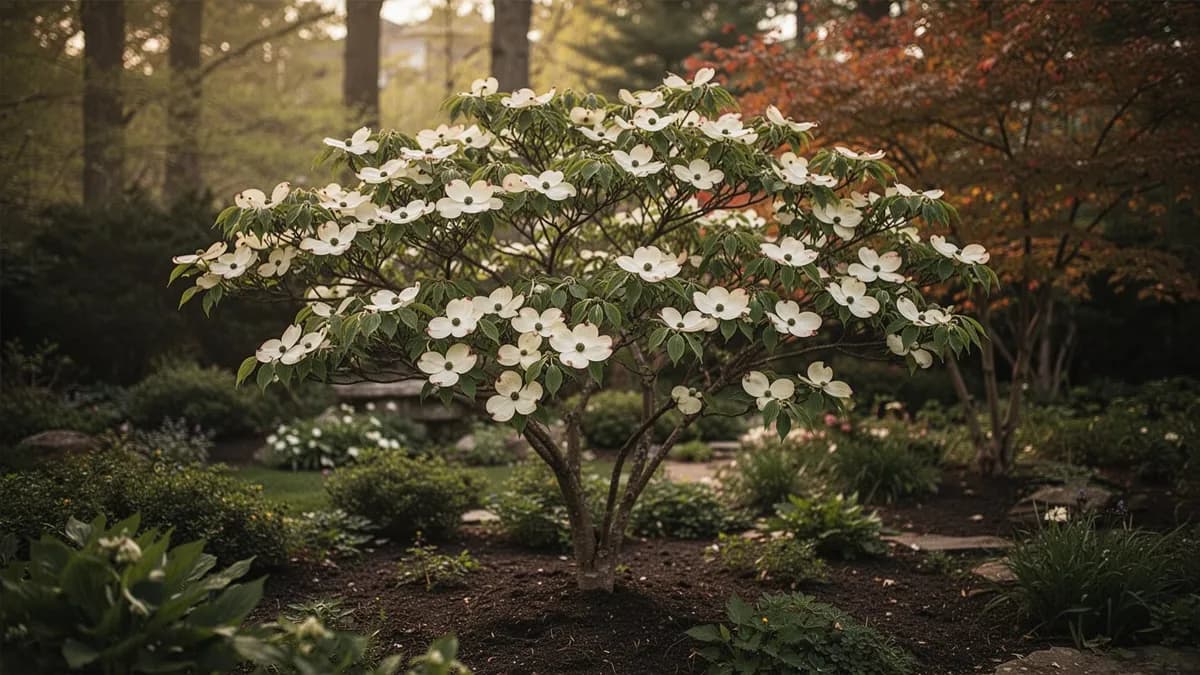
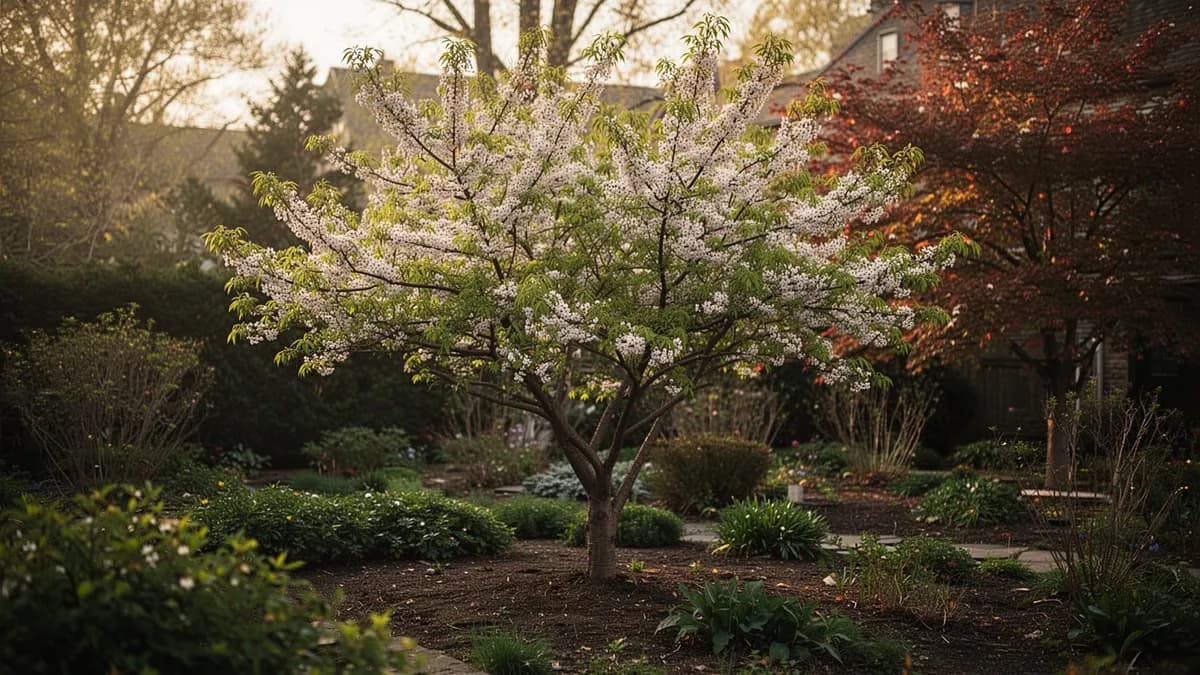
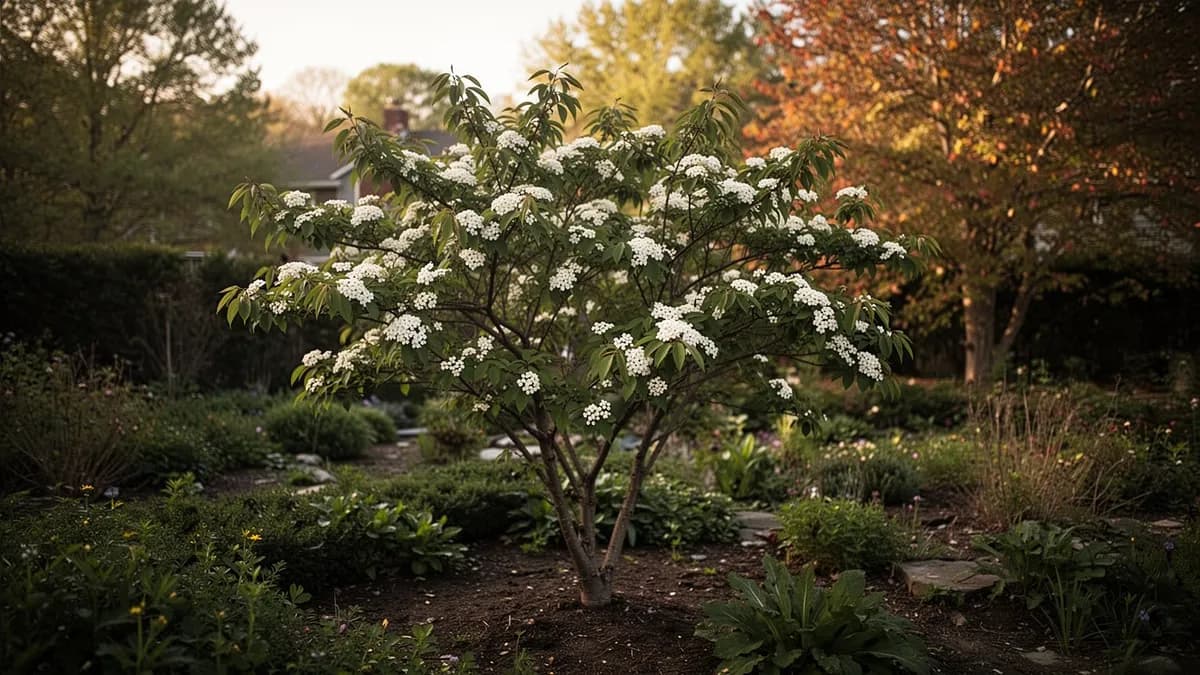
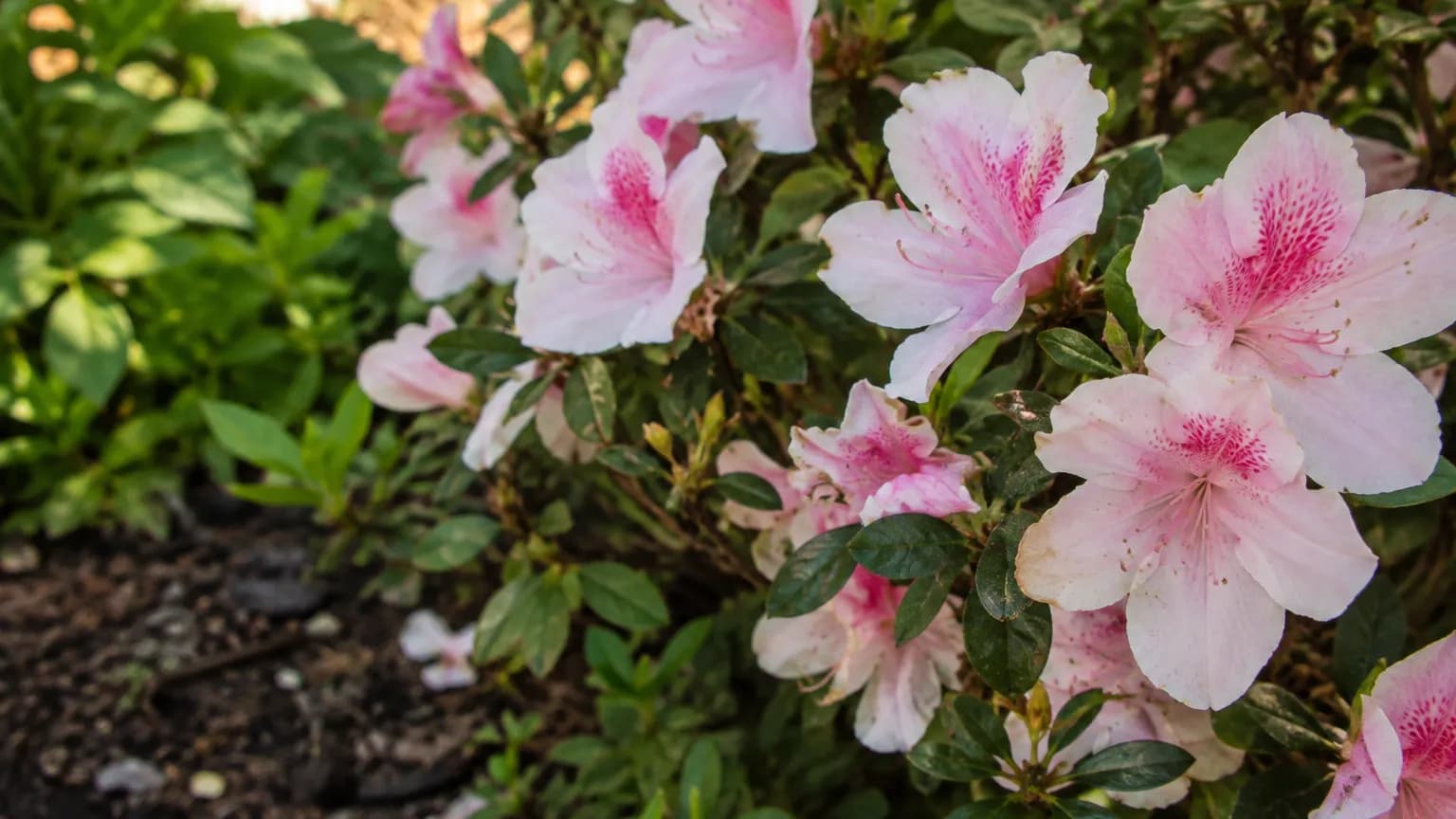
Spicebush slots naturally into the woodland-edge layer beneath and beside native small trees — flowering dogwood, eastern redbud, and serviceberry all share its taste for part shade and moist, humus-rich, slightly acidic soil, and their white and pink blossoms take over just as spicebush's yellow haze fades. Underplant with spring ephemerals such as bloodroot, trillium, and Virginia bluebells, and weave in Christmas fern and foamflower for summer texture. Site the shrub near a path, patio, or window where the spring fragrance, butterflies, and scarlet berries can be enjoyed up close, and always place at least two or three shrubs within pollinator range of each other so the females fruit.
Dogwood Tree belongs beside it.
Old growers' knowledge, checked against Spicebush's real companion table below — test any plant you're growing.
Related growing guides
Feed it well
Spicebush thrives in moist, well-drained, humus-rich soil with a slightly acidic to neutral pH of 5.5 to 7.0, much like the forest floor it comes from. It tolerates clay and even periodically wet sites along stream banks, but it will not abide dry, compacted, or strongly alkaline ground. Work generous amounts of compost and leaf mold into the planting area and maintain a 5 to 8 cm mulch of shredded leaves or bark over the root zone, refreshing it each autumn. Feed lightly in early spring with a top-dressing of compost or a balanced slow-release organic fertilizer; established shrubs in rich soil need almost no supplemental feeding, and excess nitrogen only produces soft, leggy growth.
Ideal Temperature
Hardiness Zone Compatibility
From seed to harvest, stage by stage
Seed Stratification & Germination
Spicebush seed carries a double dormancy and will not sprout until it has experienced both warmth and prolonged cold, mimicking a full year on the forest floor. Fresh seed collected in late summer is cleaned of its oily pulp, warm-stratified through autumn, then chilled through winter before the root finally emerges in spring.
Seedling Establishment
The young seedling lifts a pair of narrow cotyledons, then sets its first true leaves — already aromatic when crushed. Growth above ground is modest while the root system explores the moist topsoil. Seedlings are shade-loving and thin-skinned, sulking in full sun or dry soil.
Juvenile Growth
Over the next seasons the shrub builds its framework: multiple slender stems rise from the base, branching into the beginnings of a rounded mound that grows 30 to 60 cm taller each year. No flowers yet — the plant is banking energy in roots and wood, and its sex remains a mystery.
First Flowering
In early spring of year two or three, the first haze of tiny yellow blossoms opens along the bare branches — and with it the answer to whether the shrub is male or female. Bloom arrives weeks before leaf-out, a lifeline for early native bees, and lasts two to three weeks.
Fruiting & Berry Harvest
On female shrubs with a male nearby, small green drupes swell behind the fading flowers and ripen to glossy scarlet from late summer into early autumn. This is the moment foragers wait for: berries for drying, twigs for tea, and fat swallowtail caterpillars finishing their growth in folded leaves.
Mature Specimen
A mature spicebush stands 1.8 to 3.6 meters tall and wide, blooming and fruiting reliably each year with almost no care. The shrub turns luminous golden yellow in autumn, and individual stools can persist for decades, spreading slowly into a loose colony.
Clean all pulp from the seed, then give it 2-3 months warm followed by 3-4 months in the refrigerator in barely moist sand. Sow 1 cm deep and keep evenly moist — germination comes the following spring.
Caring for Spicebush month by month
What to do each month for your Spicebush
November
You are hereRefresh the mulch ring with shredded autumn leaves before the ground freezes. Water young plantings deeply if autumn has been dry. Leave a few berry clusters on the shrub for migrating birds.
Harvesting Spicebush
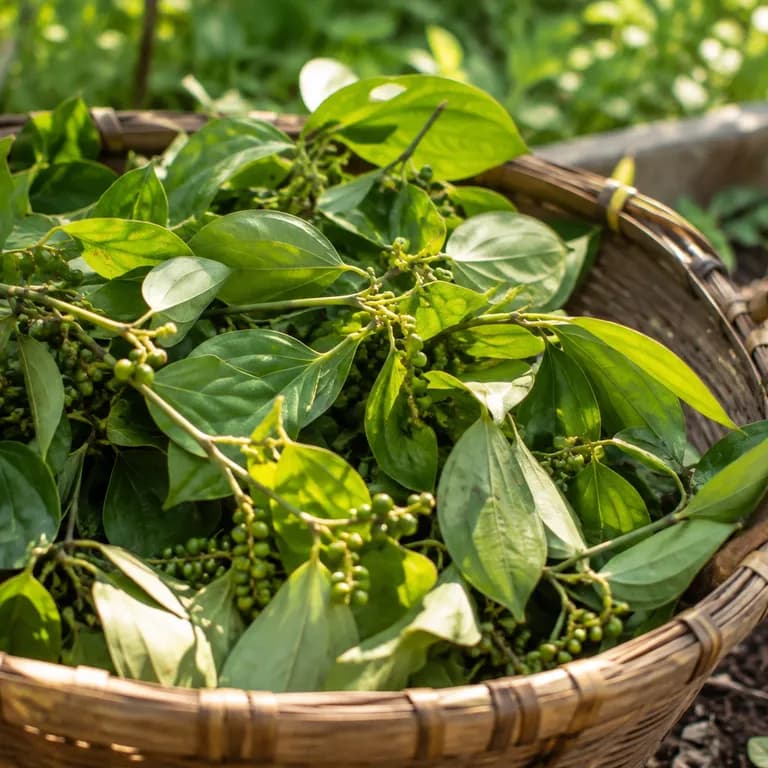
Only female shrubs bear fruit. Watch the clusters from late summer into early autumn and pick when the drupes are uniformly scarlet and give slightly to the touch — under-ripe berries are bland and bitter. Snip whole clusters with pruners rather than pulling, which tears the thin bark. For tea, cut 10 to 15 cm twig tips in spring or autumn when aromatic oils are most concentrated, removing no more than a third of the current season's growth from any shrub. Dry berries whole in a dehydrator on low or on screens in a warm, airy room until hard, then store airtight and grind only what you need for peak aroma.
What goes wrong — and the fix
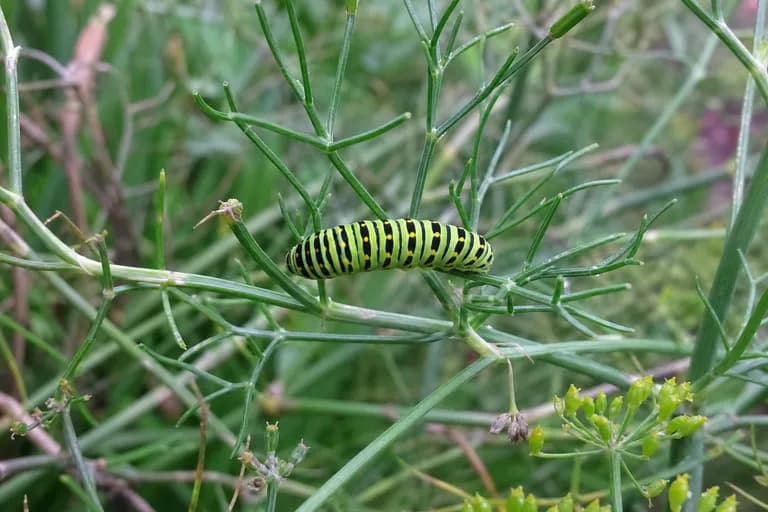
Spicebush Swallowtail Caterpillars
PestLeaves folded lengthwise or rolled into shelters held with silk, with smooth green caterpillars resting inside by day. Two large, snake-like eyespots sit behind the head. Feeding is light and rarely noticed on established shrubs.
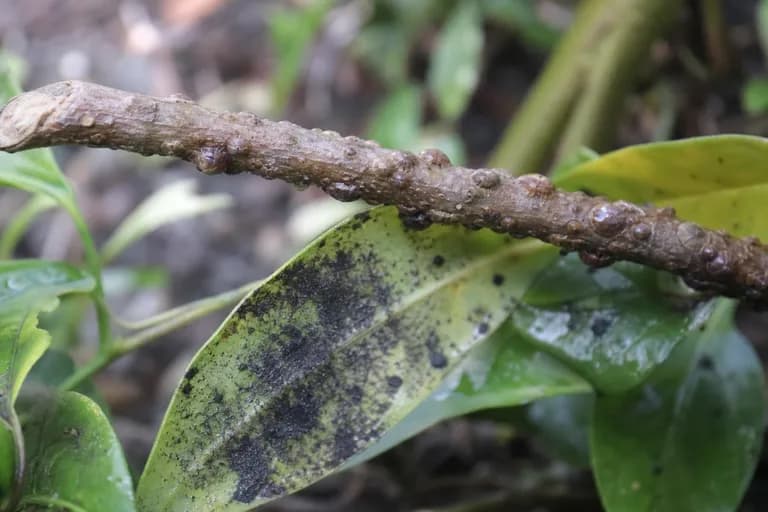
Scale Insects
PestSmall brown or gray bumps clustered on twigs and stems, sometimes with sticky honeydew and black sooty mold. Heavier infestations cause yellowing leaves and weak growth.
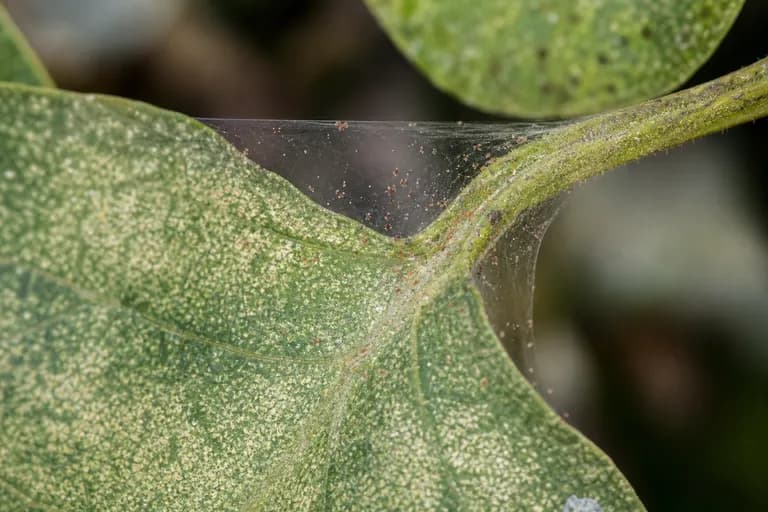
Spider Mites
PestFine yellow stippling on leaves and faint webbing on the undersides, appearing on shrubs in hot, dry, sunny sites during summer. Leaves may bronze and drop early.
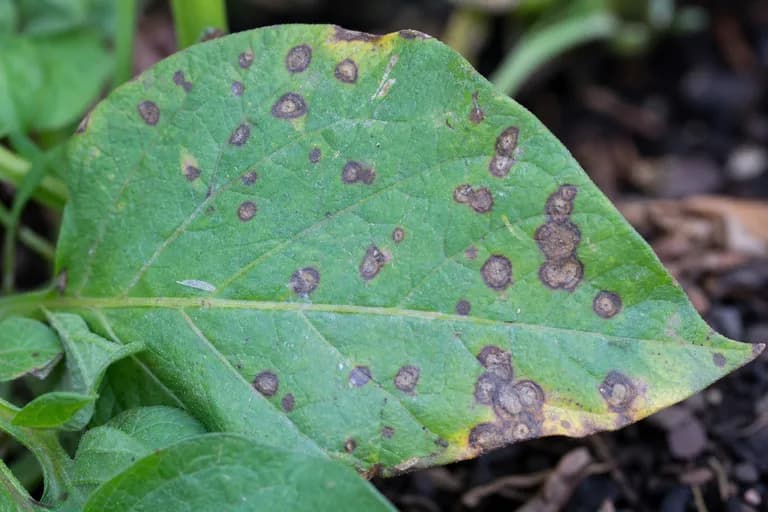
Leaf Spot
DiseaseSmall circular brown to purplish spots on the foliage during wet summers, occasionally merging into larger blotches. Damage is cosmetic; the shrub's health is unaffected.
Root Rot
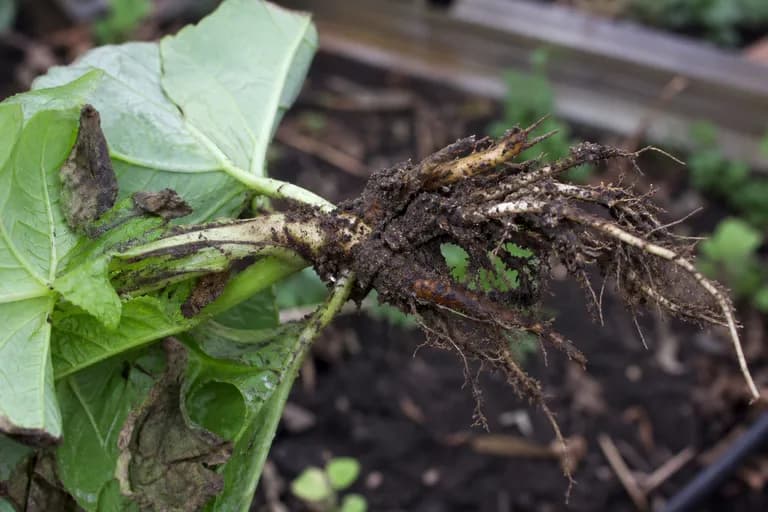
DiseaseWilting, sparse foliage, and dieback of individual stems on shrubs planted in chronically waterlogged soil. Roots appear dark and mushy rather than firm and pale.
Troubleshooting Common Problems
The most common disappointment is a shrub that never fruits: spicebush is dioecious, so a lone female without a male nearby — or a male plant, which never fruits at all — stays berryless. Sparse flowering usually means too much shade; the shrub survives deep shade but blooms and fruits best with a few hours of sun. In hot, sunny sites without enough water, leaf edges scorch brown by midsummer. Heavy nitrogen feeding produces leggy, floppy growth with few flowers. Individual stems may die back in waterlogged soil where root rot takes hold — improve drainage and remove dead wood. Beyond these, spicebush is remarkably trouble-free and rarely browsed by deer.
Growing Tips
- Plant for berries from day one: buy a labeled female plus a male, or set out three to four seed-grown shrubs together so both sexes are almost certainly present.
- Mimic the woodland edge — morning sun with afternoon shade is ideal. Full sun works only with consistently moist soil; deep shade means few flowers and no fruit.
- Plant in spring or fall, setting the root ball at nursery depth, and water deeply once a week for the first two growing seasons.
- Keep a 5 to 8 cm ring of shredded-leaf mulch over the roots, pulled back from the stems — it feeds the soil, holds moisture, and replicates forest litter.
- Prune immediately after flowering. Spicebush sets next year's buds on this year's wood, so pruning in summer, fall, or winter removes the spring show.
- Every two or three years, cut the oldest third of the stems to the ground in late winter to renew the shrub and keep it dense.
- Propagate with softwood cuttings in early summer from a plant of known sex — far more predictable than seed, which needs months of warm then cold stratification.
- Welcome folded leaves: a rolled spicebush leaf usually shelters a swallowtail caterpillar, and the shrub shrugs off the nibbling.
- Go easy on fertilizer. Rich compost mulch is all the feeding an established spicebush needs; heavy nitrogen makes leggy growth and fewer blooms.
Pick your Spicebush
Straight species (seed-grown)
Nearly all spicebush sold is the unimproved species, and for good reason — it is hardy, adaptable, and exceptionally wildlife-rich. Seed-grown plants vary in sex, so plant several together to guarantee both pollinizers and berry bearers.
Green Gold
A male selection prized for unusually large, showy golden-yellow spring blooms. Because it is male it never fruits — but one plant will pollinate every female in the garden.
Rubra
A male form, also listed as f. rubra, whose spring flowers are flushed reddish-brown to red rather than the usual clear yellow. Non-fruiting, and an effective pollinizer for female shrubs.
Xanthocarpa
A female selection, also listed as f. xanthocarpa, whose fruit ripens yellow-orange instead of the typical scarlet. Needs a male such as Green Gold or Rubra nearby to set its golden crop.
Lindera glauca
An Asian relative sometimes sold as silver spicebush, with narrower, willow-like foliage and small black fruit. A refined, slightly less hardy alternative for collectors of the genus.
Lindera obtusiloba
An East Asian cousin with butter-yellow early spring bloom and handsome three-lobed leaves that turn clear yellow in autumn. Larger and more tree-like than its American relative.
Where Spicebush comes from
Spicebush (Lindera benzoin) is native to the rich, moist woodlands of eastern North America, ranging from southern Maine and Ontario south to Florida and west to Texas and Kansas. It grows as an understory shrub along stream banks, swamp edges, and damp hollows, often forming loose thickets through seed and slowly spreading roots. Linnaeus first described the plant in 1753 as Laurus benzoin, and it was later moved to the genus Lindera, named in honor of the Swedish physician and botanist Johan Linder.
Long before European settlement, Indigenous peoples of eastern North America brewed teas from spicebush bark, twigs, and leaves to ease colds, fevers, and digestive complaints, and used the berries as seasoning. Colonists adopted these uses so thoroughly that the shrub picked up folk names like fever bush and wild allspice. When trade blockades during the American Revolution made imported allspice scarce, dried spicebush berries became a widespread household substitute, and twig tea remained a traditional Appalachian spring tonic into the twentieth century.
In modern horticulture spicebush has been rediscovered as a premier native shrub for shady gardens, valued for its early bloom, golden fall color, and near-total resistance to deer. Ecologists prize it as a host plant of the spicebush swallowtail and the promethea moth, and foragers have revived interest in its berries as a locally sourced spice. Named cultivars remain few — most plants sold are the straight species — so each shrub planted today is much like the ones that flavored colonial kitchens.
Spicebush: did you know?
Fascinating facts about Spicebush
Spicebush is the essential host plant of the spicebush swallowtail butterfly. Its caterpillars hide by day inside leaves they fold shut with silk, and their large false eyespots make them look like tiny snakes to scare off predators.
Spicebush questions, answered
When should I plant Spicebush?
What are good companion plants for Spicebush?
What hardiness zones can Spicebush grow in?
How much sun does Spicebush need?
How far apart should I space Spicebush?
What pests and diseases affect Spicebush?
What are the best Spicebush varieties to grow?
What soil does Spicebush need?
Why does my spicebush never produce berries?
How can I tell male and female spicebush apart?
When and how should I prune spicebush?
Is spicebush deer resistant?
Can spicebush grow in full sun or full shade?
Are spicebush berries safe to eat?
Plant these alongside Spicebush
More Deciduous
Grow your best Spicebush yet — and everything around it.
Start a free plan today. Lay out your beds, drop in your Spicebush, and let PlotMyGarden handle the timing, spacing, companions and reminders from seed to harvest basket.
