Goldener Salbei
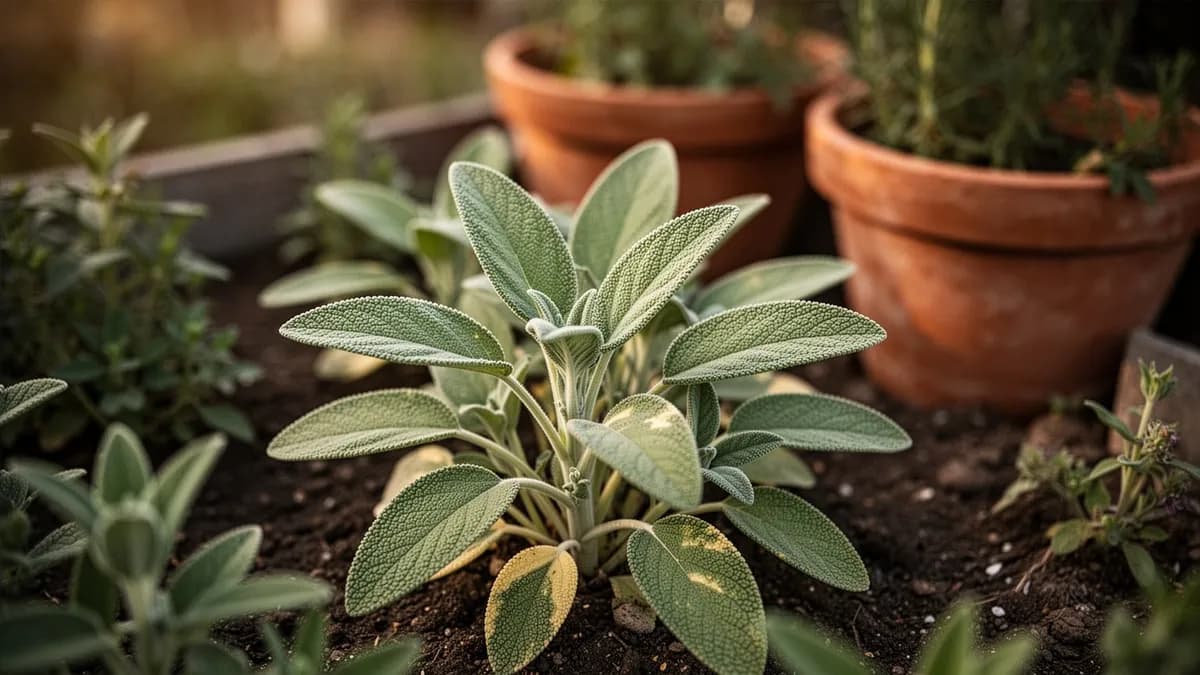
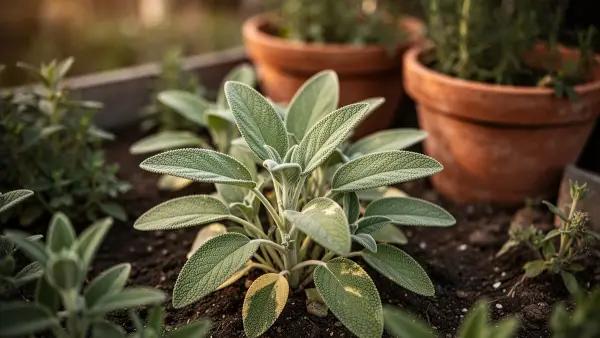
Ein panaschierter Salbei mit grün-gold gefleckten Blättern, der Kräutergärten aufhellt und gleichzeitig ein mildes Salbeiaroma liefert.





Auf dieser SeiteÜberblick
Goldener Salbei im Überblick
Ein panaschierter Salbei mit grün-gold gefleckten Blättern, der Kräutergärten aufhellt und gleichzeitig ein mildes Salbeiaroma liefert. Goldener Salbei ist etwas weniger wüchsig und weniger winterhart als gewöhnlicher Salbei, eignet sich aber hervorragend als Kübelpflanze. Verwenden Sie die farbenfrohen Blätter als Garnitur oder in leichteren Gerichten, in denen ein kräftiges Salbeiaroma zu dominant wäre.
Wann Goldener Salbei pflanzen
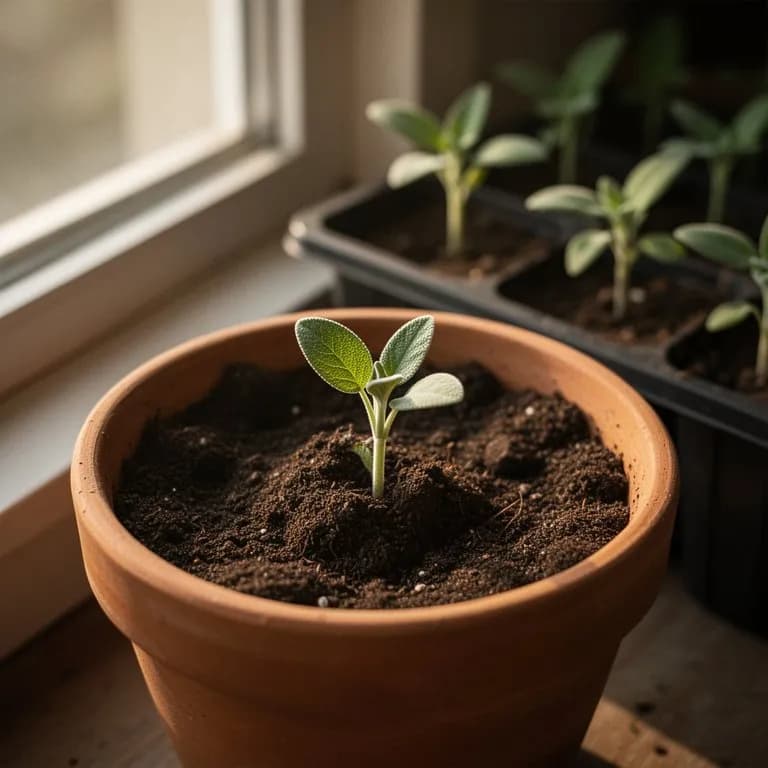
Goldener Salbei muss vegetativ vermehrt werden, da er aus Samen nicht sortenecht wächst. Schneiden Sie 8–10 cm lange Weichholzstecklinge vom Neuaustrieb im späten Frühjahr oder Frühsommer. Entfernen Sie die unteren Blätter, tauchen Sie die Schnittstelle in Bewurzelungshormon und stecken Sie sie in feuchtes Perlit oder eine Sand-Torf-Mischung. Schließen Sie sie in einen durchsichtigen Plastikbeutel oder eine Feuchtigkeitshaube ein und stellen Sie sie an einen hellen, indirekt beleuchteten Platz. Stecklinge bewurzeln in 3–5 Wochen. Absenken ist eine weitere wirksame Methode: Heften Sie einen niedrigen Trieb am Boden fest, bedecken Sie ihn mit Erde und trennen Sie ihn ab, sobald er bewurzelt ist. Kaufen Sie in der Gärtnerei gezogene Pflanzen für den schnellsten Start.
Dein Goldener Salbei-Jahr
Abgestimmt auf Zone 7 · typische Saison · Frost geht um den 2. Apr. und kehrt um den 1. Nov. zurück
Goldener Salbei Mär – Mai pflanzen, Apr – Okt ernten. Beachte die Pflanzmethoden unten und wähle dein Klima für passende Zeiträume.
So baust du Goldener Salbei an
Goldener Salbei (Salvia officinalis 'Icterina') ist eine panaschierte Sorte, die für ihre fröhlichen grün-goldenen Blätter geschätzt wird, die Kräutergärten aufhellen. Wie andere Ziersalbei-Sorten wird er am besten durch Stecklinge oder Gärtnereipflanzen vermehrt und nicht durch Aussaat. Pflanzen Sie ihn nach dem letzten Frost in voller Sonne mit gut durchlässigem Boden und einem Abstand von 45–60 cm.
Goldener Salbei ist weniger wüchsig als gewöhnlicher grüner Salbei und etwas weniger winterhart, was ihn zu einer ausgezeichneten Wahl für die Kübelkultur macht, wo er im Winter geschützt werden kann. Das panaschierte Laub benötigt volle Sonne, um seine beste Farbe zu entwickeln; zu viel Schatten führt dazu, dass die Blätter wieder einfarbig grün werden. Vermeiden Sie Überwässerung und nährstoffreichen Boden, da diese üppiges Wachstum auf Kosten von Geschmack und Farbe fördern.
Schneiden Sie im Frühjahr leicht zurück, um die Form zu erhalten, indem Sie etwa ein Viertel entfernen, um Winterschäden zu beseitigen und frischen Wuchs zu fördern. Goldener Salbei blüht selten, was seine Nutzungsdauer als Blattpflanze tatsächlich verlängert. Schützen Sie ihn vor starkem Frost mit Mulch oder stellen Sie Kübel an geschützte Standorte. In den Zonen 6–7 ist er halbimmergrün und kann bei strengen Wintern bis zu den Wurzeln zurückfrieren, treibt aber im Frühjahr wieder aus.
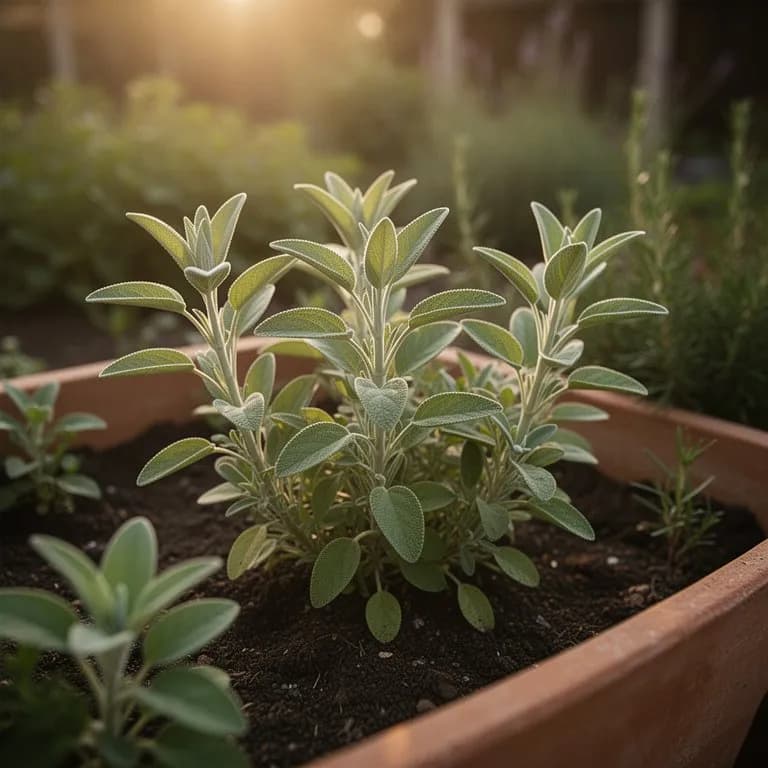
8 Pflanzen passen in ein Beet von 120 × 240 cm
Goldener Salbei braucht 55 cm Platz pro Pflanze. Der Planer hält diesen Abstand für dich ein — jede Pflanze, jedes Beet.
Die besten Nachbarn für Goldener Salbei
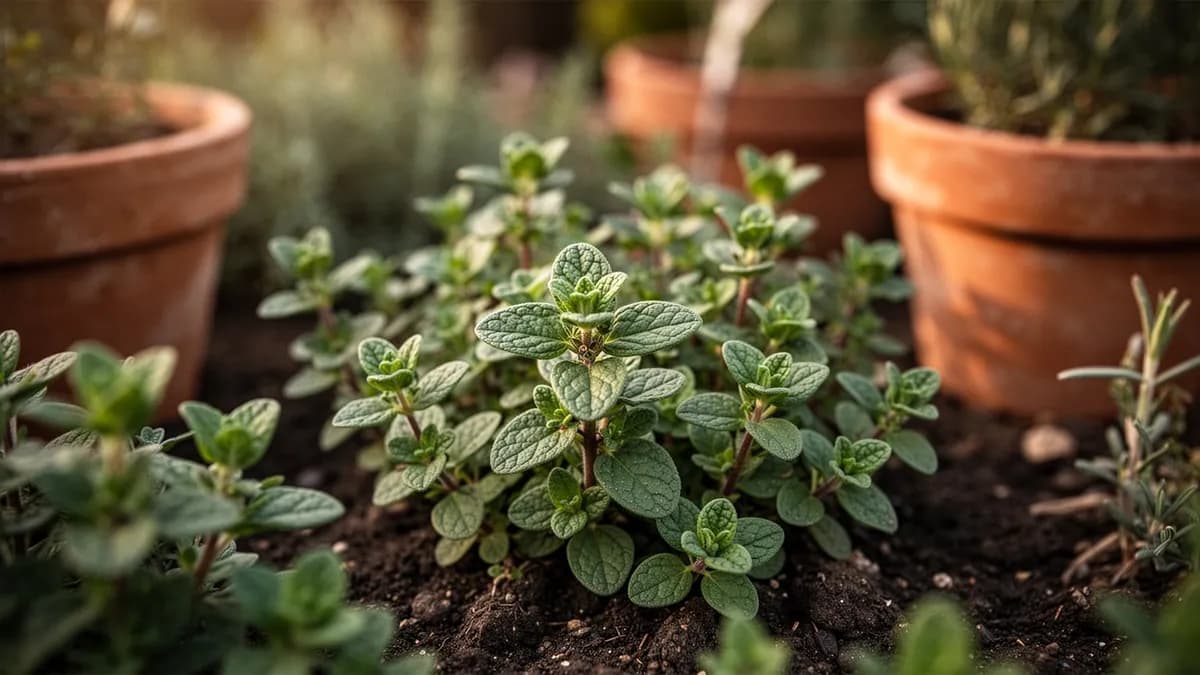
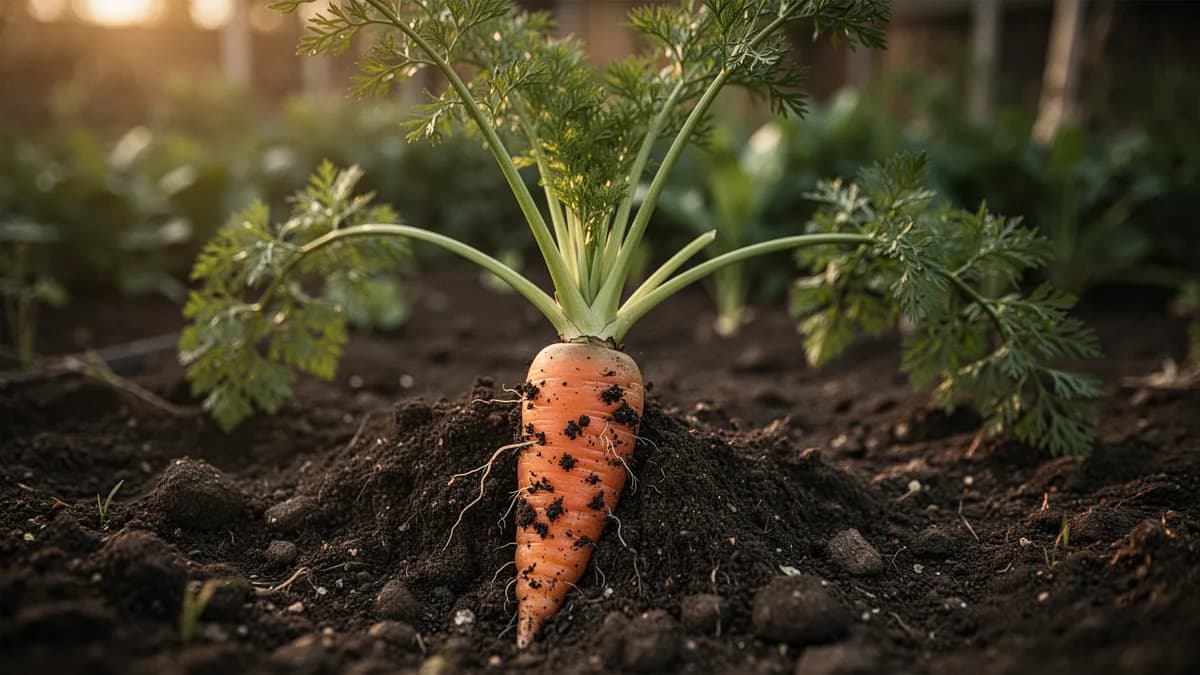
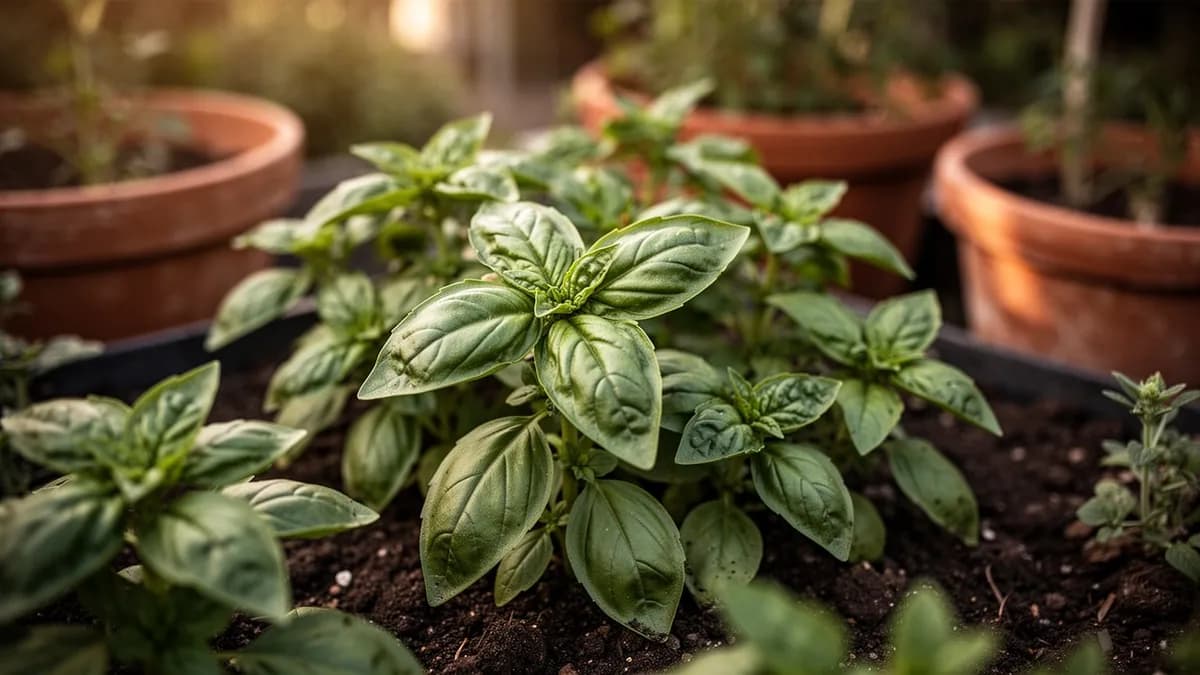
Goldener Salbei bietet die gleichen schädlingsabwehrenden Vorteile wie gewöhnlicher Salbei durch seine ätherischen Öle. Pflanzen Sie ihn in der Nähe von Kohlgewächsen, um Kohlmotten abzuwehren, und neben Möhren, um Möhrenfliegen fernzuhalten. Die leuchtend goldene Panaschierung macht ihn zu einer attraktiven Zierpflanze als Randbepflanzung in Gemüsegärten. Kombinieren Sie ihn mit Rosmarin und Thymian für eine klassische mediterrane Kräutergruppe. Vermeiden Sie die Pflanzung neben Basilikum, Gurken und Raute, die Wachstumsbedingungen bevorzugen, die mit dem Bedarf des Salbeis an magerem, trockenem Boden kollidieren.
Rosmarin gehört daneben. Basilikum nicht.
Altes Gärtnerwissen, geprüft an der echten Nachbartabelle von Goldener Salbei — teste jede Pflanze, die du anbaust.
Probiere Goldener Salbei direkt hier im Beet
Ein echtes Planer-Beet, Goldener Salbei steht schon drin. Tippe einen Begleiter an, platziere ihn und sieh, wie die Nachbarschaftsprüfung antwortet — grün für gute Nachbarn, rot bei Streit.


Passende Anbau-Ratgeber
Richtig düngen
Goldener Salbei benötigt einen gut durchlässigen, mageren bis mäßig nährstoffreichen Boden mit einem pH-Wert von 6,0–7,0. Wie bei allen Salbeisorten ist eine hervorragende Drainage entscheidend. Schwere Böden mit Perlit, grobem Sand oder Kies verbessern. Vermeiden Sie nährstoffreichen Boden und starke Düngung, da diese die goldene Panaschierung vermindern und schlaksigen grünen Wuchs erzeugen. Eine leichte Frühjahrsgabe von Kompost als Mulch reicht als Nährstoffversorgung aus. Verwenden Sie in Kübeln eine schnell durchlässige, kiesige Topferde. Gießen Sie mäßig und lassen Sie den Boden zwischen den Wassergaben leicht abtrocknen.
Ideale Temperatur
Winterhärtezone-Kompatibilität
Von der Saat zur Ernte, Schritt für Schritt
Vermehrung und Etablierung
Goldener Salbei wird am zuverlässigsten durch Stecklinge oder Gärtnerei-Jungpflanzen vermehrt und nicht durch Aussaat, da aus Samen gezogene Pflanzen die geschätzte goldene Panaschierung nicht zuverlässig reproduzieren. Stängelstecklinge von 8–10 cm Länge, die von halbreifem Holz genommen werden, bewurzeln in feuchtem Perlit oder sandigem Kompost innerhalb von 2–3 Wochen. Jungpflanzen sollten nach dem letzten Frosttermin in gut durchlässigen Boden gesetzt werden.
Setzling und Wurzelentwicklung
Frisch bewurzelte Stecklinge oder Jungpflanzen entwickeln ihr Wurzelsystem und produzieren den ersten Schub neuer panaschierter Blätter. Das Wachstum ist anfangs langsam, während die Pflanze ihr Wurzelnetzwerk im umgebenden Boden aufbaut. Das charakteristische Grün-Gold-Blattmuster wird ausgeprägter, sobald sich die Pflanze eingelebt hat und ausreichend Sonnenlicht erhält.
Vegetatives Wachstum
Die Pflanze tritt in kräftiges Wachstum ein und bildet mehrere verzweigte Stängel mit aromatischen, panaschierten Blättern. Goldener Salbei bildet einen holzigen Halbstrauch von 30–45 cm Höhe und 40–60 cm Breite. Das Laub wird dicht und buschig und bildet einen attraktiven Hügel aus Grün und Gold. Die holzige Basis verdickt sich und die Pflanze entwickelt den halbimmergrünen Habitus, der sie durch milde Winter trägt.
Blüte
Im späten Frühjahr bis Frühsommer des zweiten Jahres und darüber hinaus bildet Goldener Salbei schlanke Ähren aus röhrenförmigen violett-blauen Blüten an den Spitzen reifer Stängel. Die Blüten sind äußerst attraktiv für Bienen, Schmetterlinge und andere Bestäuber. Die Blüte ist weniger üppig als beim gewöhnlichen Gartensalbei, aber die Blüten setzen einen schönen vertikalen Akzent über dem panaschierten Laub.
Ruheperiode und Überwinterung
Wenn die Temperaturen im Herbst sinken, verlangsamt sich das Wachstum und die Pflanze tritt in Halbruhe ein. In milden Klimazonen (Zonen 6–9) ist Goldener Salbei halbimmergrün und behält einen Großteil seines Laubs über den Winter. In kälteren Zonen kann die Pflanze bis zur holzigen Basis zurückfrieren, treibt aber im Frühjahr aus den Wurzeln wieder aus, wenn sie gut gemulcht ist. Etablierte Pflanzen werden mit zunehmendem Alter winterhärter.
Nehmen Sie Stecklinge im späten Frühjahr oder Frühsommer von gesunden, nicht blühenden Trieben. Entfernen Sie die unteren Blätter, tauchen Sie das Schnittende in Bewurzelungshormon und stecken Sie es in einen Topf mit feuchtem Perlit. Decken Sie es mit einem durchsichtigen Plastikbeutel ab, um die Feuchtigkeit zu halten, und stellen Sie es in helles, indirektes Licht. Besprühen Sie es alle paar Tage, bis sich Wurzeln bilden.
Goldener Salbei Monat für Monat pflegen
Was du jeden Monat für deine Goldener Salbei tun solltest
Oktober
Aktueller MonatDie Pflanze bei sinkenden Temperaturen natürlich abhärten lassen. Zu diesem Zeitpunkt nicht düngen oder stark zurückschneiden. In den Zonen 5–6 Winterschutzmaterialien vorbereiten. Salbei im Kübel an einen geschützten Standort nahe einer nach Süden ausgerichteten Wand für den Winterschutz stellen.
Immer wissen, was jetzt im Garten zu tun ist
Eine E-Mail zum Monatsanfang: was du jetzt säen, pflanzen und anpacken solltest — für deine Goldener Salbei und alles, was drumherum wächst. Dazu ein kurzer Startkurs, der dich vor den klassischen Fehlern bewahrt.
- Was jetzt zu tun ist
- Passend zu deiner Saison
- Startkurs inklusive
Goldener Salbei ernten
Ernten Sie die Blätter des Goldenen Salbeis während der gesamten Wachstumsperiode, indem Sie einzelne Blätter oder kurze Triebspitzen abschneiden. Die panaschierten Blätter haben ein milderes, zarteres Aroma als gewöhnlicher grüner Salbei, was sie ideal für leichtere Gerichte macht. Pflücken Sie junge Blätter von den Triebspitzen für die beste Balance aus Farbe und Geschmack. Ernten Sie nie mehr als ein Viertel der Pflanze auf einmal, da Goldener Salbei weniger wüchsig ist und sich langsamer erholt als gewöhnlicher Salbei. Die farbenprächtigen Blätter sind besonders als frische Garnitur geschätzt, wo ihr optischer Reiz die Präsentation aufwertet.
angenommen, du pflanzt zu Beginn des Zeitraums — trage dein tatsächliches Datum ein
Ernte Goldener Salbei zügig, dann trägt die Pflanze weiter.
Lagerung & Konservierung
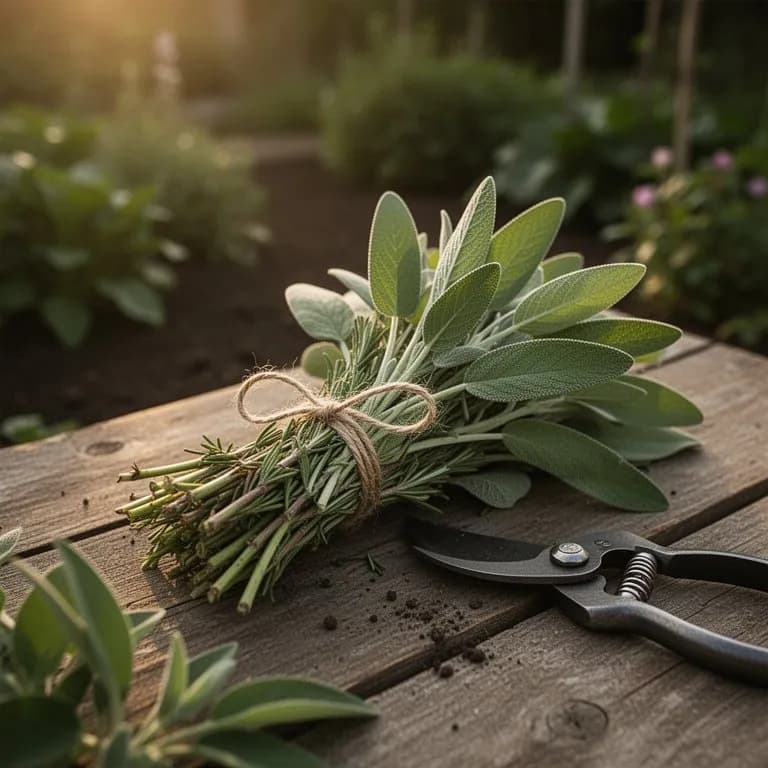
Lagern Sie frischen Goldenen Salbei im Kühlschrank, eingewickelt in leicht feuchte Küchentücher, bis zu zwei Wochen. Die panaschierten Blätter verlieren beim Trocknen etwas von ihrer goldenen Farbe, behalten aber ihr Aroma. Trocknen Sie ihn, indem Sie kleine Bündel an einem warmen, luftigen Ort aufhängen oder einen Dörrautomaten bei 35 °C verwenden. Um das dekorative Aussehen zu bewahren, pressen Sie einzelne Blätter zwischen Pergamentpapier in schweren Büchern. Frieren Sie frische Blätter in luftdichten Beuteln bis zu 6 Monate ein. Setzen Sie sie in Ölen oder Essig an, um sowohl Geschmack als auch optischen Reiz einzufangen.
Was schiefgeht — und die Lösung
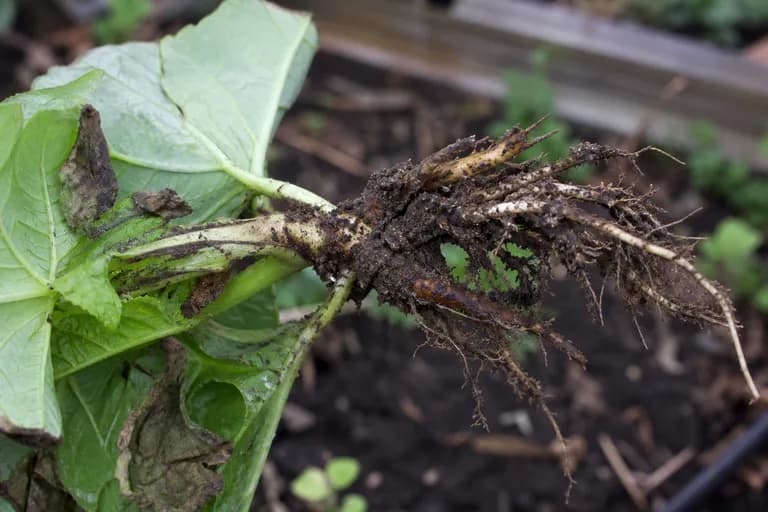
Wurzelfäule
KrankheitFortschreitendes Welken, vergilbende Blätter, matschige braune Wurzeln, Zusammenbruch der Pflanze bei nassen Bedingungen.
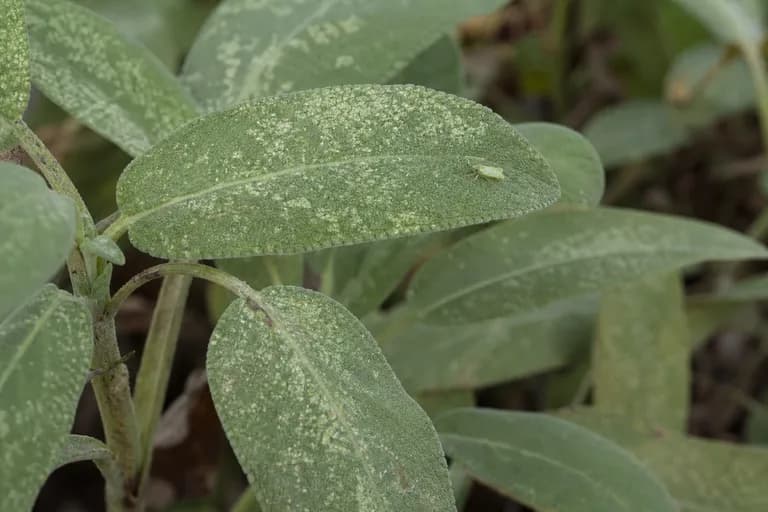
Salbei-Blattzikade
SchädlingWeiße, gesprenkelte Schäden auf den Blattoberflächen, vermindertes Wachstum, winzige keilförmige Insekten, die vom Laub springen.
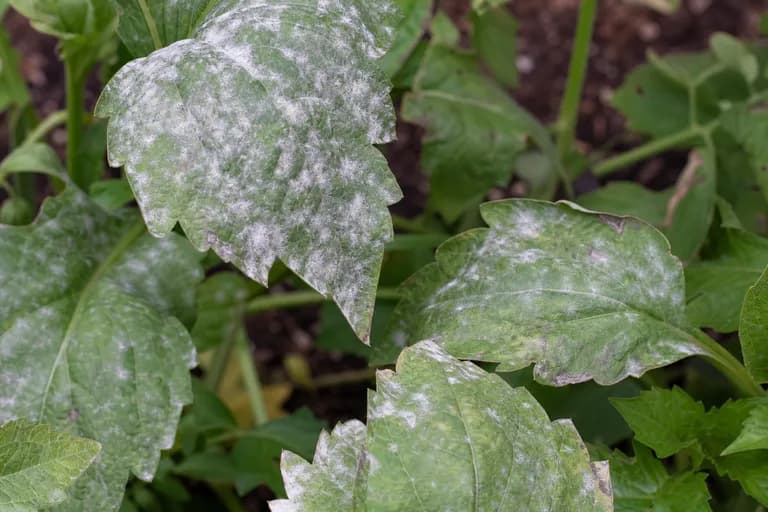
Echter Mehltau
KrankheitWeiße, pelzige Flecken auf den Blättern, verformter Neuaustrieb, vorzeitiges Vergilben und Blattfall.
Fehlerbehebung bei häufigen Problemen
Der Verlust der goldenen Panaschierung ist das Hauptproblem und wird meist durch übermäßigen Schatten, Überdüngung oder zu nährstoffreichen Boden verursacht. Stellen Sie mindestens 6 Stunden direkte Sonne für eine lebhafte Blattfärbung sicher. Goldener Salbei ist weniger winterhart als grüne Sorten, daher sollten Sie in den Zonen 6–7 Winterschutz bieten. Stämme werden ohne jährlichen Frühjahrsschnitt holzig und kahl an der Basis. Überwässerung verursacht schnellen Verfall und Wurzelfäule, besonders im Winter. Pflanzen sind kurzlebiger als gewöhnlicher Salbei und müssen typischerweise alle 3–4 Jahre ersetzt werden.
Anbautipps
- Beginnen Sie mit Goldenen Salbei aus Stecklingen oder Gärtnerei-Jungpflanzen statt aus Samen. Aus Samen gezogene Pflanzen reproduzieren die goldene Panaschierung selten zuverlässig, und Sie könnten mit gewöhnlichem grünem Salbei enden. Stecklinge von einer bekannten Icterina-Mutterpflanze garantieren die gewünschte Blattfarbe.
- Pflanzen Sie an den sonnigsten verfügbaren Standort mit scharf durchlässigem Boden. Goldener Salbei stammt aus dem Mittelmeerraum und verlangt hervorragende Drainage – er fault schnell in schwerem, staunassem Lehm. Verbessern Sie Lehmböden großzügig mit grobem Sand, Perlit oder feinem Kies vor der Pflanzung.
- Vermeiden Sie Überwässerung um jeden Preis. Goldener Salbei ist nach der Etablierung trockenheitstolerant und trocknet zwischen den Wassergaben gerne ab. Ein gründliches Durchfeuchten einmal pro Woche im Sommer reicht in den meisten Klimazonen aus. Überwässerung ist die Todesursache Nummer eins für Salbeipflanzen in Hausgärten.
- Schneiden Sie jährlich im zeitigen Frühjahr zurück, indem Sie holzige Stängel knapp über dem austreibenden Neuaustrieb kappen. Dies verhindert, dass die Pflanze sparrig und kahl an der Basis wird. Schneiden Sie niemals in altes, kahles Holz unter allen Blattknoten, da Salbei selten aus vollständig kahlen Stängeln regeneriert.
- Ernten Sie regelmäßig während der Wachstumsperiode, indem Sie Zweige von den Triebspitzen abschneiden. Dies fördert die Verzweigung und hält die Pflanze kompakt und buschig. Ernten Sie nie mehr als ein Drittel des Laubs auf einmal, um die Pflanze nicht zu stressen.
- Kultivieren Sie Goldenen Salbei in Hochbeeten oder Kübeln, wenn Ihr Garten eine schlechte Drainage hat. Ein Terrakotta-Topf mit einer kiesigen, gut durchlässigen Topferde aus gleichen Teilen Kompost, Perlit und grobem Sand repliziert ideale mediterrane Bodenbedingungen perfekt.
- Pflanzen Sie Goldenen Salbei als Begleitpflanze neben Kohlgewächse (Kohl, Brokkoli, Blumenkohl), um Kohlmotten und andere Kohlschädlinge mit seinen starken ätherischen Ölen abzuwehren. Salbei harmoniert auch gut mit Rosmarin, Thymian und Oregano, die ähnliche Wachstumsbedingungen bevorzugen.
- Düngen Sie sparsam – Goldener Salbei braucht keinen nährstoffreichen Boden oder starke Düngung. Eine einmalige Gabe von ausgewogenem organischem Langzeitdünger im zeitigen Frühjahr reicht für die gesamte Saison. Übermäßiger Stickstoff erzeugt üppiges, aber fad schmeckendes Laub mit reduziertem Gehalt an ätherischen Ölen.
- Schützen Sie vor rauen Winterbedingungen in den Zonen 5–6, indem Sie nach dem ersten starken Frost Mulch über dem Wurzelbereich anhäufeln. Kübelpflanzen können in eine unbeheizte Garage oder ein Kalthaus gestellt werden. Vermeiden Sie beheizte Innenräume, die für die Winterruhe zu trocken und warm sind.
- Ersetzen Sie alternde Pflanzen alle 4–5 Jahre. Salbei wird mit dem Alter natürlicherweise zunehmend holzig und weniger produktiv und entwickelt spärliches Laub und sparrige Stängel. Nehmen Sie im dritten Jahr Stecklinge von Ihrer bestehenden Pflanze, um kräftige Ersatzpflanzen bereitzuhaben, wenn die Produktivität nachlässt.
Bau deine beste Goldener Salbei an — und alles drumherum.
Starte heute kostenlos. Lege deine Beete an, setze deine Goldener Salbei ein und lass PlotMyGarden Timing, Abstände, Begleiter und Erinnerungen von der Saat bis zum Erntekorb übernehmen.
Finde deine Goldener Salbei
Icterina
Die Standard-Sorte des Goldenen Salbeis mit grüner und leuchtend goldener Panaschierung. Die am weitesten verbreitete und zuverlässigste Form.
Aurea
Eine vollständig goldblättrige Salbeisorte mit gleichmäßigerer gelber Färbung. Weniger panaschiert, aber intensiv leuchtend.
Tricolor
Ein verwandter panaschierter Salbei mit grünen, cremefarbenen und violetten Zeichnungen. Auffallend dekorativ, aber die am wenigsten winterharte Sorte der Gruppe.
Frischer Salbei kostet im Supermarkt 2–4 € pro kleinem Bund (15–20 g), und eine einzige ausgewachsene Goldene-Salbei-Pflanze kann diese Menge alle zwei Wochen während der Wachstumsperiode produzieren. Getrockneter Bio-Salbei kostet bei Spezialanbietern 8–15 € pro 30 g. Eine einzige Gärtnereipflanze für 4–6 € oder ein kostenloser Steckling aus dem Garten von Freunden liefert jahrelange Ernten und spart regelmäßigen Salbeiverbrauchern leicht 40–80 € jährlich. Über den kulinarischen Wert hinaus dient Goldener Salbei als hochwertige Zierpflanze – panaschierte Salbeipflanzen kosten in Gartencentern 6–12 €, sodass die Vermehrung von Stecklingen zusätzlichen Wert schafft.
Schnelle Rezepte
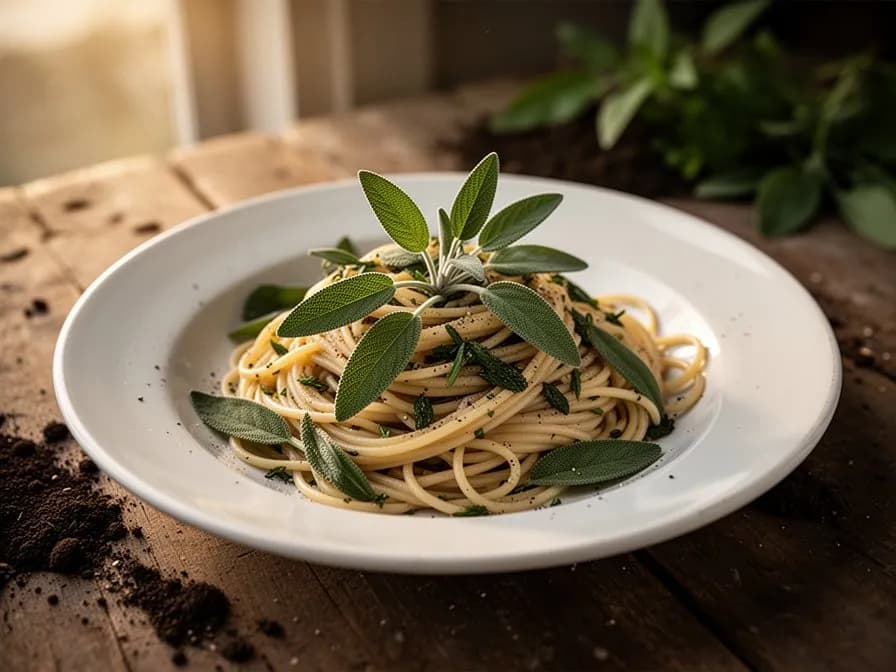
Knusprige Goldene-Salbei-Braune-Butter
10 Min.Eine klassische italienisch inspirierte Sauce, bei der Goldene-Salbei-Blätter in bräunender Butter knusprig und duftend gebraten werden. Die panaschierten Blätter werden wunderschön durchscheinend mit goldenen Rändern. Über frische Ravioli, Gnocchi, gerösteten Kürbis oder gebratene Schweinekoteletts träufeln für ein müheloses Gourmet-Finish.
5 ZutatenGoldener-Salbei-Honig-Kräutertee
8 Min.Ein wohltuender Kräuteraufguss aus frischen Goldenen-Salbei-Blättern, Zitrone und Honig. Salbeitee wird seit Jahrhunderten als linderndes Mittel für den Hals und als Verdauungshilfe genossen. Die golden panaschierten Blätter verleihen ein etwas milderes, süßeres Aroma im Vergleich zu gewöhnlichem grünem Salbei.
5 ZutatenSalbei-Parmesan-Focaccia-Topping
15 Min.Verwandeln Sie gekaufte oder selbstgemachte Focaccia mit einem duftenden Goldenen-Salbei-Parmesan-Topping. Die Salbeiblätter werden in die geölte Teigoberfläche gedrückt und backen zu knusprigen, aromatischen Dekorationen, die so beeindruckend aussehen, wie sie schmecken.
6 ZutatenKulinarische Verwendung
Goldener Salbei hat ein milderes, subtileres Aroma als gewöhnlicher Salbei, was ihn für leichtere Gerichte geeignet macht, in denen Standardsalbei zu dominant wäre. Verwenden Sie die wunderschönen panaschierten Blätter als frische Garnitur für Suppen, geröstetes Gemüse und Fleischplatten. Hervorragend in Sahnesaucen, milden Pastagerichten und sanften Geflügelwürzungen. Die dekorativen Blätter verleihen einen optischen Reiz, wenn sie frisch über fertige Gerichte gestreut werden. Verwenden Sie sie in Kräuterbutter, wo sowohl Aussehen als auch mildes Salbeiaroma gewünscht sind.
Was drinsteckt
Gesundheitsvorteile
- Enthält Rosmarinsäure, ein starkes Polyphenol-Antioxidans, das in Studien nachweislich Entzündungsmarker und oxidativen Stress reduziert und möglicherweise die Herz-Kreislauf-Gesundheit unterstützt und das Risiko chronischer Krankheiten senkt.
- Salbeitee wird seit Jahrhunderten traditionell zur Linderung von Halsschmerzen und Mundentzündungen verwendet. Moderne Forschung bestätigt, dass Salbeiextrakte antimikrobielle und entzündungshemmende Eigenschaften besitzen, die gegen häufige Halserreger wirksam sind.
- Reich an Vitamin K, das für die Blutgerinnung und den Knochenstoffwechsel unerlässlich ist. Regelmäßige kulinarische Verwendung von Salbei trägt bedeutsam zur täglichen Vitamin-K-Aufnahme bei und unterstützt den langfristigen Erhalt der Knochendichte.
- Enthält Thujon und andere Terpene, die auf ihre potenziell kognitionssteigernden Wirkungen untersucht wurden. Kleine klinische Studien deuten darauf hin, dass Salbeiextrakte Gedächtnis und Aufmerksamkeit bei jungen und älteren Erwachsenen verbessern können.
- Salbei hat in vorläufigen Studien blutzuckersenkende Eigenschaften gezeigt. Die traditionelle Verwendung von Salbeitee als Verdauungshilfe nach Mahlzeiten kann helfen, postprandiale Blutzuckerspitzen zu mildern, obwohl weitere Forschung erforderlich ist.
- Die ätherischen Öle in Salbeiblättern, insbesondere Campher und 1,8-Cineol, haben antimikrobielle Aktivität gegen eine Reihe lebensmittelbedingter Bakterien und Pilze gezeigt, was Salbei zu einem funktionellen Küchenkraut macht, das zur Lebensmittelsicherheit beitragen kann.
Woher Goldener Salbei stammt
Goldener Salbei (Salvia officinalis 'Icterina') ist eine panaschierte Kultursorte des gewöhnlichen Gartensalbeis, der selbst im Mittelmeerraum beheimatet ist, insbesondere in den Küstenregionen des nördlichen Mittelmeerraums von Spanien über Südfrankreich und Italien bis in den westlichen Balkan. Gewöhnlicher Salbei wird seit weit über 2.000 Jahren für kulinarische und medizinische Zwecke kultiviert, mit Aufzeichnungen über seine Verwendung aus dem alten Ägypten, Griechenland und der römischen Zivilisation. Die golden panaschierte Form 'Icterina' entstand als natürlich vorkommender Sport – eine spontane genetische Mutation, die die markanten Blätter mit grüner Mitte und unregelmäßig goldgelben Rändern hervorbrachte, die sie vom einfachen graugrünen Laub der Stammart unterscheiden.
Das genaue Datum und der Ort der Entdeckung von Icterina sind nicht genau dokumentiert, aber panaschierte Salbeisorten werden seit mindestens dem 17. Jahrhundert in europäischen Kräutergärten kultiviert. Die Sorte erlangte im 19. und 20. Jahrhundert breite Anerkennung im britischen Gartenbau und erhielt schließlich den Award of Garden Merit der Royal Horticultural Society für ihre herausragenden dekorativen Qualitäten und zuverlässige Gartenleistung. Ihre Beliebtheit wuchs, als Gärtner erkannten, dass sie den kulinarischen Nutzen des gewöhnlichen Salbeis mit ganzjährigem optischem Interesse in Beeten, Kübeln und Kräutergärten verbindet.
Im Laufe der Geschichte genoss gewöhnlicher Salbei einen nahezu ehrfürchtigen Status in der europäischen Kräutermedizin. Der griechische Arzt Dioskurides verschrieb Salbei bei Geschwüren, Wunden und Blutungen. Der römische Naturforscher Plinius dokumentierte seine Verwendung als Diuretikum und Lokalanästhetikum. Im Mittelalter wurde Salbei in praktisch jedem Klostergarten in ganz Europa angebaut und war eine Schlüsselzutat des 'Vierräuberessigs', eines schützenden Tonikums, das während der Pestepidemien verwendet wurde. Die berühmte Frage der medizinischen Schule von Salerno, 'Cur moriatur homo cui Salvia crescit in horto?' (Warum sollte ein Mensch sterben, in dessen Garten Salbei wächst?), fing den erhabenen medizinischen Ruf des Krauts ein.
Heute wird Goldener Salbei weltweit in gemäßigten und mediterranen Klimazonen angebaut und gleichermaßen als Küchenkraut und dekorative Gartenpflanze geschätzt. Er gedeiht an gut durchlässigen, sonnigen Standorten und ist zu einem festen Bestandteil moderner Kräutergartengestaltung geworden, oft zusammen mit seinen Geschwistern Purpursalbei (Purpurascens) und Dreifarbiger Salbei (Tricolor) für einen eindrucksvollen Teppich aus Farbe und Textur gepflanzt.
Goldener Salbei: Schon gewusst?
Faszinierende Fakten über Goldener Salbei
Goldener Salbei (Salvia officinalis 'Icterina') erhielt den renommierten Award of Garden Merit der Royal Horticultural Society, der ihn als herausragende Zierpflanze auszeichnet, die in britischen Gärten zuverlässig gedeiht – ein Beleg für seine Winterhärte und optische Anziehungskraft.
Goldener Salbei: Fragen & Antworten
Wann sollte ich Goldener Salbei pflanzen?
Was sind gute Begleitpflanzen für Goldener Salbei?
In welchen Winterhärtezonen kann Goldener Salbei wachsen?
Wie viel Sonne braucht Goldener Salbei?
Welchen Abstand sollte ich zwischen Goldener Salbei lassen?
Welche Schädlinge und Krankheiten befallen Goldener Salbei?
Wie lagere ich Goldener Salbei nach der Ernte?
Was sind die besten Goldener Salbei-Sorten zum Anbauen?
Welchen Boden braucht Goldener Salbei?
Schmeckt Goldener Salbei genauso wie normaler Salbei?
Warum verlieren die Blätter meines Goldenen Salbeis ihre Panaschierung und werden einfarbig grün?
Kann Goldener Salbei den Winter im Freien überstehen?
Wie trockne ich Goldene-Salbei-Blätter für die Winterlagerung?
Ist Goldener Salbei für die medizinische Anwendung sicher, und gibt es Vorsichtsmaßnahmen?
Kann ich Goldenen Salbei ganzjährig drinnen anbauen?
Du hast die Theorie gelesen. Jetzt baue sie auf Autopilot an.
Alles, was Goldener Salbei knifflig macht — das Timing, die Abstände, die Begleiter, das Erntefenster — genau das übernimmt PlotMyGarden für dich, für jede Pflanze im Garten.
Ein Plan, der dein Wetter kennt
Standort einmal festlegen. Aussaat-, Dünge- und Erntedaten rund um deinen echten letzten Frosttermin und die Live-Vorhersage — kein Raten mehr nach Saattüte.
Aus dem Abschnitt „Pflanzzeit“Beetplaner per Drag & Drop
Beete auf einem Raster gestalten. Jede Pflanze rastet im richtigen Abstand ein, und du siehst die ganze Saison, bevor du einen Cent für Saatgut ausgibst.
Aus dem Abschnitt „Anbau“Begleiter-Konflikte früh erkannt
Über 200 gute und schlechte Kombinationen werden beim Pflanzen live geprüft — so landet ein saisonruinierender Fehler nie in der Erde.
Aus dem Abschnitt „Begleiter“Erinnerungen, nach denen du wirklich handelst
„Gieß die Bohnen.“ „Heute ernten, bevor's umschlägt.“ Pünktlich, konkret und auf deine echten Pflanzen bezogen.
Aus dem Abschnitt „Ernte“Staffel-Aussaat, geplant
Sechs Wochen ernten statt sechs Tage? Die App verteilt deine Aussaaten automatisch und erinnert dich, wenn der nächste Satz fällig ist.
Aus dem Abschnitt „Pflanzzeit“Ein Verlauf, der schlauer wird
Jede protokollierte Ernte bringt der App deinen Garten bei. Der Plan fürs nächste Jahr startet bei dem, was in deinem Boden wirklich funktioniert hat.
Aus dem Abschnitt „Überblick“Pflanze diese neben Goldener Salbei
Weitere Küchenkräuter
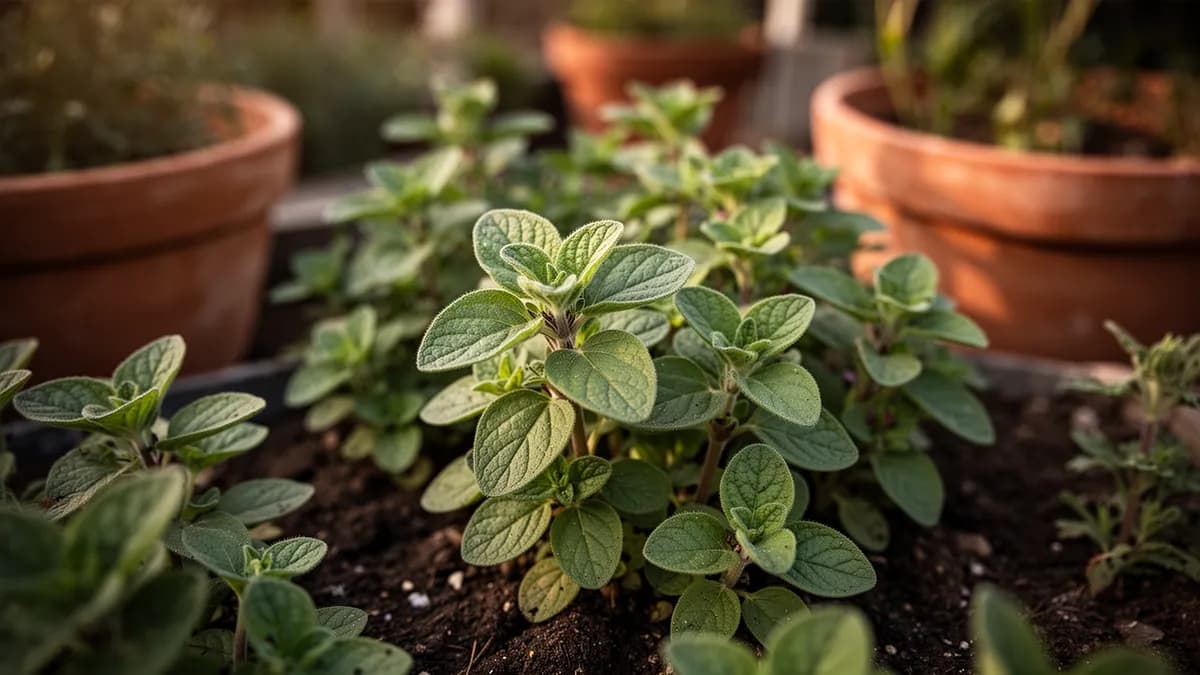
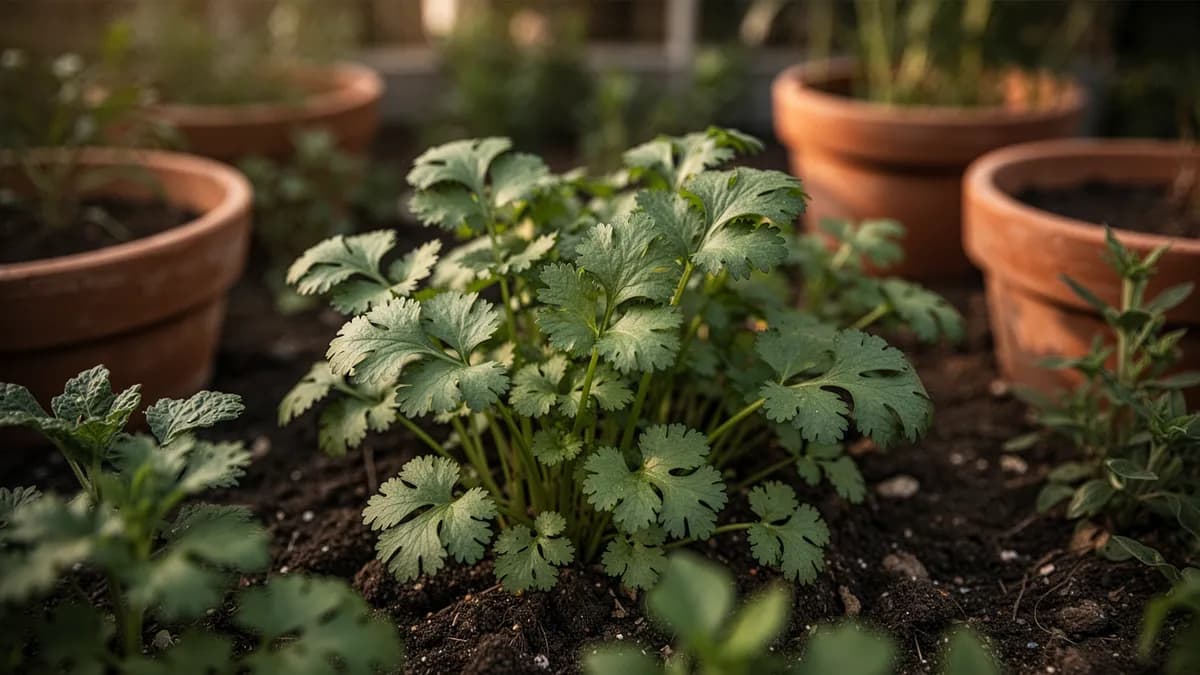
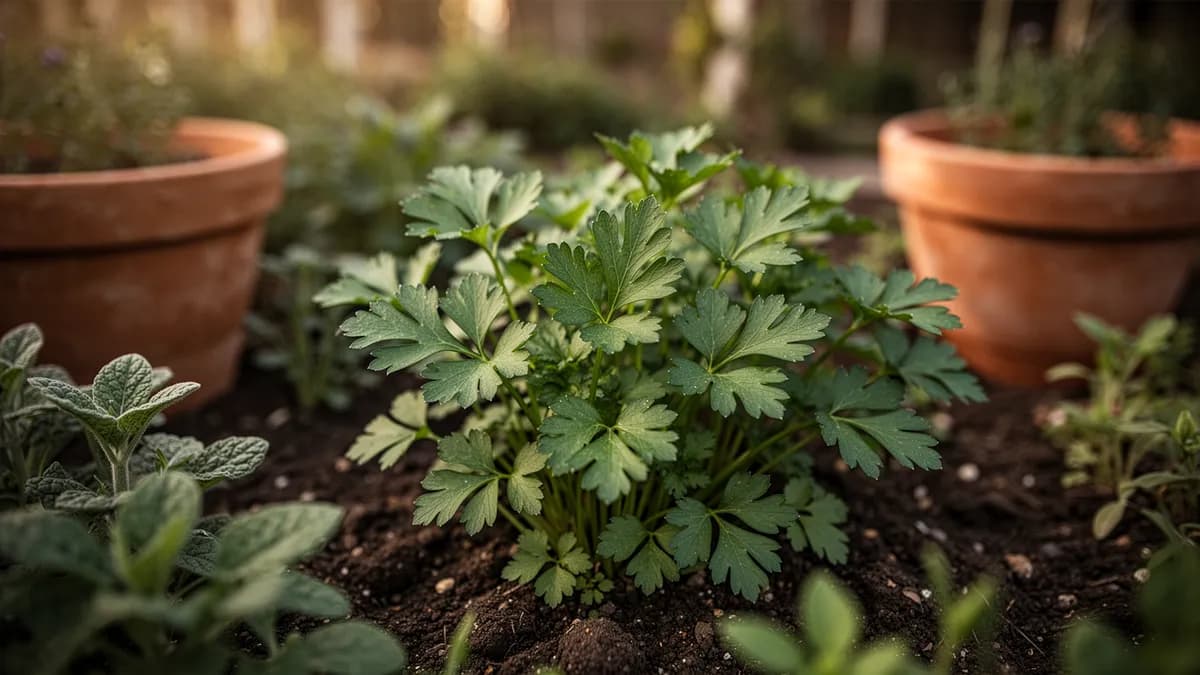
Halte Goldener Salbei von diesen fern
Bau deine beste Goldener Salbei an — und alles drumherum.
Starte heute kostenlos. Lege deine Beete an, setze deine Goldener Salbei ein und lass PlotMyGarden Timing, Abstände, Begleiter und Erinnerungen von der Saat bis zum Erntekorb übernehmen.