Lima caviar
Un cítrico autóctono de Australia que produce frutos alargados llenos de diminutas vesículas de jugo, como caviar, que estallan con un intenso sabor a lima.





En esta páginaResumen
Conoce Lima caviar
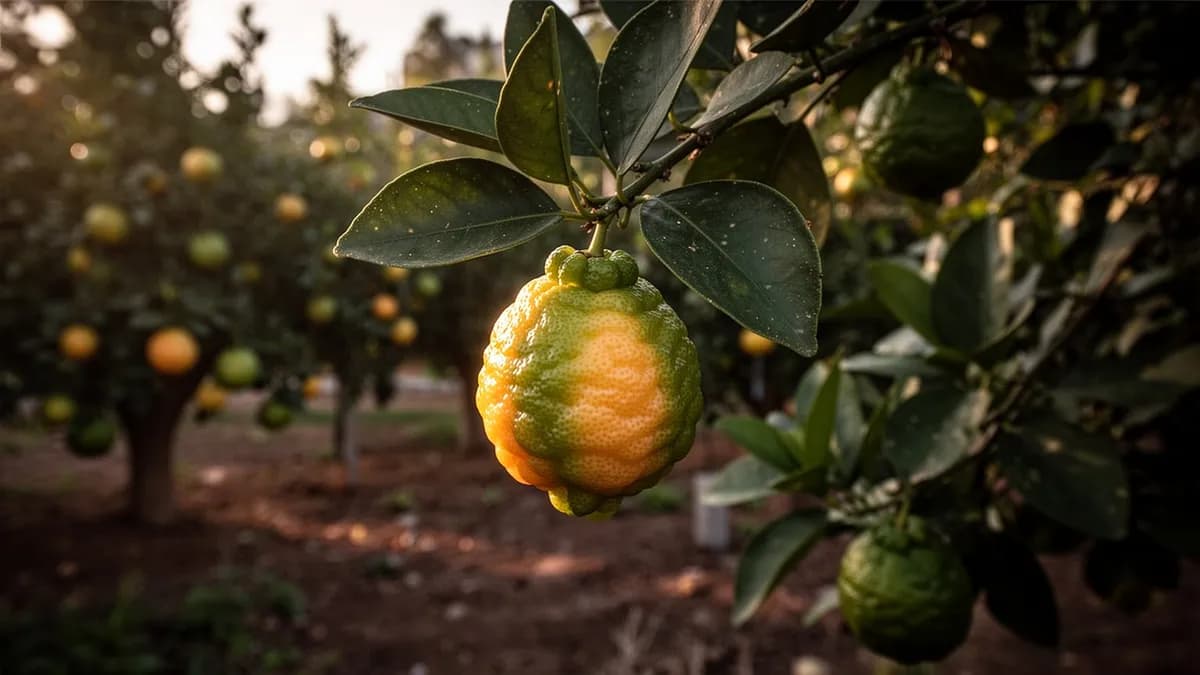
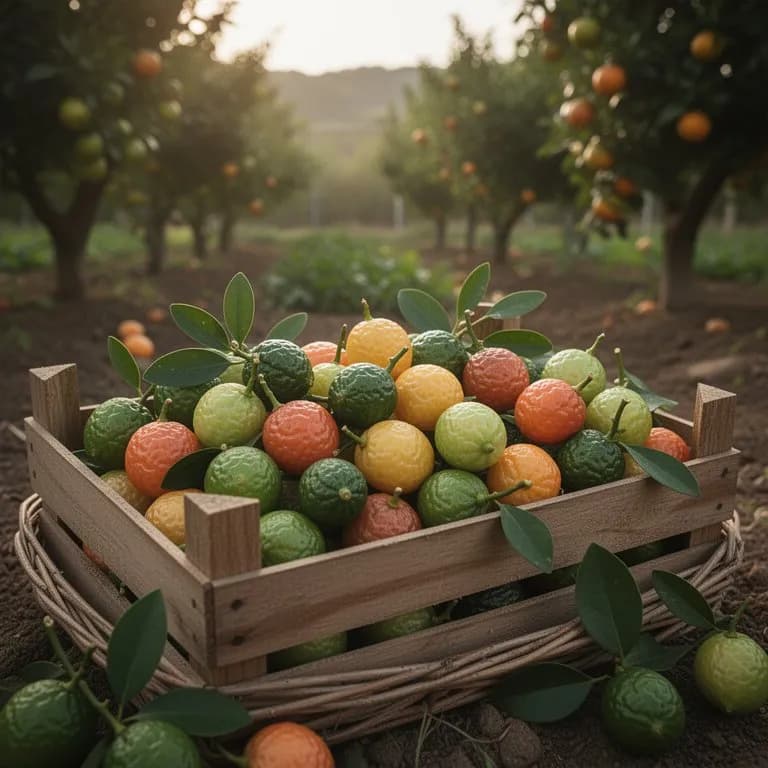
Un cítrico autóctono de Australia que produce frutos alargados llenos de diminutas vesículas de jugo, como caviar, que estallan con un intenso sabor a lima. Las limas caviar son árboles espinosos y de crecimiento lento que se adaptan bien al cultivo en maceta en climas más frescos. La pulpa perlada aparece en colores que van del verde al rosa y al rojo, lo que las convierte en una codiciada guarnición en la alta cocina.
Cuándo plantar Lima caviar
Las limas caviar pueden cultivarse a partir de semilla, aunque tardan bastante más en fructificar que los árboles injertados. Siembre semillas frescas en una mezcla húmeda y bien drenante para germinación, a una profundidad de aproximadamente un centímetro. Mantenga una temperatura constante de 25 a 30 grados Celsius con alta humedad. La germinación es lenta y suele tardar de cuatro a ocho semanas. Las plántulas son delicadas y deben protegerse del sol directo hasta que desarrollen varias hojas verdaderas. Para obtener frutos más rápido, se recomienda injertar sobre patrón de naranjo trifoliado.
Tu año de Lima caviar
Ajustado a Zona 7 · temporada típica · la helada se va hacia el 2 abr y vuelve hacia el 1 nov
Planta Lima caviar Mar – May y cosecha Jun – Oct. Consulta los métodos de plantación y elige tu clima para adaptar los periodos.
Cómo cultivar Lima caviar
Las limas caviar son árboles de sotobosque de selva tropical originarios de la zona fronteriza entre Queensland y Nueva Gales del Sur, en Australia. Prosperan con luz tamizada, aunque también soportan el pleno sol si reciben suficiente humedad y mantillo. Plántelas en un suelo bien drenado, ligeramente ácido y enriquecido con materia orgánica, y mantenga una humedad constante, ya que son sensibles tanto a la sequía como al encharcamiento.
En climas más frescos (por debajo de la zona 9), cultive las limas caviar en contenedores usando un sustrato cítrico de buena calidad. Llévelas al interior o a un invernadero antes de la primera helada, proporcionando al menos seis horas de luz intensa. Aplique fertilizante cada cuatro a seis semanas durante la temporada de crecimiento con un abono cítrico equilibrado, reduciendo el aporte en invierno.
La poda debe centrarse en retirar la madera muerta y las ramas cruzadas para mantener una copa abierta que permita la circulación del aire. Las limas caviar tienen muchas espinas, así que use guantes protectores al manipularlas. Crecen despacio y a menudo tardan de tres a cinco años, desde semilla o injerto, en producir su primera cosecha. La paciencia se ve recompensada con frutos únicos, parecidos al caviar, muy apreciados por chefs de todo el mundo.
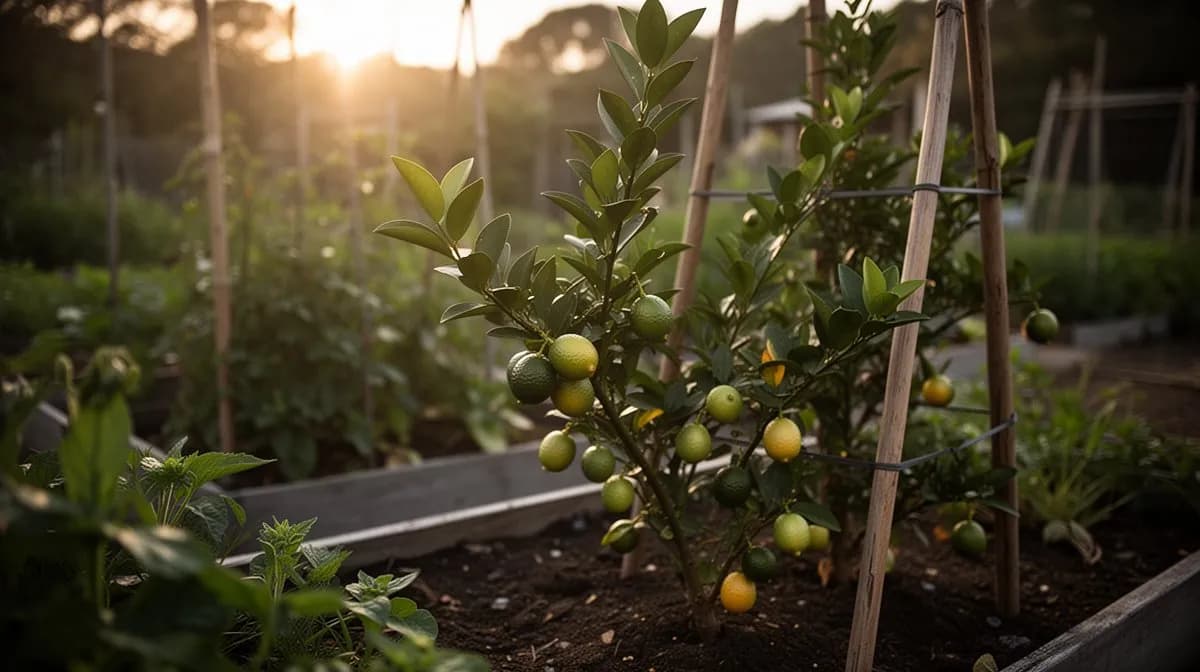
Para Lima caviar un bancal de 120 × 240 cm se queda corto
Cada Lima caviar pide 200 cm de margen. El planificador guarda ese marco por ti — cada planta, cada bancal.
Los mejores vecinos de Lima caviar
Las limas caviar se benefician de la asociación con otros cítricos que comparten necesidades de cultivo similares. El limoncillo y la albahaca plantados cerca pueden ayudar a repeler ciertas plagas y prosperan en las mismas condiciones cálidas y húmedas. La consuelda es una excelente compañera como cubresuelo, ya que acumula nutrientes y proporciona material para mantillo. Evite plantarlas cerca de árboles muy exigentes con el agua y los nutrientes, o de plantas alelopáticas como el nogal.
Limón va a su lado.
Saber de huerto de siempre, cotejado con la tabla real de Lima caviar — prueba cualquier planta que cultives.
Prueba Lima caviar en un bancal, aquí mismo
Un bancal real del planificador con Lima caviar ya plantado. Toca una planta compañera para colocarla y mira cómo responde la comprobación de vecinos: verde para buenos vecinos, rojo si hay conflicto.


Guías de cultivo relacionadas
Abónalo bien
Las limas caviar prefieren suelos ligeramente ácidos, con un pH de 5.5 a 6.5, y un drenaje excelente. En suelos arcillosos pesados, enmiende con arena gruesa, perlita y corteza compostada. Para plantas en contenedor, use un sustrato cítrico de primera calidad. Aplique un fertilizante cítrico de liberación lenta a comienzos de la primavera y de nuevo a mediados del verano, complementado con abonos líquidos mensuales de extracto de algas o emulsión de pescado durante la temporada activa. Asegure suficiente hierro, manganeso y zinc, ya que los cítricos son propensos a carencias de micronutrientes en suelos alcalinos.
Temperatura ideal
Compatibilidad de zonas de rusticidad
De la semilla a la cosecha, etapa por etapa
Germinación y plántula
Las semillas germinan lentamente en 4–8 semanas cuando se mantienen cálidas y húmedas. La plántula produce sus primeras hojas verdaderas, pequeñas, aromáticas y ovaladas, y comienza a desarrollar sus característicos tallos espinosos. El crecimiento es modesto en esta fase porque la planta se centra en establecer su sistema radicular.
Arbusto juvenil
La planta desarrolla una estructura densa y ramificada, con espinas cada vez más prominentes. Las hojas se vuelven más coriáceas y muy aromáticas al rozarlas. El enraizamiento se acelera y el arbusto empieza a adoptar su forma característica de varios tallos. El ritmo de crecimiento sigue siendo lento en comparación con la mayoría de los cítricos.
Establecimiento y ramificación
En el segundo año el arbusto ramifica con fuerza y muestra un crecimiento estacional fiable. El armazón de la planta madura se vuelve evidente. Los ejemplares en contenedor pueden mostrar estrés si sus raíces se quedan apretadas y deben trasplantarse a una maceta mayor. Las plantas en suelo amplían mucho su zona radicular.
Primera floración y fructificación
Las plantas injertadas suelen producir sus primeras flores 1–2 años después de plantarse, mientras que las plantas de semilla pueden tardar 5–7 años. La floración ocurre en primavera y de nuevo en otoño. Pequeñas flores blancas aparecen a lo largo de los tallos, seguidas del desarrollo de los frutos alargados y con forma de dedo que dan nombre a la planta.
Madurez productiva
Un arbusto maduro de lima caviar alcanza entre 2 y 5 metros y ofrece cosechas fiables cada año. Los frutos maduran durante una temporada prolongada, desde finales del verano hasta el invierno, con el punto álgido de la cosecha normalmente en otoño. Los rendimientos van desde unos cientos hasta varios miles de frutos al año, según el cultivar, el clima y los cuidados.
Producción consolidada a largo plazo
Los árboles de lima caviar bien manejados son productivos durante décadas. Las plantas viejas suelen desarrollar troncos retorcidos y bonitos, y ofrecen rendimientos crecientes año tras año. Una poda de renovación ocasional cada 5–6 años ayuda a mantener el vigor y a controlar el tamaño de la planta en el jardín.
Mantenga el sustrato constantemente húmedo, pero nunca encharcado. Proporcione luz brillante e indirecta y mantenga temperaturas superiores a 18 °C para favorecer una germinación estable.
Cuidar Lima caviar mes a mes
Qué hacer cada mes para tu Lima caviar
Octubre
Mes actualEl crecimiento primaveral y la floración están activos. Mantenga una humedad constante para favorecer el cuajado. Aplique un pulverizado foliar de micronutrientes si las hojas aparecen pálidas o cloróticas. Coloque malla en zonas con alta presión de zarigüeyas o aves mientras se desarrollan los frutos.
Ten claro qué hacer en tu huerto, cada mes
Un correo al empezar cada mes: qué sembrar, plantar y hacer ahora mismo — para tu Lima caviar y todo lo que crece alrededor. Más un breve curso inicial para esquivar los errores clásicos.
- Qué hacer ahora mismo
- Ajustado a tu temporada
- Curso inicial incluido
Cosechar Lima caviar
Las limas caviar están listas para cosechar cuando están llenas, ligeramente blandas al tacto y han alcanzado su color maduro, que varía según el cultivar del verde al burdeos o al rosa. Gire con cuidado o corte los frutos de la rama usando unas tijeras de poda afiladas para no dañar la madera espinosa. La temporada de cosecha suele ir desde finales del verano hasta el otoño. El fruto no sigue madurando de forma significativa una vez recogido, así que déjelo madurar por completo en el árbol para obtener la mejor textura perlada y la máxima intensidad de sabor.
se supone que plantas al comenzar el periodo — indica tu fecha real
Cosecha Lima caviar a tiempo y la planta sigue produciendo.
Almacenamiento y conservación
Las limas caviar frescas se conservan dos o tres semanas en el refrigerador, guardadas en una bolsa o recipiente transpirable. Para más tiempo, corte los frutos por la mitad, saque las perlas y congélelas en una sola capa sobre una bandeja antes de transferirlas a bolsas herméticas para el congelador. Las perlas congeladas conservan su textura de forma notable durante hasta seis meses y pueden usarse directamente como guarnición. También pueden conservarse en almíbar o encurtirse en una salmuera ligera con vinagre.
Qué falla — y cómo solucionarlo
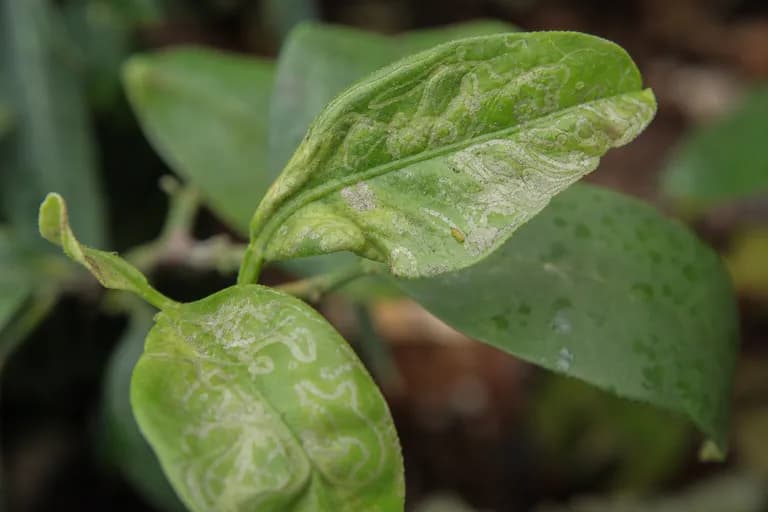
Minador de los cítricos
PlagaTúneles sinuosos y plateados en las hojas jóvenes; brotes nuevos rizados y deformados.
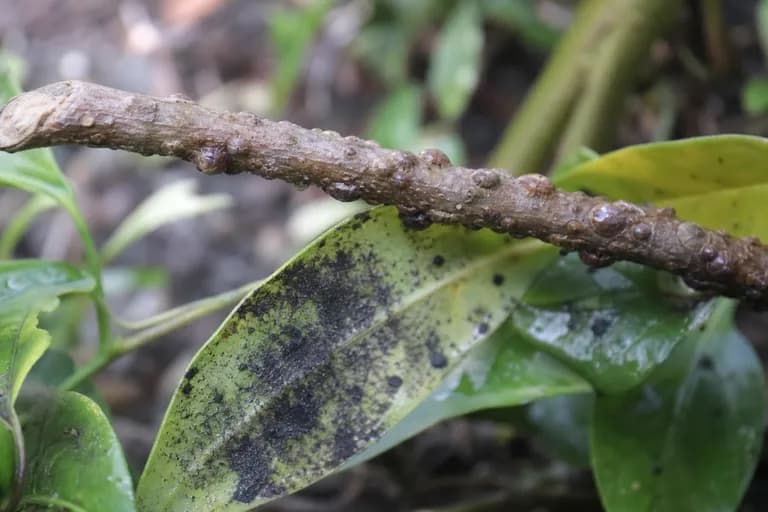
Cochinillas
PlagaPequeños bultos marrones o blancos en tallos y hojas; melaza pegajosa y fumagina.
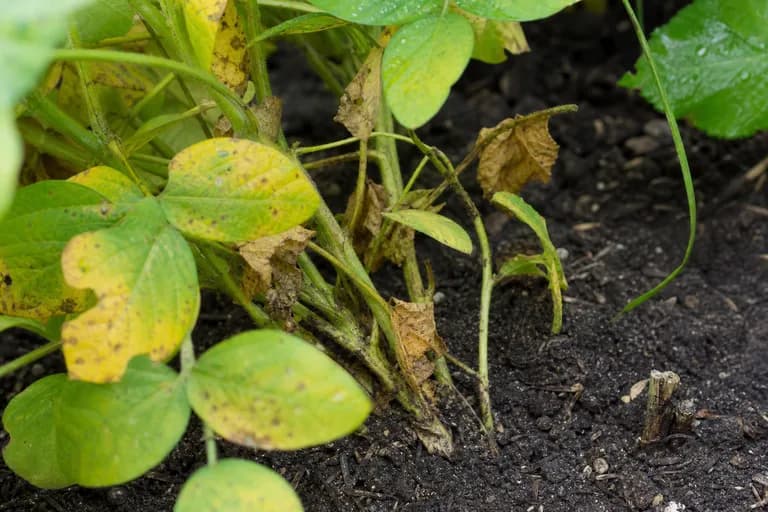
Podredumbre de raíz por Phytophthora
EnfermedadHojas amarillentas, crecimiento raquítico, raíces oscuras y blandas, y declive progresivo del árbol.
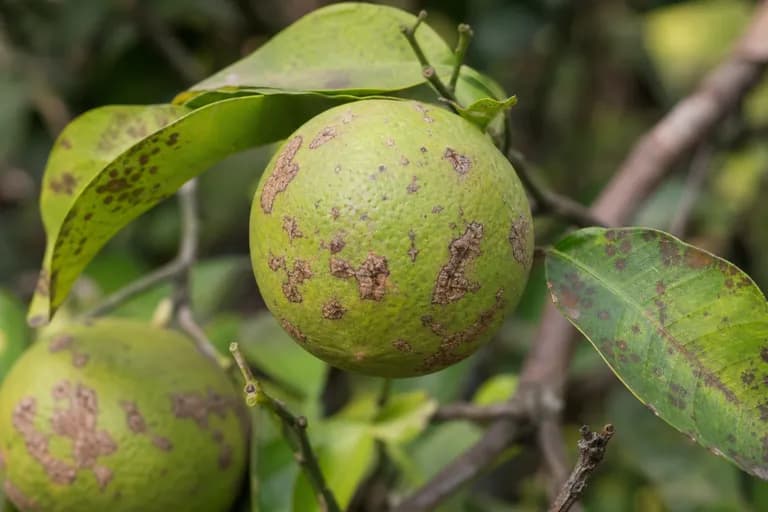
Melanosis
EnfermedadManchas marrones elevadas y textura rugosa en frutos y hojas, a menudo con un patrón en forma de lágrima siguiendo el flujo del agua.
Solución de problemas comunes
Las limas caviar suelen sufrir caída de hojas cuando se exponen a cambios bruscos de temperatura, luz o riego, especialmente al pasar entre interior y exterior. La densidad de espinas puede hacer dolorosa la cosecha sin guantes adecuados. Los árboles tardan en establecerse y pueden necesitar varios años para fructificar. El exceso de riego es una causa frecuente de muerte, ya que provoca podredumbre de raíces. En interiores secos, los ácaros pueden convertirse en un problema durante los meses de invierno.
Consejos de cultivo
- Compre siempre limas caviar injertadas y no plantas de semilla. Las plantas injertadas fructifican en 1–2 años, tienen una calidad de fruto constante y son más vigorosas que los semilleros, que pueden tardar 5–7 años en producir y pueden mostrar características variables.
- Las limas caviar prosperan en suelos bien drenados, ligeramente ácidos, con un pH de 6.0–7.0. Si su suelo nativo es arcilloso o muy alcalino, plante en un bancal elevado o en un contenedor grande con sustrato cítrico de calidad enmendado con corteza de pino compostada para mejorar el drenaje y bajar el pH.
- El hábitat natural de la planta es el sotobosque de la selva tropical, lo que significa que tolera, y a menudo prefiere, la semisombra, especialmente en climas cálidos del interior. En zonas subtropicales costeras funciona bien a pleno sol, pero la sombra de la tarde en verano la protege del estrés por calor y de la caída del fruto.
- Las limas caviar son de los cítricos más espinosos. Al cosechar, use guantes gruesos de cuero y unas pinzas o tijeras de mango largo para alcanzar los frutos en lo más profundo de la copa sin lesionarse. Coseche cortando el pedúnculo en lugar de tirar del fruto para no dañar el espolón fructífero.
- El árbol crece de forma naturalmente lenta y no responde bien a podas anuales fuertes. Limite la poda a un moldeado ligero justo después de la cosecha, eliminando solo ramas muertas, dañadas o cruzadas. Una poda severa puede reducir notablemente la producción durante una o dos temporadas.
- En climas más frescos, las limas caviar cultivadas en contenedores pueden trasladarse al interior o a un invernadero calefactado durante el invierno. Use una maceta de al menos 50 litros para acomodar el desarrollo radicular y asegure un drenaje excelente colocándola sobre pies o una capa de grava para evitar el encharcamiento.
- Las limas caviar se benefician de la asociación con hierbas de raíz poco profunda como el tomillo limón, la menta vietnamita y la cebolleta china alrededor de la base. Estas compañeras suprimen las malas hierbas, retienen la humedad, atraen insectos beneficiosos y disuaden algunas plagas del suelo sin competir mucho por nutrientes.
- El rajado del fruto, cuando la piel se abre antes de la cosecha, casi siempre se debe a un riego irregular, especialmente a un periodo largo de sequía seguido de lluvia intensa o riego abundante. Instale un sistema de riego por goteo con temporizador para aportar una humedad constante y medida y eliminar prácticamente el rajado.
- El fumago que aparece en las hojas es un problema secundario causado por la melaza de insectos chupadores como cochinillas, pulgones o mosca blanca. Trate primero la plaga con aceite ecológico o aceite de neem, y el fumago desaparecerá de forma natural una vez eliminada la fuente de melaza.
- Para obtener el sabor y el color más intensos de las vesículas, coseche los frutos cuando estén completamente coloreados y cedan ligeramente con una presión suave de los dedos. Los frutos sobremaduros que se dejan en el árbol desarrollan una textura esponjosa y un sabor apagado, mientras que los frutos inmaduros son excesivamente ácidos y con aroma poco desarrollado.
Cultiva tu mejor Lima caviar — y todo lo que la rodea.
Empieza un plan gratis hoy. Diseña tus bancales, coloca tu Lima caviar y deja que PlotMyGarden gestione el momento, el espaciado, las asociaciones y los recordatorios de la semilla a la cesta.
Elige tu Lima caviar
Rainforest Pearl
Produce perlas de color verde brillante con el clásico e intenso sabor a lima. Árbol compacto, muy adecuado para el cultivo en maceta.
Crimson Tide
Presenta perlas de color rojo oscuro a burdeos con un gran atractivo visual y un perfil de sabor ligeramente más dulce.
Pink Ice
Ofrece perlas rosa pastel con un delicado sabor cítrico. Una variedad ornamental y culinaria muy popular.
Judy's Everbearing
Una variedad muy productiva, conocida por su temporada de cosecha prolongada y su producción fiable de perlas verdes.
Durham's Emerald
Selección australiana muy apreciada por sus frutos grandes y sus perlas verde intenso con excelente acidez.
Las limas caviar frescas son una de las frutas más caras del mercado, y a menudo se venden a AU$80–120 por kilogramo en Australia y aún más en mercados de exportación como Japón, Estados Unidos y Europa. Un solo árbol maduro de cultivo doméstico que produzca 10–15 kg al año genera, en la práctica, entre AU$800 y AU$1.800 en fruta al precio minorista. Incluso un ejemplar modesto en maceta que produzca 2–3 kg al año supone un ahorro considerable para cocineros y aficionados que usan limas caviar con regularidad como guarnición o ingrediente culinario.
Recetas rápidas
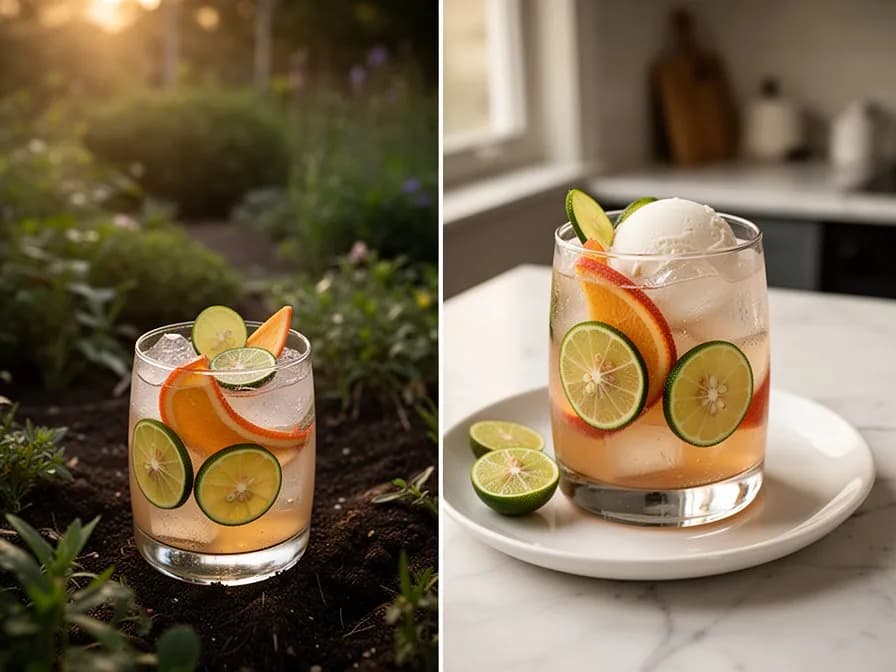
Martini de lima caviar
5 minutosUn cóctel limpio y elegante que deja que las vesículas cítricas hagan el trabajo principal, con un borde brillante y una guarnición espectacular.
5 ingredientesOstras con perlas de lima caviar
10 minutosUna entrada lujosa donde la salinidad de las ostras se realza con el estallido ácido y aromático de la lima caviar.
4 ingredientesUsos culinarios
Las perlas de lima caviar son una guarnición lujosa para sushi, ostras, tartar de marisco y cócteles. Aportan un estallido cítrico al ceviche, las ensaladas y los platos de inspiración tailandesa. Las perlas pueden incorporarse a vinagretas, servirse sobre pescado a la parrilla o espolvorearse sobre postres como la panna cotta y la pavlova. También son una cobertura impresionante para tostadas con aguacate.
Qué contiene
Beneficios para la salud
- Excelente fuente de vitamina C, con una sola lima caviar que aporta una parte importante de la necesidad diaria. La vitamina C es esencial para la función inmunitaria, la síntesis de colágeno, la absorción del hierro y actúa como un potente antioxidante hidrosoluble en todo el cuerpo.
- Contiene flavonoides bioactivos, entre ellos hesperidina, naringenina y rutina, que han demostrado propiedades antiinflamatorias en investigaciones clínicas y podrían reducir la inflamación sistémica asociada a enfermedades crónicas.
- El alto contenido de ácido cítrico del jugo de lima caviar favorece la salud urinaria al elevar los niveles de citrato en la orina, lo que inhibe la cristalización y el crecimiento de cálculos de oxalato cálcico.
- Aporta fibra dietética, incluida pectina soluble de las vesículas de jugo, que alimenta bacterias intestinales beneficiosas, favorece la función intestinal sana y puede ayudar a moderar la glucosa tras las comidas.
- Rica en compuestos antioxidantes como vitamina C, flavonoides y carotenoides, que en conjunto combaten el estrés oxidativo, un factor clave del envejecimiento celular y del desarrollo de enfermedades cardiovasculares y ciertos cánceres.
- El folato presente en la lima caviar es importante para la síntesis y reparación del ADN, lo que la hace especialmente valiosa para mujeres en edad fértil y para cualquier persona con una ingesta limitada de alimentos ricos en folato.
De dónde viene Lima caviar
La lima caviar (Microcitrus australasica) es una de las especies cítricas más antiguas del mundo y se originó en las selvas subtropicales de las cordilleras McPherson y Tweed, en la frontera entre Queensland y Nueva Gales del Sur, en Australia. Mucho antes de la colonización europea, los pueblos aborígenes de las naciones Bundjalung, Gidhabal y vecinas recolectaban limas caviar de árboles silvestres de la selva tropical, comiendo el fruto fresco y usando las hojas aromáticas y la piel con fines medicinales. La planta estaba profundamente integrada en la cultura alimentaria y en el conocimiento ecológico de estas comunidades durante miles de años.
Los colonos europeos del siglo XIX registraron las limas caviar en el sotobosque de la selva, pero en gran medida las descartaron como especies curiosas sin valor comercial. La industria cítrica de la época se centraba en las variedades introducidas, naranjas, limones y mandarinas, y las especies nativas australianas fueron ignoradas. Las limas caviar siguieron existiendo en estado silvestre, pero rara vez se cultivaban de forma intencionada.
La transformación de la lima caviar de planta olvidada de selva tropical a ingrediente gourmet global comenzó de verdad en los años noventa y principios de los dos mil, impulsada por el movimiento de alimentos nativos australianos. Productores pioneros de Queensland y del norte de Nueva Gales del Sur empezaron a domesticar y seleccionar ejemplares silvestres superiores, desarrollando cultivares con nombre y colores de fruto, de vesícula y perfiles de sabor consistentes. De este trabajo surgieron variedades como 'Alstonville', 'Byron Sunrise', 'Pink Ice' y 'Crimson Tide'.
El momento decisivo llegó cuando algunos chefs australianos, sobre todo los vinculados al renacimiento culinario del 'bush tucker', empezaron a incluir limas caviar de forma destacada en sus menús. La noticia se extendió rápidamente a Europa y Norteamérica. A finales de la década de 2000, las limas caviar aparecían en las cocinas de restaurantes con tres estrellas Michelin en París, Tokio y Nueva York, usadas como guarnición de ostras, sashimi, ceviche y postres.
Hoy las limas caviar se cultivan comercialmente en Australia, California, Francia, España, Israel y Japón. En todo el mundo ha surgido un mercado doméstico floreciente, con cultivares injertados ya disponibles a través de viveros especializados en la mayoría de las regiones templadas y subtropicales. La planta ha completado un viaje extraordinario, de la oscuridad de la selva tropical al cítrico culinario más codiciado del planeta.
Lima caviar: ¿sabías que?
Datos fascinantes sobre Lima caviar
Las limas caviar se llaman a veces el 'caviar de los cítricos' porque sus vesículas, pequeñas bolsas de jugo parecidas a perlas, se sienten y estallan en la lengua como si fueran huevas de lujo, lo que las hace enormemente populares entre chefs con estrella Michelin de todo el mundo.
Lima caviar: preguntas frecuentes
¿Cuándo debo plantar Lima caviar?
¿Cuáles son buenas plantas acompañantes para Lima caviar?
¿En qué zonas de rusticidad puede crecer Lima caviar?
¿Cuánto sol necesita Lima caviar?
¿A qué distancia debo espaciar Lima caviar?
¿Qué plagas y enfermedades afectan a Lima caviar?
¿Cómo almaceno Lima caviar después de la cosecha?
¿Cuáles son las mejores variedades de Lima caviar para cultivar?
¿Qué suelo necesita Lima caviar?
¿Cómo sé cuándo las limas caviar están maduras y listas para cosechar?
¿Puedo cultivar lima caviar en una maceta o en interior?
¿Por qué se ponen amarillas las hojas de mi lima caviar?
¿Las limas caviar necesitan otra planta para cruzarse y producir fruto?
¿En qué se diferencian los muchos cultivares de lima caviar disponibles?
¿Cómo guardo las limas caviar después de cosecharlas y puedo congelarlas?
Acabas de leer la teoría. Ahora cultívala en piloto automático.
Todo lo que hace que Lima caviar sea delicado — el momento, el espaciado, las asociaciones, la ventana de cosecha — es justo lo que PlotMyGarden resuelve por ti, para cada planta de tu huerto.
Un plan que conoce tu clima
Indica tu ubicación una vez. Recibe fechas de siembra, abonado y cosecha basadas en tu última helada real y el pronóstico en vivo — sin adivinar con un sobre genérico.
De la sección “Cuándo plantar”Planificador de bancales de arrastrar y soltar
Diseña bancales sobre una cuadrícula. Cada planta encaja con su espaciado correcto y ves toda la temporada antes de gastar un céntimo en semillas.
De la sección “Cultivo”Conflictos de asociación, detectados a tiempo
Más de 200 buenas y malas combinaciones comprobadas en vivo mientras plantas — para que un error que arruine la temporada nunca llegue a la tierra.
De la sección “Asociaciones”Recordatorios que sí vas a seguir
“Riega las judías.” “Recoge hoy antes de que se pase.” Oportunos, concretos y ligados a las plantas que de verdad cultivas.
De la sección “Cosecha”Escalonado, programado
¿Quieres cosechar seis semanas en vez de seis días? Reparte tus siembras automáticamente y te avisa cuando toca el siguiente lote.
De la sección “Cuándo plantar”Un registro que se vuelve más listo
Cada cosecha que registras le enseña tu huerto. El plan del año que viene parte de lo que de verdad funcionó en tu suelo, no en un manual.
De la sección “Resumen”Planta estos junto a Lima caviar
Más Cítricos
Cultiva tu mejor Lima caviar — y todo lo que la rodea.
Empieza un plan gratis hoy. Diseña tus bancales, coloca tu Lima caviar y deja que PlotMyGarden gestione el momento, el espaciado, las asociaciones y los recordatorios de la semilla a la cesta.